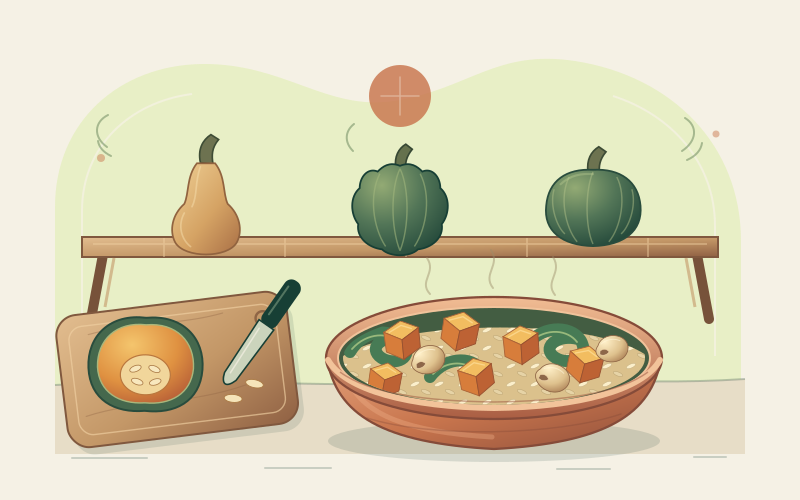
One reference portion is not every squash
Winter squash includes butternut, acorn, kabocha-type, and other mature fruits across several Cucurbita species. Their water content, flesh colour, texture, and nutrient composition differ. Preparation matters as well: raw, baked, boiled and drained, canned, sweetened, and pureed products are separate foods, not interchangeable entries.
The figures below use approximately 100 g of butternut winter squash, cooked, baked, without salt, USDA FoodData Central SR Legacy entry 169296. They describe that reference food rather than a universal garden harvest or an average for every winter-squash species and cultivar.
A household portion may be smaller or larger than 100 g, and added oil, butter, sugar, salt, or sauce changes the finished dish. Baking also changes water content. Compare like with like, and treat database figures as useful approximations rather than measurements of the squash on your own plate.
Read the cooked values by nutrient
| Nutrient | Amount | Context |
|---|---|---|
| Vitamin A | 558 µg RAE | Retinol activity equivalents; largely from provitamin A carotenoids in plant foods |
| Potassium | 284 mg | A mineral contribution that varies by squash and preparation |
| Dietary fibre | 3.2 g | Intact cooked flesh retains fibre; a smooth drink is not automatically equivalent |
| Folate | 19 µg DFE | Dietary folate equivalents, not the amount of folic acid in a supplement |
| Iron | 0.6 mg | Non-heme iron; content does not measure absorption |
| Protein | 0.9 g | A small amount, so pair the meal with other protein-containing foods as desired |
Vitamin A in orange-fleshed squash reflects carotenoids, including beta-carotene, that the body can convert to vitamin A. The table uses micrograms of retinol activity equivalents (µg RAE), a unit that accounts for differences in vitamin A activity. Orange flesh can be a visual clue, but it is not a laboratory measurement. Acorn and other winter squash have different USDA entries and should not automatically inherit these butternut values.
Vitamin A has roles in normal vision, immune function, reproduction, and cell growth, but a serving of squash does not prevent or treat disease. This article makes no promise of improved eyesight, immunity, skin, or any medical outcome. Follow qualified advice about supplements and individual needs.
Potassium contributes to the mineral content of the cooked portion. It is one part of overall intake, not a reason to prescribe squash for blood-pressure control. People advised to manage potassium intake because of a medical condition or treatment should follow their clinician’s guidance rather than general food rankings.
Dietary fibre remains in intact flesh after ordinary cooking, even when the texture becomes soft. A baked or roasted piece, a soup containing the whole cooked flesh, and a strained juice can differ substantially. Fibre intake depends on the serving and the rest of the diet; beans, lentils, grains, other vegetables, fruit, nuts, and seeds can all contribute.
The reference also contains modest folate and iron and little protein. These figures do not show absorption or individual requirements. A vitamin-C-rich vegetable or fruit in a mixed meal can support absorption of non-heme iron from plant foods, but no pairing treats a diagnosed deficiency.
Keep the crop rank qualitative and the plate varied
Rooted places winter squash in the High, density rank 3 editorial nutrient category. This is qualitative shorthand for comparing crops on a common cooked basis, not an official score, a medical recommendation, or proof that one cultivar outranks another. It does not combine flesh and seeds into a single nutrient profile or imply that a larger serving is always better.
Use squash as one ingredient among many. Beans and lentils add protein, fibre, folate, and minerals; grains add energy and varying protein, fibre, and micronutrients; leafy and other vegetables broaden flavour and nutrient variety. Bean-and-grain proteins can contribute complementary amino-acid patterns across the day without mandatory same-meal combining.
| Base | Squash addition | Other produce |
|---|---|---|
| Brown rice or another cooked grain | Roasted cubes with chickpeas | Broccoli, cabbage, or a lemon dressing |
| Lentils | Butternut simmered in a spiced stew | Tomatoes, onion, or leafy greens |
| Wholegrain toast or flatbread | Squash and white-bean mash | Peppers, tomatoes, or a mixed salad |
| Corn tortillas | Acorn or kabocha-type squash with black beans | Tomato salsa, peppers, or cabbage |
Adapt these combinations to allergies, preferences, availability, and individual advice. Squash’s colour and texture need no “superfood” label.
Use the seeds as a separate ingredient
Mature squash seeds from a sound fruit can be eaten after suitable cleaning and cooking. Scoop them out, separate the stringy pulp, rinse under clean running water, and dry them before roasting. Follow a reliable recipe for time and temperature, and roast until suitably dry and crisp. Added oil and salt become part of the food’s nutritional context.
Seeds have a different profile from the water-rich flesh, including more concentrated energy, protein, fats, and minerals per comparable weight. Do not apply the baked-flesh table to seeds or assume a large handful is nutritionally equivalent to a serving of squash. Portion, species, maturity, hull, and preparation all change the result.
Discard seeds from mouldy, leaking, badly decayed, or otherwise doubtful fruit. An unusually bitter squash should not be eaten or used for seed. Cool roasted seeds and store them in a clean, dry container; if they become damp, mouldy, rancid, or otherwise doubtful, discard them rather than trying to rescue them by reheating.
Store whole and cut squash differently
-
Keep intact keepers dry and ventilated
Use mature, cured, unblemished fruit for storage. Keep whole squash in a cool, dry, frost-free, ventilated place and inspect regularly. Do not seal damp fruit in an airtight container. Our harvest and curing guide explains the garden-side steps.
-
Wash before cutting
Wash hands and clean the board and knife. Rinse the intact rind under clean running water and scrub firm surfaces with a clean produce brush so soil is not carried into the flesh. Do not use soap or household disinfectant on food. Cut away damaged areas, and discard produce with extensive mould, slime, leakage, or decay.
-
Chill cut flesh and leftovers promptly
Once cut, squash is perishable. Cover and refrigerate unused raw pieces, and refrigerate cooked dishes promptly in clean, shallow containers. Do not leave perishable food at room temperature for more than two hours, or more than one hour above 32°C. Reheat leftovers thoroughly and follow local refrigerator-storage guidance.
-
Cook for the recipe you actually serve
Roast, bake, steam, or simmer until tender, removing the rind where the cultivar and recipe require it. Retain cooking liquid in a soup when appropriate rather than treating boiled and drained values as equivalent. Record major additions if you need a closer estimate of the finished dish.
Sources and specialist references
- US Department of Agriculture: Winter squash, butternut, cooked, baked, without salt (169296)
- NIH Office of Dietary Supplements: Vitamin A and carotenoids fact sheet for consumers
- University of Minnesota Extension: Storing and preserving pumpkins and winter squash
- US Food and Drug Administration: Raw produce—selecting and serving it safely
- US Department of Agriculture: Leftovers and food safety