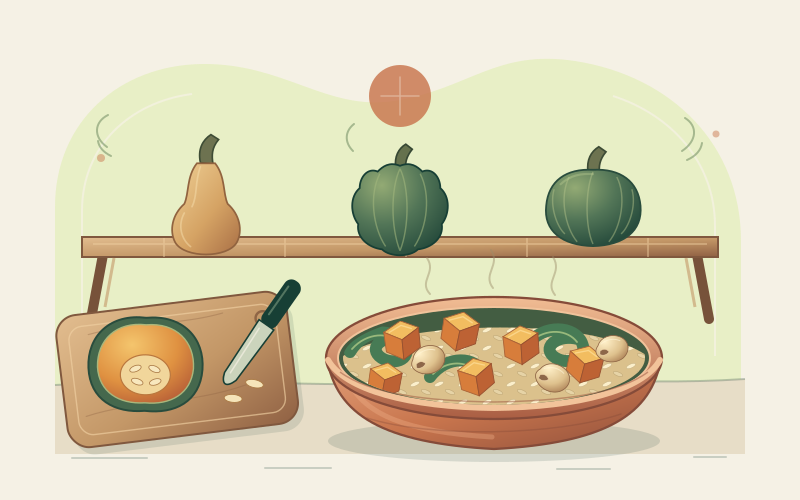

Crop 012 / Cucurbita moschata; other winter squashes include C. pepo and C. maxima

Give the vines warmth, then let the rinds mature.

Grow winter squash for firm-rinded fruit harvested fully mature, not for cold-season cropping. Match the cultivar to your frost-free season, give the vines room and pollinators access, then cure and store only sound fruit.

Harvest at maturity
Firm rind, dry stem Full colour, a hard rind and a dry, firm stem are better cues than size alone.
Typical mature-fruit window
80–120 days From sowing under suitable warm conditions, including a protected seedling period.
Season
Warm and frost-free Despite its name, winter squash is frost-sensitive and needs enough warmth to mature.
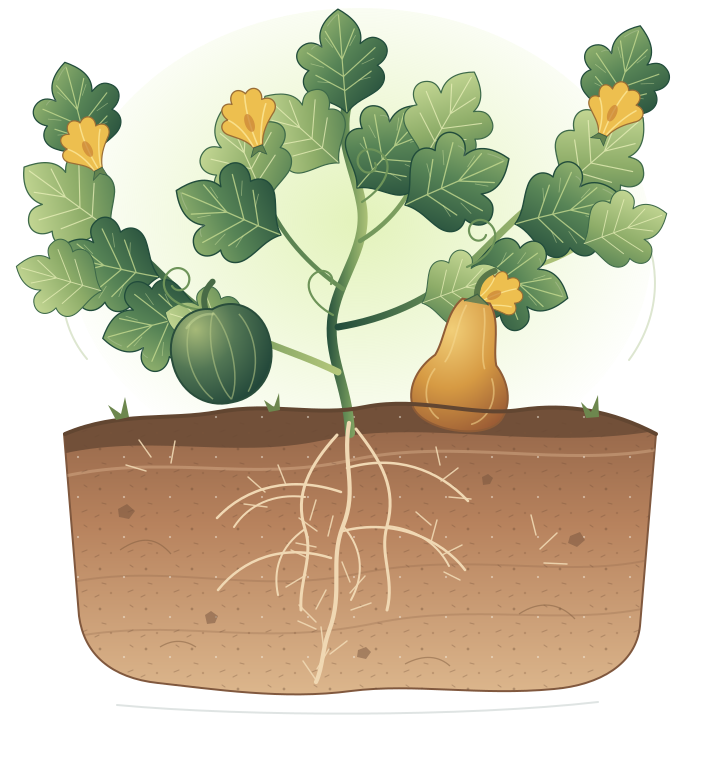
Sprawling winter squash vine with lobed leaves, coiled tendrils, golden flowers, developing fruit and branching roots in a soil cutaway.
Broad leaves, separate flowers and developing squash grow along the vine; allow room for growth and keep the root zone steadily but not excessively moist.

Know the crop

Crop profile

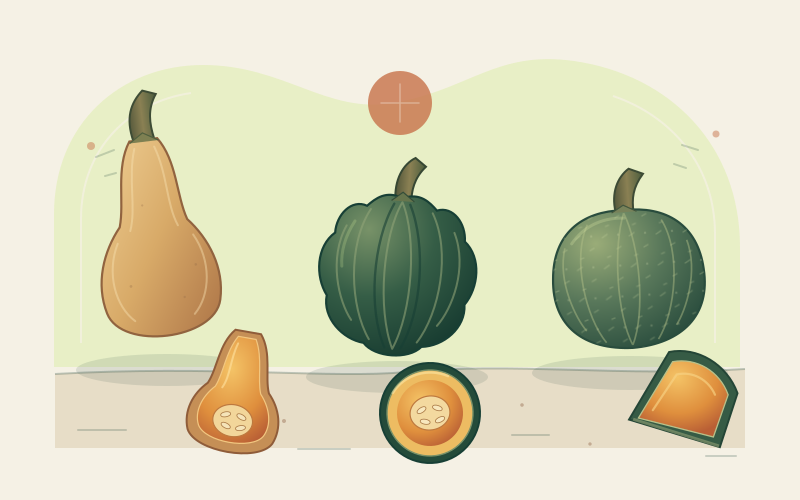
A warm-season vine grown for mature, firm-rinded fruit such as butternut. Unlike summer squash, which is picked immature with tender skin, winter squash is harvested mature and many types can be cured and stored. Frost and a short season can prevent maturity.

Crop essentials

Botanical name
Cucurbita moschata; other winter squashes include C. pepo and C. maxima
Growth
80–120 days From sowing to mature fruit, including the seedling period when started under cover. Butternut and other cultivars differ; cool weather, late planting and insufficient heat delay maturity. Allow fruit to cure only after it reaches mature rind and stem condition.
Family
Cucurbitaceae
Origin
The Americas
Habit
Warm-season, frost-sensitive annual, with compact and trailing vine forms

Nutrition / baked butternut

Nutrition, in context

High Editorial nutrient-density rank 3. This is Rooted’s qualitative category for protein, fibre, folate, iron and potassium in the site’s cooked-food comparison, with highlights adding context. It is not an official nutritional score or a universal ranking of vegetables.

Reference nutrients per 100 g butternut winter squash, cooked, baked, without salt
Nutrient Amount
Protein 0.9 g
Fibre 3.2 g
Folate 19 µg
Iron 0.6 mg
Potassium 284 mg
  • Contains vitamin A (558 µg RAE) and vitamin C (15.1 mg) in the same baked butternut reference.
  • Provides fibre and potassium, with modest protein and folate.
  • These values concern mature butternut, not zucchini or other immature summer squash.

Basis: Approximate values per 100 g butternut winter squash, cooked, baked, without salt (USDA FoodData Central SR Legacy 169296). This is one winter-squash type, not an average for acorn, pumpkin or every Cucurbita species. Cultivar, maturity, cooking water loss and serving size change intake; values do not measure absorption or individual needs.

At the table

Build a varied meal around winter squash

  • Beans, chickpeas or lentils — Protein and fibre. Pulses add protein, folate and iron to winter squash, creating a more varied meal. They can accompany grains across the day without a strict combining rule. Make squash and chickpea stew, or serve baked butternut with lentils.
  • Maize, rice or other grains — A varied meal. Grains contribute their own nutrients and make a squash dish more substantial. Include pulses, tofu, eggs, fish or another protein-containing food as preferred. Serve winter squash with maize and beans, or with rice and tofu.
  • Leafy greens, cabbage or peppers — Vegetable variety. Additional vegetables broaden the flavours and nutrients in the meal. No particular vegetable pairing is essential. Serve squash with sautéed greens and a bean and sweet-pepper salad.

The essentials

From warm soil to a well-cured harvest

Six practical stages. Adapt timing, cultivar, vine space and protection to your frost-free season, rainfall and local pests.

  1. Choose for warmth and season length

    Winter squash is a warm-season, frost-sensitive annual. Check the packet’s days to maturity against your local frost-free period and choose an early cultivar where the season is short. In cool districts, start compact seedlings under cover roughly two to four weeks before planting out; elsewhere, direct-sow once frost danger has passed and soil has warmed.

  2. Prepare fertile soil and allow vine space

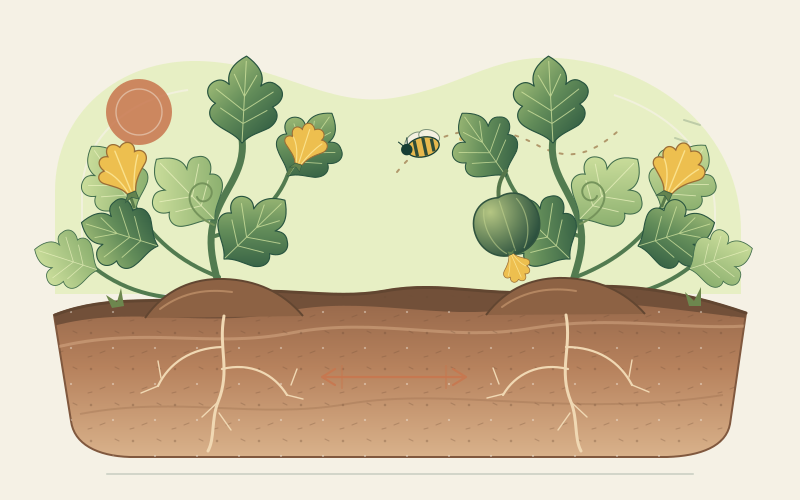
    Choose full sun and fertile, moisture-retentive but well-drained soil, using a soil test to guide corrections. Follow the cultivar’s spacing: as general guidance, allow about 90 cm between compact planting stations and at least 1.5 m between trailing ones. Harden off transplants, keep their root balls intact and water them in without leaving the ground saturated.

  3. Guide vines without restricting growth

    Mark the root zone before foliage spreads and guide stray vines gently rather than repeatedly moving them after fruit set. Vertical growing can save ground space only with a strong, safe support and cultivars bearing suitably small fruit; secure stems loosely and support developing squash with a sling so fruit does not hang from its stem.

  4. Water roots and protect pollination

    Check below the surface and water thoroughly when needed, especially during establishment, flowering and fruit swelling. Direct water to the soil and mulch established plants, keeping damp material clear of stems. Male and female flowers are separate and insects normally transfer pollen; avoid broad-spectrum insecticide around flowering plants, and open insect covers for flowering or hand-pollinate when necessary.

  5. Harvest when rind and stem are mature

    Leave storage fruit on the vine while the plant remains healthy and frost stays away. Look for the cultivar’s expected full colour, a hard rind that is difficult to mark with a thumbnail, and a dry, firm stem. Harvest before damaging frost, cut rather than pull the fruit, leave roughly 5–10 cm of stem where the cultivar forms one, and never carry squash by that stem.

  6. Cure, store and inspect sound fruit

    Cure sound, mature fruit in a warm, dry, ventilated, frost-free place for about one to two weeks, following cultivar-specific advice. Then store at about 10–15°C with air circulation, ideally not touching. Use bruised, cracked or stemless fruit promptly, refrigerate cut squash and cooked leftovers, and inspect stored fruit regularly for soft patches, mould, leakage or shrivelling; storage life varies by type and condition.

Growing notes by place

Read your region, then read your weather

Compare broad growing conditions, then adjust for your own frost dates, altitude, rainfall and soil.

Cool, temperate and often maritime, with summer warmth and frost dates varying by site.

Northwestern Europe

Early butternut and smaller winter squashes can mature in warm, sheltered British and nearby gardens; northern and upland sites are less reliable.

Indicative planting
Sow April–May under cover and transplant late May–June after frost, once plants are hardened off and soil is warming.
Indicative harvest
Cut mature fruit September–October before frost, when rinds are firm and stems corky; leave a stem section attached.
Soil and moisture
Fertile, moisture-retentive but free-draining soil with compost in full sun; avoid waterlogged or heavily shaded sites.

Field note: Choose an early cultivar, warm and shelter the bed, and ripen only fruit with enough remaining frost-free time.
Dates are indicative. Local frost forecasts, heat, seasonal rainfall and recent weather—not the calendar alone—should guide sowing and harvest.

Cool-temperate Northern Hemisphere · example

A warm-season rhythm

A compact planning guide, not a fixed schedule. Shift it with latitude, altitude, cultivar and local conditions.

  1. April–May

    Prepare a sunny, fertile, free-draining bed and plan enough room for the mature vines. Where spring is cool, start compact transplants under cover only shortly before planting out.

  2. May–June

    Direct-sow into warm soil after frost, or harden off and transplant with roots intact. Water in, protect young plants from local cold or pests, and manage covers so pollinators can reach flowers later.

  3. June–August

    Guide vines, maintain root-zone moisture through flowering and fruit swelling, and inspect foliage and developing fruit. Keep only the late fruit that can realistically mature before local frost.

  4. September–October

    Harvest fully coloured fruit with firm rinds and dry stems before damaging frost. Cure sound squash, move it into suitable ventilated storage and use damaged fruit promptly.

The indicative 80–120 day window runs from sowing to mature fruit and includes any protected seedling period. Cool weather, late planting and insufficient heat delay maturity; curing cannot make an immature fruit into a mature storage crop.

From the field journal

Grow, choose and cook your winter squash

Practical reading for warm-season vines, informed cultivar choices and varied meals without superfood claims.

Your next harvest begins here

Start with a cultivar that fits your season.

A compact planting station or a small, well-spaced vine patch is enough to learn the crop. Give it warmth, water and pollinator access, then wait for mature rinds before curing and storage.

Open the growing guide