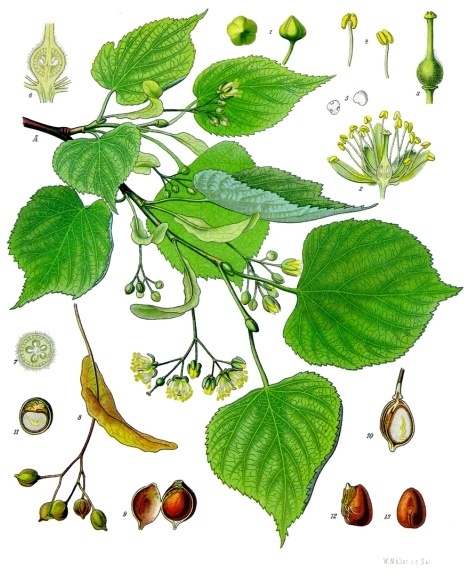
Traditionally used for fever, especially in children and elderly; fever with anxiety or restlessness; respiratory infections with fever.
Traditional uses
- For fever, especially in children and elderly (very gentle)
- For fever with anxiety or restlessness (mild nervine)
- For respiratory infections with fever—mild expectorant as well
- Promotes relaxation and sleep during illness
Conditions it is used for
Fever & Infection
In the old texts
Linden tea is a household remedy across Europe, from France to Poland to Turkey. It is gentle enough for children and elderly, promotes sweating, and has mild sedative properties that help with rest during illness. In many European countries, it remains the first remedy reached for when fever begins.
What does the work
- Flavonoids
- Large class of polyphenolic compounds (>6000 known).
- Mucilage
- High-molecular-weight polysaccharides that form viscous gel when hydrated.
- Volatile oils
- Complex mixtures of terpenes, terpenoids, and phenylpropanoids responsible for plant aromas and many therapeutic effects.
Cautions
- Allergic reactions Take care
Asteraceae (chamomile, echinacea, feverfew) contain sesquiterpene lactones that can trigger contact dermatitis and cross-reactive IgE-mediated responses in ragweed-sensitive individuals. - Sedation Worth knowing
GABAergic herbs (valerian, kava, passionflower) potentiate GABA-A receptor activity, producing additive sedation when combined with benzodiazepines, barbiturates, or alcohol 1.
These are the cautions recorded for this plant, not a complete list. Doses, preparations and interactions vary; ask a pharmacist or qualified practitioner before combining a herb with medication.
Research references
- Khom S et al.. Valerenic acid potentiates and inhibits GABA(A) receptors: molecular mechanism and subunit specificity. Neuropharmacology, 2007.