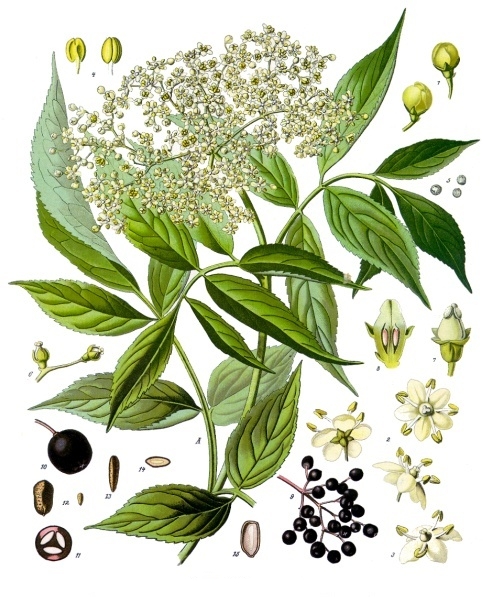
Traditionally used for fever with dry skin; fever accompanying colds and flu; children’s fevers.
Traditional uses
- For fever with dry skin (not yet sweating)—promotes sweating to help break fever
- For fever accompanying colds and flu
- For children’s fevers (gentle enough for pediatric use)
- Drink hot and go to bed covered—sweating should follow
Conditions it is used for
Fever & Infection
Immune System & General Tonics
In the old texts
While elderflower is the fever remedy, elderberry (the fruit) has distinct antiviral properties. Traditional use for colds and flu has been validated by modern research showing elderberry can inhibit viral replication and reduce duration of influenza. A 2019 meta-analysis confirmed its efficacy for upper respiratory infections.
What does the work
- Flavonoids
- Large class of polyphenolic compounds (>6000 known).
- Quercetin
- Flavonol found widely in onions, elderflower, stinging nettle, hawthorn, and many fruits and vegetables.
Combines well with
Echinacea Western herbalism
Antiviral + immune stimulant at infection onset
How: Anthocyanins and lectins (elderberry) inhibit viral neuraminidase and hemagglutinin binding; alkylamides and polysaccharides (echinacea) stimulate phagocytosis and increase TNF-alpha and IL-1 production
Cautions
- Allergic reactions Take care
Asteraceae (chamomile, echinacea, feverfew) contain sesquiterpene lactones that can trigger contact dermatitis and cross-reactive IgE-mediated responses in ragweed-sensitive individuals. - Autoimmune conditions Take care
Immunostimulant herbs (echinacea, astragalus) activate innate immunity via Dectin-1, TLR, and NF-κB pathways, potentially exacerbating autoimmune flares by amplifying self-reactive immune responses.
These are the cautions recorded for this plant, not a complete list. Doses, preparations and interactions vary; ask a pharmacist or qualified practitioner before combining a herb with medication.