What it does
Flavonol found widely in onions, elderflower, stinging nettle, hawthorn, and many fruits and vegetables. Potent antioxidant and anti-inflammatory: inhibits COX-2, LOX, and NF-κB. Mast cell stabilizer — inhibits histamine release (anti-allergic) 1. Also inhibits xanthine oxidase (anti-gout mechanism) 2. Poorly bioavailable in aglycone form; glycoside forms (rutin, quercitrin) from food are better absorbed. Water-soluble glycosides extract in tea; aglycone extracts better in alcohol. Heat-stable: survives cooking. Drying preserves quercetin well. Gut bacteria deglycosylate quercetin glycosides for absorption. Onion skins contain 10× more quercetin than flesh.
Plants that contain it

Ayurveda
Amla
Phyllanthus emblica
One of the three fruits in Triphala.
- decoction
- juice
- powder
- tea
- Used for
- 3 conditions
- Body systems
- Digestive, Respiratory +1

European · TCM Serious cautions
Burdock
Arctium lappa
Root used for skin conditions, liver support, and as a gentle detoxifying agent.
- decoction
- poultice
- tea
- tincture
- Used for
- 3 conditions
- Body systems
- Respiratory, Pain & Inflammation
European · Unani
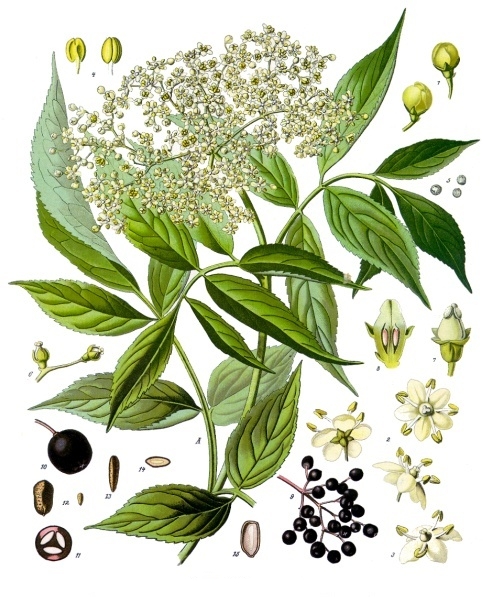
Elder Flower
Sambucus nigra
Traditionally used for fever with dry skin; fever accompanying colds and flu; children’s fevers.
- infusion
- syrup
- tea
- tincture
- Used for
- 3 conditions
- Body systems
- Fever & Infection, Immune System & General Tonics

Ayurveda Serious cautions
Moringa
Moringa oleifera
One of the most nutrient-dense plants known — every part is used medicinally.
- capsule
- oil
- powder
- tea
- Used for
- 3 conditions
- Body systems
- Digestive, Pain & Inflammation

European · Unani
Onion
Allium cepa
Traditionally used for productive cough with stuck mucus; chest congestion; an accessible kitchen remedy.
- poultice
- syrup
- Used for
- 2 conditions
- Body systems
- Respiratory, Wounds, Skin & External Conditions

European · Unani Serious cautions
Stinging Nettle
Urtica dioica
Traditionally used for osteoarthritis and inflammatory arthritis; gout; a nutritive tonic.
- decoction
- juice
- tea
- tincture
- Used for
- 7 conditions
- Body systems
- Pain & Inflammation, Circulatory +3
Research references
- Weng Z et al.. Quercetin is more effective than cromolyn in blocking human mast cell cytokine release and inhibits contact dermatitis and photosensitivity in humans. PLoS ONE, 2012.
- Cao H et al.. X-ray crystal structure of a xanthine oxidase complex with the flavonoid inhibitor quercetin. J Nat Prod, 2014.