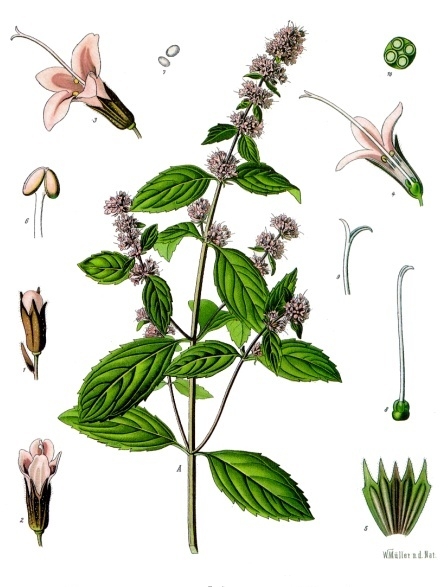
Traditionally used for nausea without acid reflux; digestive cramping; heat-related nausea.
Traditional uses
- For nausea without acid reflux: Tea as needed
- For digestive cramping: Combines anti-nausea with antispasmodic effects
- For heat-related nausea: Peppermint has cooling properties, useful in summer or fever-related nausea
Conditions it is used for
Digestive System
Respiratory System
Pain & Inflammation
Fever & Infection
In the old texts
Peppermint is a hybrid mint documented in European herbalism since the 17th century, though mint species broadly appear in earlier texts including Dioscorides and Islamic sources. It became a cornerstone of Western digestive remedies.
What does the work
- Menthol
- Cyclic monoterpene alcohol from peppermint oil.
- Volatile oils
- Complex mixtures of terpenes, terpenoids, and phenylpropanoids responsible for plant aromas and many therapeutic effects.
Combines well with
Yarrow European
Classic diaphoretic fever tea—promotes sweating from three angles
How: Sambucus flavonoids promote diaphoresis; menthol activates TRPM8 cold receptors while promoting peripheral vasodilation; achillein induces perspiration via vasodilatory action
Cautions
- Heart conditions Serious
Cardiac glycoside-containing plants (foxglove, lily of the valley) inhibit Na+/K+-ATPase; sympathomimetics (ephedra) increase cardiac workload; both carry arrhythmia risk in pre-existing cardiac disease. - Children Take care
Children have immature hepatic CYP450 enzyme systems and lower body mass, making them more susceptible to dose-dependent toxicity. Many herbs lack pediatric pharmacokinetic data. - Gallstones Take care
Cholagogue herbs (dandelion, artichoke, turmeric) stimulate bile flow via cholecystokinin release, which can mobilize gallstones and trigger biliary colic or obstruct the common bile duct. - Cooling / Cold conditions Worth knowing
Cooling herbs (peppermint, chamomile) activate TRPM8 receptors and have peripheral vasodilatory effects that may worsen cold-pattern presentations in traditional diagnostic frameworks. - GERD / Acid reflux Worth knowing
Peppermint and other carminatives relax the lower esophageal sphincter via calcium channel blockade and smooth muscle relaxation, worsening gastroesophageal reflux symptoms. - Warming / Heat conditions Worth knowing
In traditional energetic frameworks, warming herbs (ginger, cinnamon, cayenne) contain TRPV1 agonists and sympathomimetics that increase metabolic heat production, potentially aggravating inflammatory or febrile conditions.
These are the cautions recorded for this plant, not a complete list. Doses, preparations and interactions vary; ask a pharmacist or qualified practitioner before combining a herb with medication.