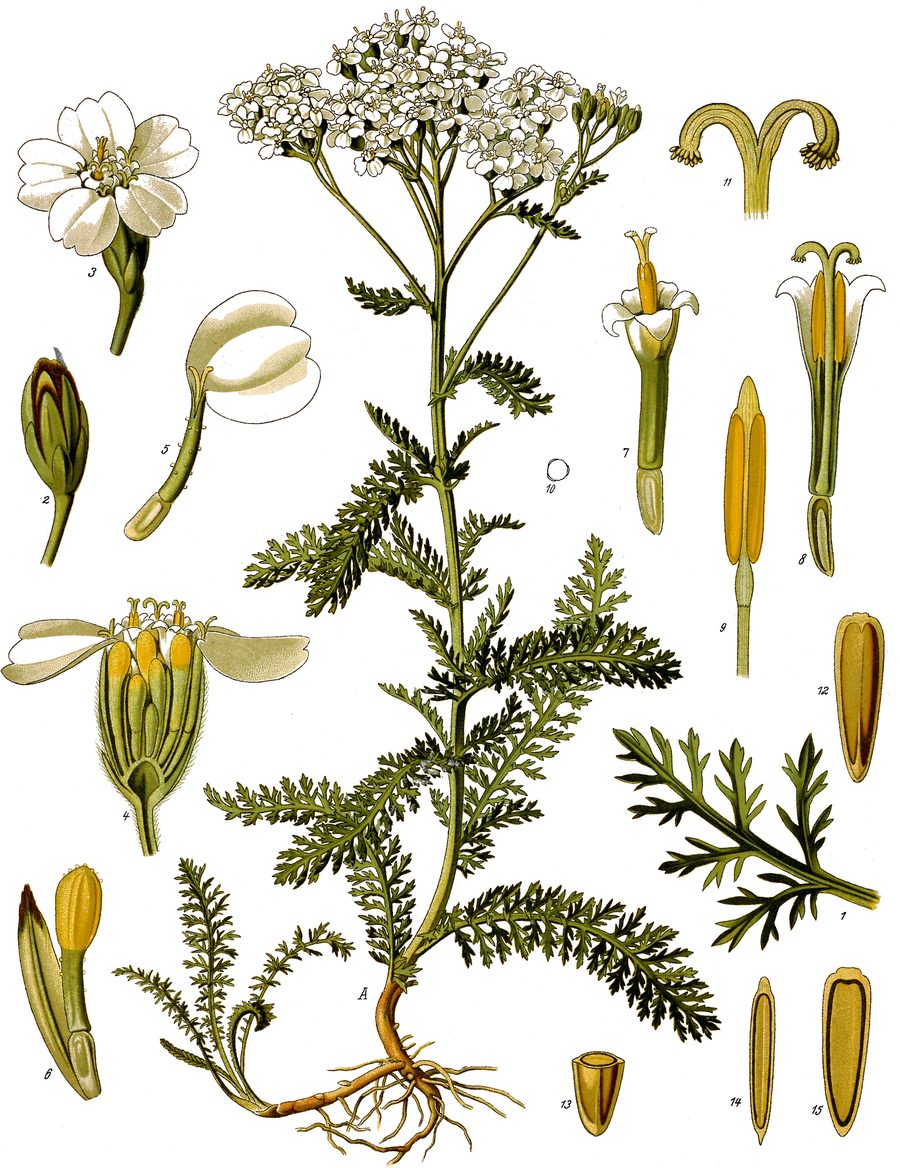
Traditionally used for fever; fever with body aches.
Traditional uses
- For fever—promotes sweating
- For fever with body aches (common cold/flu pattern)
- Also useful for heavy menstrual bleeding (different application)
- Bitter taste stimulates digestion during illness
Conditions it is used for
Fever & Infection
Wounds, Skin & External Conditions
Circulatory System
Women’s Health
In the old texts
Yarrow’s reputation as a wound herb is ancient—its Latin name Achillea references Achilles, who legendarily used it to treat his soldiers’ wounds. The common names “soldier’s woundwort” and “staunchweed” reflect centuries of battlefield use. It is both styptic (stops bleeding) and vulnerary (promotes wound healing).
What does the work
- Flavonoids
- Large class of polyphenolic compounds (>6000 known).
- Tannins
- Polyphenolic compounds that bind and precipitate proteins.
- Volatile oils
- Complex mixtures of terpenes, terpenoids, and phenylpropanoids responsible for plant aromas and many therapeutic effects.
Combines well with
Peppermint European
Classic diaphoretic fever tea—promotes sweating from three angles
How: Sambucus flavonoids promote diaphoresis; menthol activates TRPM8 cold receptors while promoting peripheral vasodilation; achillein induces perspiration via vasodilatory action
Cautions
- Blood thinners Serious
Many herbs inhibit platelet aggregation (via COX-1, thromboxane A2, or PAF pathways) or potentiate warfarin metabolism (CYP2C9/3A4 interactions), increasing bleeding risk when combined with anticoagulant drugs 1. - Drug interactions Serious
Herbs can alter drug metabolism via CYP450 induction (St. John’s wort induces CYP3A4 2) or inhibition (piperine inhibits CYP3A4 and P-glycoprotein), causing subtherapeutic or toxic drug levels. - Pregnancy Serious
Many herbs cross the placental barrier and may stimulate uterine contractions (emmenagogue/oxytocic effects) or disrupt fetal development. Alkaloids, volatile oils, and anthraquinone laxatives carry particular risk 3. - Allergic reactions Take care
Asteraceae (chamomile, echinacea, feverfew) contain sesquiterpene lactones that can trigger contact dermatitis and cross-reactive IgE-mediated responses in ragweed-sensitive individuals. - Blood pressure Take care
Herbs with ACE-inhibiting, calcium-channel-blocking, or vasodilatory activity may cause additive hypotension when combined with antihypertensive drugs, particularly in salt-depleted individuals. - Photosensitivity Worth knowing
Furanocoumarins and naphthodianthrones (hypericin from St. John’s wort) absorb UV radiation and generate reactive oxygen species in skin cells, causing phototoxic dermatitis 4.
These are the cautions recorded for this plant, not a complete list. Doses, preparations and interactions vary; ask a pharmacist or qualified practitioner before combining a herb with medication.
Research references
- Heck AM et al.. Potential interactions between alternative therapies and warfarin. Am J Health Syst Pharm, 2000.
- Moore LB et al.. St. John’s wort induces hepatic drug metabolism through activation of the pregnane X receptor. Proc Natl Acad Sci USA, 2000.
- Ernst E. Herbal medicinal products during pregnancy: are they safe?. BJOG, 2002.
- Miskovsky P. Hypericin--a new antiviral and antitumor photosensitizer: mechanism of action and interaction with biological macromolecules. Curr Drug Targets, 2002.