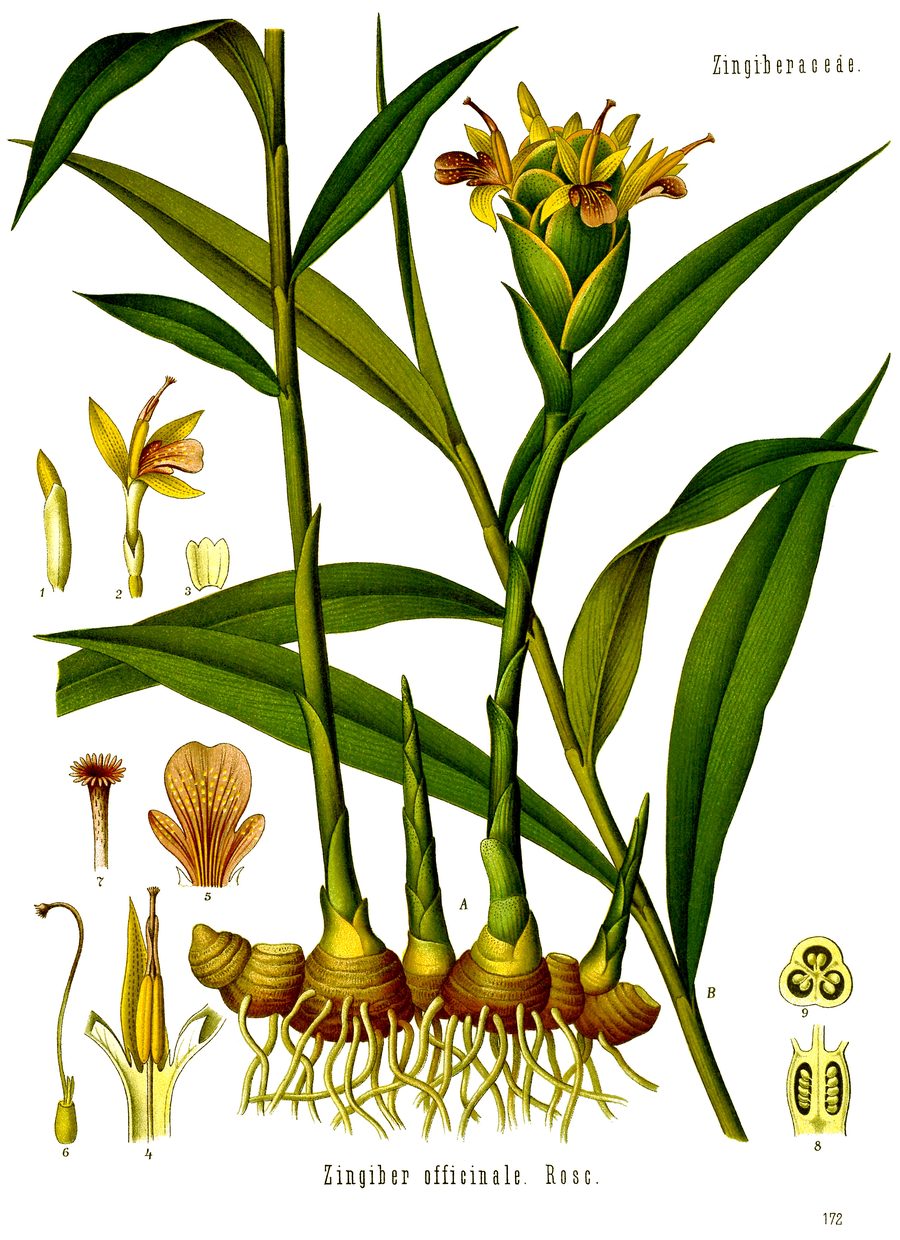
Traditionally used for acute nausea; motion sickness; pregnancy nausea.
Traditional uses
- For acute nausea: Fresh ginger tea or chewed slices
- For motion sickness: Begin 30 minutes before travel, continue as needed
- For pregnancy nausea: Small frequent doses of mild ginger tea (see cautions)
- For post-operative nausea: Documented efficacy in clinical settings
Conditions it is used for
Digestive System
Respiratory System
Pain & Inflammation
Circulatory System
Women’s Health
Emergency & Survival Priorities
In the old texts
Ginger appears in virtually every major pharmacopoeia. The Canon of Ibn Sina lists it for cold stomach conditions and nausea. Charaka classifies it among the mahakashaya (great groups) of anti-emetics. The Prophet Muhammad (peace be upon him) recommended it. Dioscorides documented its digestive properties. This cross-cultural convergence spanning 2,000+ years is remarkable.
What does the work
- Gingerol
- Phenolic ketone found in fresh ginger rhizome.
- Volatile oils
- Complex mixtures of terpenes, terpenoids, and phenylpropanoids responsible for plant aromas and many therapeutic effects.
Combines well with
Cardamom Ayurveda, Unani
Cardamom balances ginger’s heat; both anti-nausea
How: Gingerols antagonize 5-HT3 serotonin receptors (anti-emetic); 1,8-cineole (cardamom) exerts prokinetic activity; cardamom terpenes moderate ginger thermogenesis
Clove TCM, Ayurveda
Synergistic anti-nausea for cold stomach patterns
How: Gingerols block 5-HT3 receptors; eugenol inhibits COX-2 and enhances gastric motility via cholinergic pathways
Senna Unani, European
Prevents griping cramps from senna
How: Sennosides activate myenteric plexus peristalsis; gingerols and anethole provide carminative antispasmodic action, preventing excessive smooth muscle contraction
Asafoetida Ayurveda
Triple carminative for severe bloating from legumes
How: Ferulic acid derivatives (asafoetida) inhibit gas-producing bacterial enzymes; cuminaldehyde stimulates bile secretion; gingerols accelerate gastric emptying via cholinergic pathways
Cumin Ayurveda
Triple carminative for severe bloating from legumes
How: Ferulic acid derivatives (asafoetida) inhibit gas-producing bacterial enzymes; cuminaldehyde stimulates bile secretion; gingerols accelerate gastric emptying via cholinergic pathways
Honey (Raw, Unprocessed) Universal
Soothing + warming for cough; honey carries ginger’s compounds
How: Honey suppresses cough reflex via opioidergic pathways and soothes mucosa osmotically; gingerols and shogaols exert bronchodilatory and anti-tussive effects
Turmeric Ayurveda, TCM
Dual anti-inflammatory; ginger aids turmeric absorption
How: Curcumin inhibits COX-2 and NF-kB; gingerols suppress prostaglandin and leukotriene synthesis via separate binding sites; gingerols also inhibit intestinal glucuronidation, improving curcumin bioavailability
Cayenne American folk
Deep-penetrating warmth for muscular/joint pain
How: Capsaicin depletes substance P from C-fiber nociceptors (counterirritant analgesia); gingerols inhibit COX-2 locally and increase blood flow; camphor activates TRPV3 and TRPM8 channels producing analgesic warming sensation
Dong Quai TCM
Blood building with warming support
How: Ferulic acid and ligustilide (dong quai) are vasodilatory and inhibit platelet aggregation; astragaloside IV supports hematopoiesis via erythropoietin signaling; gingerols enhance peripheral circulation as a warming synergist
Astragalus TCM
Blood building with warming support
How: Ferulic acid and ligustilide (dong quai) are vasodilatory and inhibit platelet aggregation; astragaloside IV supports hematopoiesis via erythropoietin signaling; gingerols enhance peripheral circulation as a warming synergist
Cautions
- Blood thinners Serious
Many herbs inhibit platelet aggregation (via COX-1, thromboxane A2, or PAF pathways) or potentiate warfarin metabolism (CYP2C9/3A4 interactions), increasing bleeding risk when combined with anticoagulant drugs 1. - Pregnancy Serious
Many herbs cross the placental barrier and may stimulate uterine contractions (emmenagogue/oxytocic effects) or disrupt fetal development. Alkaloids, volatile oils, and anthraquinone laxatives carry particular risk 2. - Gallstones Take care
Cholagogue herbs (dandelion, artichoke, turmeric) stimulate bile flow via cholecystokinin release, which can mobilize gallstones and trigger biliary colic or obstruct the common bile duct. - Surgery Take care
Herbs affecting coagulation (garlic, ginkgo, ginger inhibit platelet aggregation) or anesthesia metabolism (kava, valerian potentiate sedatives) should be discontinued 2–3 weeks before elective surgery. - GERD / Acid reflux Worth knowing
Peppermint and other carminatives relax the lower esophageal sphincter via calcium channel blockade and smooth muscle relaxation, worsening gastroesophageal reflux symptoms. - Warming / Heat conditions Worth knowing
In traditional energetic frameworks, warming herbs (ginger, cinnamon, cayenne) contain TRPV1 agonists and sympathomimetics that increase metabolic heat production, potentially aggravating inflammatory or febrile conditions.
These are the cautions recorded for this plant, not a complete list. Doses, preparations and interactions vary; ask a pharmacist or qualified practitioner before combining a herb with medication.
Research references
- Heck AM et al.. Potential interactions between alternative therapies and warfarin. Am J Health Syst Pharm, 2000.
- Ernst E. Herbal medicinal products during pregnancy: are they safe?. BJOG, 2002.