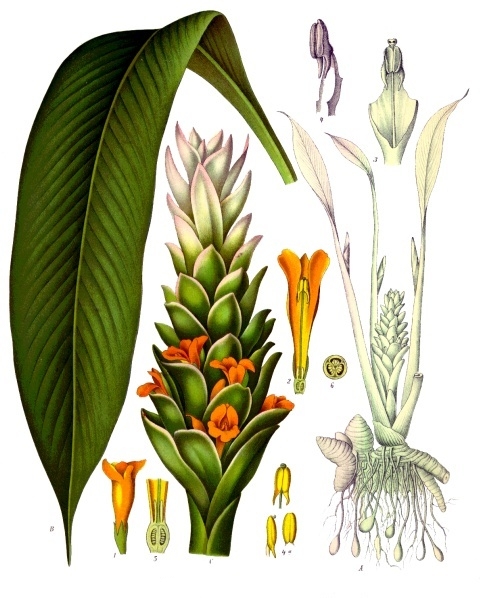
Traditionally used for sore throat with inflammation; respiratory infections; voice strain and hoarseness.
Traditional uses
- For sore throat with inflammation
- For respiratory infections—antimicrobial and anti-inflammatory
- For voice strain and hoarseness
- As a general anti-inflammatory support during illness
Note on Black Pepper: Adding black pepper dramatically increases curcumin absorption—traditional formulations often include it.
Conditions it is used for
Respiratory System
Pain & Inflammation
Eye Conditions
In the old texts
Turmeric is one of the most documented medicinal spices. Ayurveda uses it extensively for inflammation, infection, and respiratory conditions. Its bright yellow color comes from curcumin, a potent anti-inflammatory compound documented in both traditional and modern contexts.
What does the work
Combines well with
Boswellia Ayurveda
Complementary anti-inflammatory pathways (COX + LOX inhibition)
How: Curcumin inhibits COX-2 and NF-kB transcription factor; AKBA (acetyl-11-keto-beta-boswellic acid) selectively inhibits 5-lipoxygenase; dual pathway blockade reduces both prostaglandins and leukotrienes simultaneously
Ginger Ayurveda, TCM
Dual anti-inflammatory; ginger aids turmeric absorption
How: Curcumin inhibits COX-2 and NF-kB; gingerols suppress prostaglandin and leukotriene synthesis via separate binding sites; gingerols also inhibit intestinal glucuronidation, improving curcumin bioavailability
Amla Ayurveda
Enhanced anti-inflammatory; vitamin C improves curcumin stability
How: Ascorbic acid (amla) protects curcumin from oxidative degradation in the GI tract; ellagic acid and curcumin both inhibit NF-κB via different binding sites; amla’s tannins slow gastric emptying, increasing curcumin contact time
Cautions
- Blood thinners Serious
Many herbs inhibit platelet aggregation (via COX-1, thromboxane A2, or PAF pathways) or potentiate warfarin metabolism (CYP2C9/3A4 interactions), increasing bleeding risk when combined with anticoagulant drugs 1. - Gallstones Take care
Cholagogue herbs (dandelion, artichoke, turmeric) stimulate bile flow via cholecystokinin release, which can mobilize gallstones and trigger biliary colic or obstruct the common bile duct. - GI upset Worth knowing
Many herbs cause dose-dependent gastrointestinal irritation via direct mucosal contact (capsaicin, volatile oils), osmotic effects (saponins), or stimulation of gastric acid secretion (bitters).
These are the cautions recorded for this plant, not a complete list. Doses, preparations and interactions vary; ask a pharmacist or qualified practitioner before combining a herb with medication.
Research references
- Heck AM et al.. Potential interactions between alternative therapies and warfarin. Am J Health Syst Pharm, 2000.