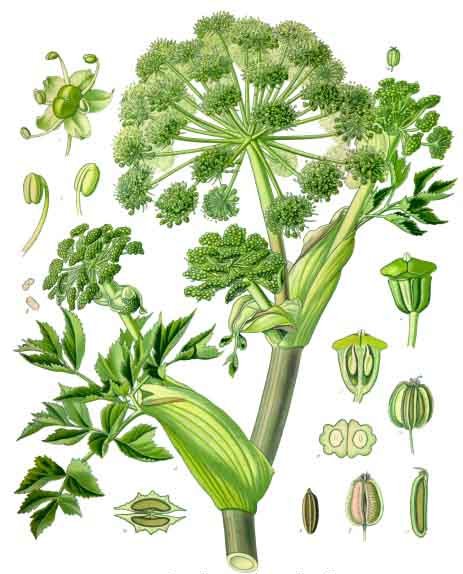
Traditionally used for blood deficiency/anemia; post-menstrual and postpartum blood building; pale complexion, fatigue, dizziness.
Traditional uses
- For blood deficiency/anemia
- For post-menstrual and postpartum blood building
- For pale complexion, fatigue, dizziness (blood deficiency pattern)
- Usually in combination with other herbs
Conditions it is used for
Circulatory System
Women’s Health
In the old texts
Dong quai is one of the most important blood tonics in TCM, traditionally used for “blood deficiency” patterns that overlap with anemia. It is particularly associated with women’s health but used for both sexes. It is typically used in combination formulas rather than alone.
What does the work
- Volatile oils
- Complex mixtures of terpenes, terpenoids, and phenylpropanoids responsible for plant aromas and many therapeutic effects.
Combines well with
Astragalus TCM
Blood building with warming support
How: Ferulic acid and ligustilide (dong quai) are vasodilatory and inhibit platelet aggregation; astragaloside IV supports hematopoiesis via erythropoietin signaling; gingerols enhance peripheral circulation as a warming synergist
Ginger TCM
Blood building with warming support
How: Ferulic acid and ligustilide (dong quai) are vasodilatory and inhibit platelet aggregation; astragaloside IV supports hematopoiesis via erythropoietin signaling; gingerols enhance peripheral circulation as a warming synergist
Cautions
- Blood thinners Serious
Many herbs inhibit platelet aggregation (via COX-1, thromboxane A2, or PAF pathways) or potentiate warfarin metabolism (CYP2C9/3A4 interactions), increasing bleeding risk when combined with anticoagulant drugs 1. - Pregnancy Serious
Many herbs cross the placental barrier and may stimulate uterine contractions (emmenagogue/oxytocic effects) or disrupt fetal development. Alkaloids, volatile oils, and anthraquinone laxatives carry particular risk 2. - Surgery Take care
Herbs affecting coagulation (garlic, ginkgo, ginger inhibit platelet aggregation) or anesthesia metabolism (kava, valerian potentiate sedatives) should be discontinued 2–3 weeks before elective surgery. - Photosensitivity Worth knowing
Furanocoumarins and naphthodianthrones (hypericin from St. John’s wort) absorb UV radiation and generate reactive oxygen species in skin cells, causing phototoxic dermatitis 3.
These are the cautions recorded for this plant, not a complete list. Doses, preparations and interactions vary; ask a pharmacist or qualified practitioner before combining a herb with medication.
Research references
- Heck AM et al.. Potential interactions between alternative therapies and warfarin. Am J Health Syst Pharm, 2000.
- Ernst E. Herbal medicinal products during pregnancy: are they safe?. BJOG, 2002.
- Miskovsky P. Hypericin--a new antiviral and antitumor photosensitizer: mechanism of action and interaction with biological macromolecules. Curr Drug Targets, 2002.