
Crop 002 / Phaseolus vulgaris

Two harvests from one warm-season crop.

Grow common beans for crisp snap pods or let the seeds mature for the pantry. Choose a type that fits your season, sow after frost, and give the plants steady moisture as flowers become pods.

One species, two harvests
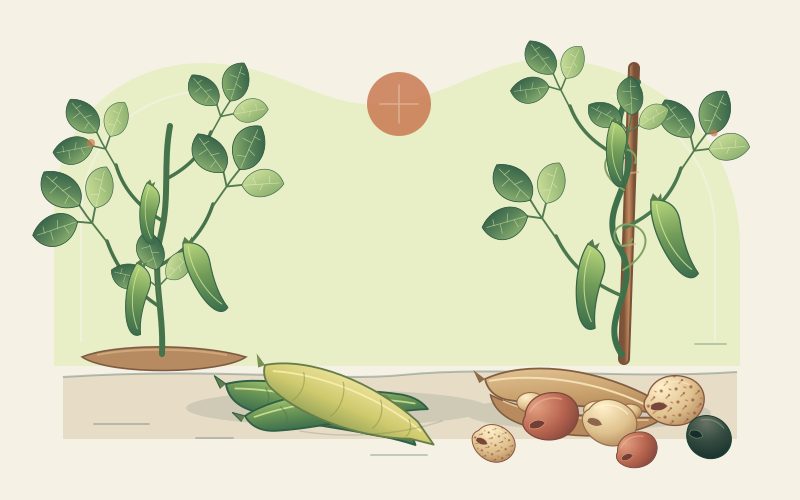
Snap or dry Pick young pods whole or mature seeds for storage.
Typical crop window
50–110 days Type, variety and weather determine maturity.
Season
Warm and frost-free Cold soil and frost can check or kill plants.
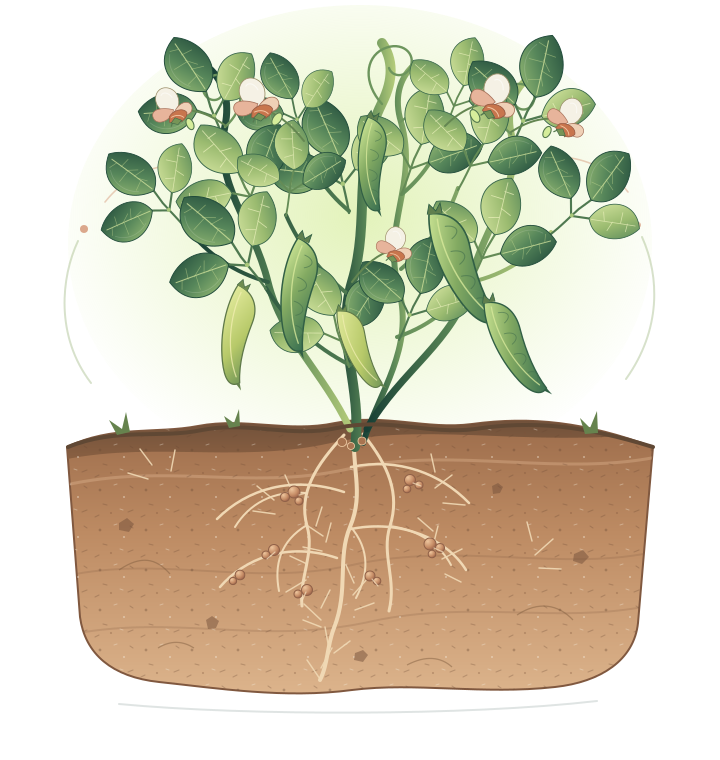
Common bean plant with compound leaves, flowers, hanging green pods and a root system with nodules.
Compound leaves and pods grow above ground; compatible bacteria can inhabit nodules on the roots below.

Know the crop

Crop profile

Common bean, Phaseolus vulgaris, includes both snap and dry types; this page does not generalise to every legume species.

Crop essentials

Growth
50–110 days Snap types are usually ready first; dry types need longer to mature and dry on the plant.
Family
Fabaceae, the legume family
Origin
The Americas, with independent domestication in Mesoamerica and the Andean region
Habit
Warm-season annual, with bush and climbing pole forms

Nutrition, in context

Nutrient density: High (editorial rank 3 of 4). This is Rooted’s qualitative category for cooked-food protein, fibre, folate, iron and potassium density, not an official nutritional score.

Reference nutrients per 100 g mature black common beans, boiled without salt
Nutrient Amount
Protein 8.9 g
Fibre 8.7 g
Folate 149 µg
Iron 2.1 mg
Potassium 355 mg

Basis: USDA FoodData Central reference values for black beans, rounded where appropriate. Values vary by variety and preparation; this example does not describe raw beans or every bean cultivar.

Pair beans across the day

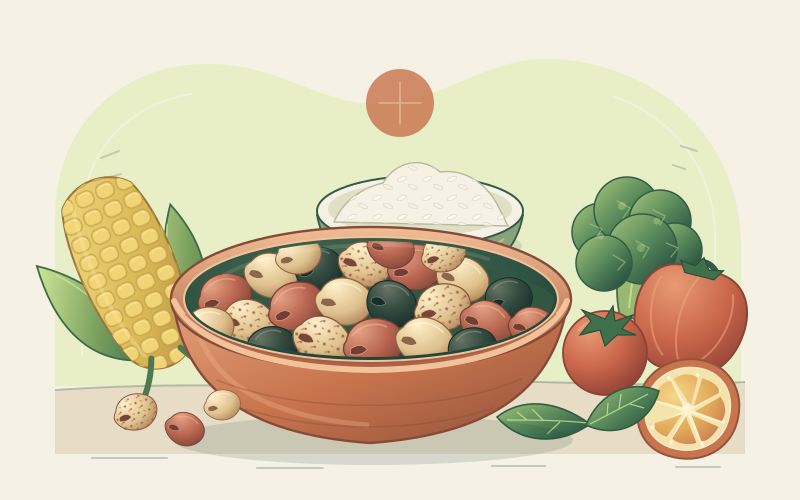
  • Add grains for complementary amino-acid patterns. Beans and grains such as maize, rice or wheat have different essential-amino-acid strengths. Eating a variety across the day is enough; they do not need to be combined in the same meal.
  • Include vitamin-C-rich produce. Peppers, broccoli, tomatoes, citrus fruit or berries alongside beans can support absorption of their non-heme iron.
  • Build variety, not a rigid formula. Other vegetables, herbs and varied protein foods make bean-based meals flexible and satisfying without a prescribed pairing ratio.

The essentials

From warm soil to full pods

Six practical stages. Adapt the timing and variety to your frost-free season, rainfall and intended harvest.

  1. Choose the form and harvest

    Pick compact bush plants or climbing pole plants, then choose a snap type for tender young pods or a dry type for mature seed. Check the stated days to maturity against your season.

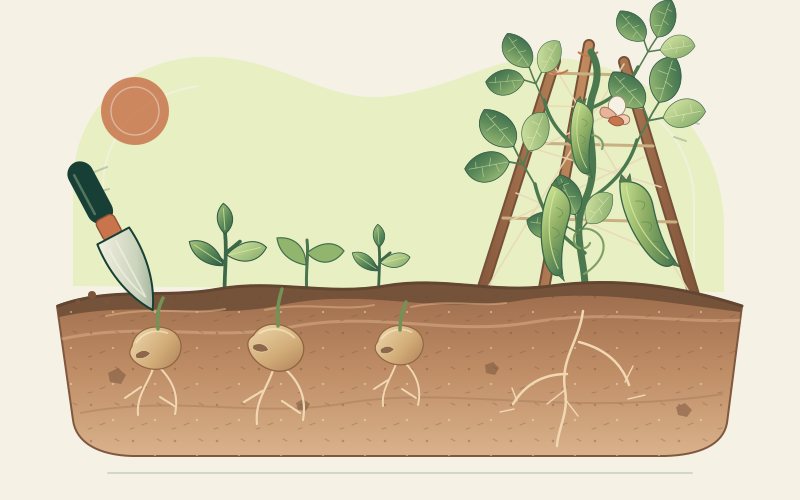
  2. Direct sow after frost

    Sow where the crop will grow once frost risk has passed and soil has warmed to about 16 °C or more. Cold, wet soil can rot seed; beans usually transplant poorly.

  3. Space plants and add support

    Sow about 3–5 cm deep. Space bush beans roughly 10–15 cm apart and pole beans 15–20 cm apart, following the seed packet. Install sturdy poles, a trellis or a teepee at sowing so plant roots are not disturbed later.

  4. Feed moderately

    Too much nitrogen can favour leaves over pods. Compatible rhizobium bacteria in root nodules can fix atmospheric nitrogen, although results vary with soil and conditions; a common-bean inoculant may help where those bacteria are absent, but it does not replace balanced soil fertility.

  5. Water through flowering

    Keep moisture consistent, especially during flowering and pod set, without waterlogging the roots. Water the soil rather than routinely wetting foliage, and mulch established plants to reduce evaporation.

  6. Pick, dry and store safely

    Pick snap pods while tender, before the seeds bulge. For dry beans, harvest mature pods before prolonged wet weather and let seeds dry fully before storing them in a cool, dry, sealed container. Discard mouldy seed, and never eat dry beans raw; kidney beans in particular require thorough soaking and boiling.

Growing notes by place

Read your region, then read your weather

Compare broad growing conditions, then adjust for your own frost dates, altitude, rainfall and soil.

Cool temperate · maritime to continental

North-western Europe

Common beans need the warm, frost-free part of the year. Bush snap types are dependable in many gardens; dry types need an early variety and enough warm autumn time for the seed to mature and dry.

Indicative planting
May to early June, after local frost risk and once soil has warmed; later in cold or upland districts
Indicative harvest
Snap pods from July to September; dry beans from August to October, before prolonged autumn wet weather
Soil and moisture
Fertile and free-draining, with consistent moisture during flowering and pod set but no waterlogging

Field note: Choose an early variety in a short season, and use a sheltered sowing site or temporary cover to warm the soil without delaying frost-safe planting.
Dates are indicative. Local frost forecasts, soil temperature and recent weather—not the calendar alone—should guide sowing and harvest.

Cool-temperate Northern Hemisphere · example

A warm-season rhythm

A compact planning guide, not a fixed schedule. Shift it with latitude, altitude, variety and local conditions.

  1. April–May

    Prepare a sheltered, free-draining bed and install supports for pole types. Wait for warm soil rather than sowing by date alone.

  2. May–June

    Direct sow after local frost risk; make a small second sowing of snap beans where the remaining season allows.

  3. June–August

    Guide pole growth onto supports, weed carefully and maintain even moisture through flowering and pod set.

  4. July–October

    Pick snap pods regularly. Leave dry types to mature, then harvest and finish drying seed before damp autumn weather.

In a short or cool, wet season, early bush snap types are often easier than dry beans, which need additional time for mature seed to dry safely.

From the field journal

Plan, pick and pair your beans

Practical reading for growing common beans, choosing between snap and dry types, and building balanced meals.

Your next harvest begins here

Start with the harvest you want.

A short row of snap beans or a small patch for drying is enough to learn the crop. Match the type to your season and keep notes from the first flower onward.

Open the growing guide