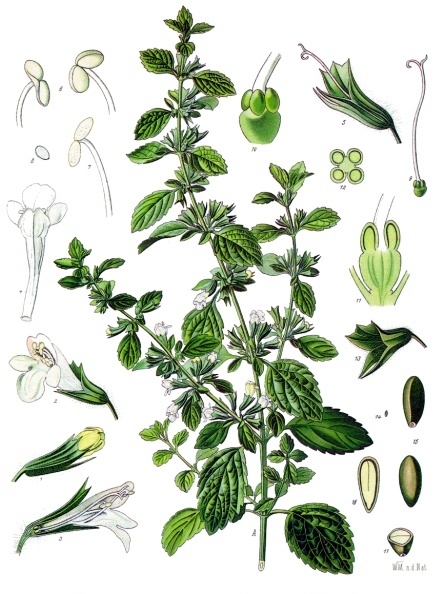
Traditionally used for viral infections generally; herpes simplex; viral infections with anxiety or sleep disturbance.
Traditional uses
- For viral infections generally
- For herpes simplex (cold sores)—topical application can speed healing and reduce recurrence
- For viral infections with anxiety or sleep disturbance (nervine properties)
- For digestive upset during viral illness
Conditions it is used for
Fever & Infection
Nervous System & Mental State
In the old texts
Lemon balm has been used in European and Middle Eastern medicine since ancient times—Dioscorides mentioned it. Avicenna recommended it for the heart and to lift the spirits. Modern research has focused on its antiviral activity, particularly against herpes simplex virus, and its calming effects.
What does the work
- Flavonoids
- Large class of polyphenolic compounds (>6000 known).
- Rosmarinic acid
- Phenolic acid ester found in rosemary, lemon balm, sage, holy basil, and many Lamiaceae.
- Volatile oils
- Complex mixtures of terpenes, terpenoids, and phenylpropanoids responsible for plant aromas and many therapeutic effects.
Combines well with
Valerian Western herbalism
Triple nervine for anxiety with sleep disturbance
How: Valerenic acid modulates GABA-A receptors; chrysin and apigenin (passionflower) act as partial agonists at the benzodiazepine binding site; rosmarinic acid (lemon balm) inhibits GABA-transaminase, increasing synaptic GABA concentration
Passionflower Western herbalism
Triple nervine for anxiety with sleep disturbance
How: Valerenic acid modulates GABA-A receptors; chrysin and apigenin (passionflower) act as partial agonists at the benzodiazepine binding site; rosmarinic acid (lemon balm) inhibits GABA-transaminase, increasing synaptic GABA concentration
Chamomile European
Gentle calming tea safe for children and sensitive people
How: Apigenin (chamomile) binds GABA-A benzodiazepine receptors with anxiolytic effect; rosmarinic acid (lemon balm) inhibits GABA-transaminase; linalool (lavender) modulates glutamate binding at NMDA receptors—triple anxiolytic via three distinct molecular targets
Lavender European
Gentle calming tea safe for children and sensitive people
How: Apigenin (chamomile) binds GABA-A benzodiazepine receptors with anxiolytic effect; rosmarinic acid (lemon balm) inhibits GABA-transaminase; linalool (lavender) modulates glutamate binding at NMDA receptors—triple anxiolytic via three distinct molecular targets
Cautions
- Drug interactions Serious
Herbs can alter drug metabolism via CYP450 induction (St. John’s wort induces CYP3A4 1) or inhibition (piperine inhibits CYP3A4 and P-glycoprotein), causing subtherapeutic or toxic drug levels. - Thyroid conditions Take care
Goitrogens (isothiocyanates from cruciferous plants) inhibit thyroid peroxidase, reducing iodine organification and T4 synthesis. Bugleweed directly suppresses TSH and peripheral T4-to-T3 conversion. - Sedation Worth knowing
GABAergic herbs (valerian, kava, passionflower) potentiate GABA-A receptor activity, producing additive sedation when combined with benzodiazepines, barbiturates, or alcohol 2.
These are the cautions recorded for this plant, not a complete list. Doses, preparations and interactions vary; ask a pharmacist or qualified practitioner before combining a herb with medication.
Research references
- Moore LB et al.. St. John’s wort induces hepatic drug metabolism through activation of the pregnane X receptor. Proc Natl Acad Sci USA, 2000.
- Khom S et al.. Valerenic acid potentiates and inhibits GABA(A) receptors: molecular mechanism and subunit specificity. Neuropharmacology, 2007.