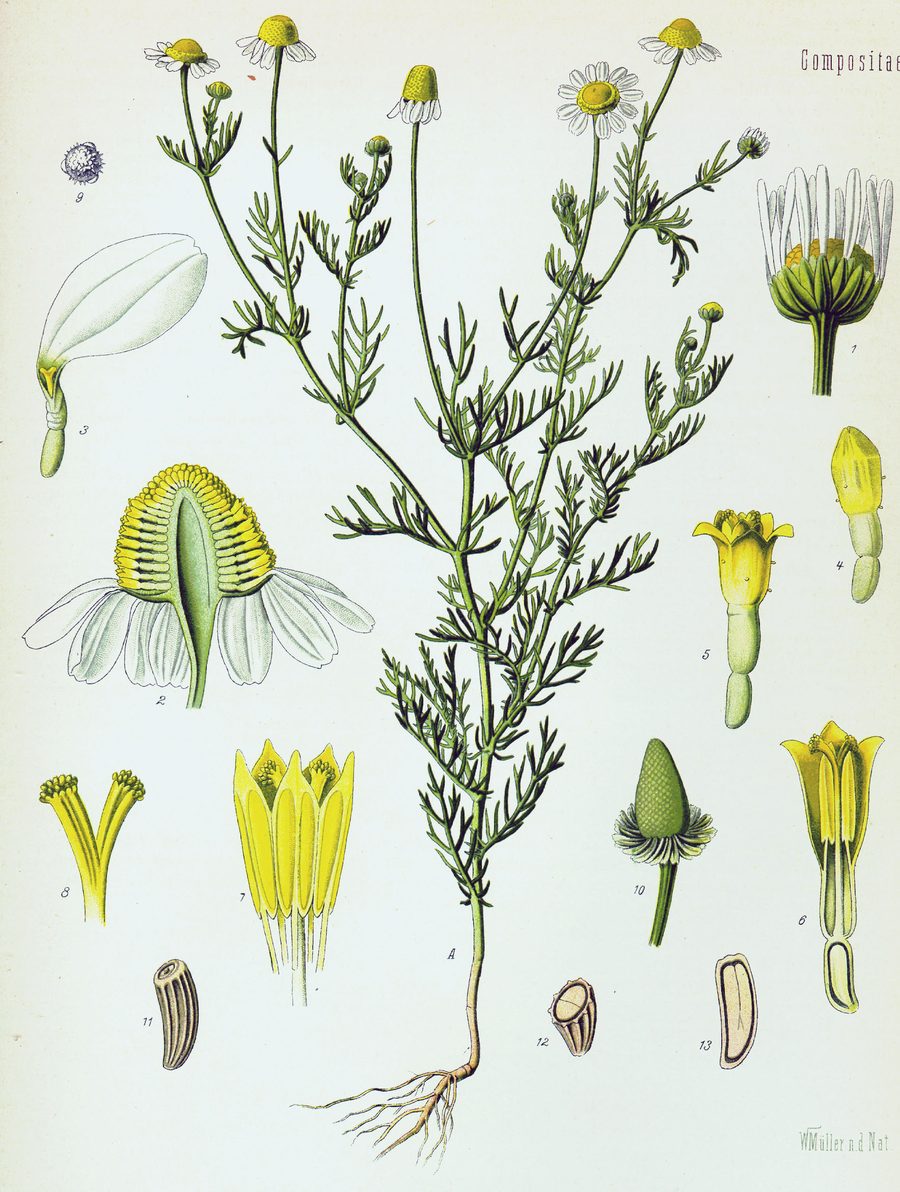
Traditionally used for eczema and dermatitis; irritated, inflamed skin; diaper rash.
Traditional uses
- For eczema and dermatitis
- For irritated, inflamed skin
- For diaper rash (traditional)
- For wound healing (see 5.1)
Conditions it is used for
Wounds, Skin & External Conditions
Nervous System & Mental State
Eye Conditions
In the old texts
Chamomile has been used for skin conditions since ancient Egypt. Dioscorides recommended it. Its anti-inflammatory and soothing properties are well-documented. German chamomile contains chamazulene, which gives chamomile oil its blue color and contributes to anti-inflammatory effects.
What does the work
- Chamazulene
- Sesquiterpene not present in fresh chamomile — formed during steam distillation from matricin (a sesquiterpene lactone) via heat-induced decomposition 1.
Combines well with
Lemon Balm European
Gentle calming tea safe for children and sensitive people
How: Apigenin (chamomile) binds GABA-A benzodiazepine receptors with anxiolytic effect; rosmarinic acid (lemon balm) inhibits GABA-transaminase; linalool (lavender) modulates glutamate binding at NMDA receptors—triple anxiolytic via three distinct molecular targets
Lavender European
Gentle calming tea safe for children and sensitive people
How: Apigenin (chamomile) binds GABA-A benzodiazepine receptors with anxiolytic effect; rosmarinic acid (lemon balm) inhibits GABA-transaminase; linalool (lavender) modulates glutamate binding at NMDA receptors—triple anxiolytic via three distinct molecular targets
Cautions
- Allergic reactions Take care
Asteraceae (chamomile, echinacea, feverfew) contain sesquiterpene lactones that can trigger contact dermatitis and cross-reactive IgE-mediated responses in ragweed-sensitive individuals.
These are the cautions recorded for this plant, not a complete list. Doses, preparations and interactions vary; ask a pharmacist or qualified practitioner before combining a herb with medication.
Research references
- Ramadan M et al.. Chamazulene carboxylic acid and matricin: a natural profen and its natural prodrug. J Nat Prod, 2006.