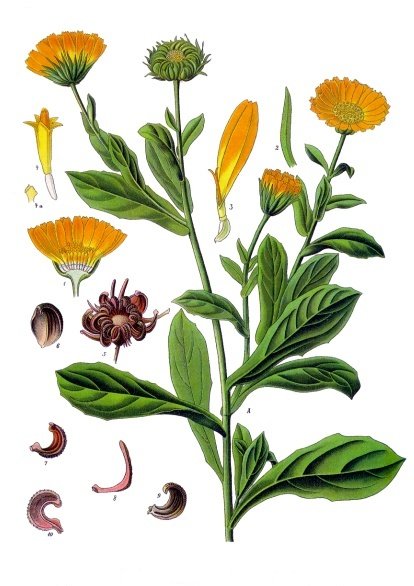
Traditionally used for wounds in healing phase; minor cuts and abrasions; surgical wounds and episiotomy healing.
Traditional uses
- For wounds in healing phase—promotes tissue regeneration
- For minor cuts and abrasions
- For surgical wounds and episiotomy healing (traditional use)
- For burns (see 5.2)
- For skin conditions generally—versatile skin healer
Conditions it is used for
Wounds, Skin & External Conditions
Eye Conditions
In the old texts
Calendula has been used in European medicine since at least the 12th century. It was a standard wound remedy during the American Civil War when other supplies were scarce. Its bright orange flowers contain compounds that promote tissue regeneration and have antimicrobial properties. It remains one of the most widely used wound-healing herbs.
What does the work
- Flavonoids
- Large class of polyphenolic compounds (>6000 known).
Cautions
- Pregnancy Serious
Many herbs cross the placental barrier and may stimulate uterine contractions (emmenagogue/oxytocic effects) or disrupt fetal development. Alkaloids, volatile oils, and anthraquinone laxatives carry particular risk 1. - Allergic reactions Take care
Asteraceae (chamomile, echinacea, feverfew) contain sesquiterpene lactones that can trigger contact dermatitis and cross-reactive IgE-mediated responses in ragweed-sensitive individuals.
These are the cautions recorded for this plant, not a complete list. Doses, preparations and interactions vary; ask a pharmacist or qualified practitioner before combining a herb with medication.
Research references
- Ernst E. Herbal medicinal products during pregnancy: are they safe?. BJOG, 2002.