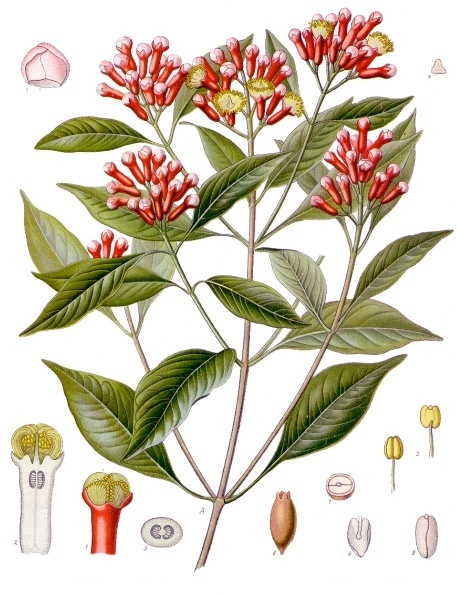
Traditionally used for nausea with cold stomach; vomiting that is watery or clear.
Traditional uses
- For nausea with cold stomach (desire for warm drinks, pallor)
- For vomiting that is watery or clear
- Combined with other warming spices for digestive weakness
Conditions it is used for
Digestive System
Pain & Inflammation
Oral & Dental Health
In the old texts
Cloves were among the most valuable spices in ancient trade. Ibn Sina documented their warming, digestive properties. TCM uses them for “rebellious stomach Qi”—the pattern of energy moving upward causing nausea and vomiting.
What does the work
- Eugenol
- Phenylpropanoid found in clove buds, holy basil, and cinnamon leaf oil.
- Volatile oils
- Complex mixtures of terpenes, terpenoids, and phenylpropanoids responsible for plant aromas and many therapeutic effects.
Combines well with
Ginger TCM, Ayurveda
Synergistic anti-nausea for cold stomach patterns
How: Gingerols block 5-HT3 receptors; eugenol inhibits COX-2 and enhances gastric motility via cholinergic pathways
Cautions
- Blood thinners Serious
Many herbs inhibit platelet aggregation (via COX-1, thromboxane A2, or PAF pathways) or potentiate warfarin metabolism (CYP2C9/3A4 interactions), increasing bleeding risk when combined with anticoagulant drugs 1. - Pregnancy Serious
Many herbs cross the placental barrier and may stimulate uterine contractions (emmenagogue/oxytocic effects) or disrupt fetal development. Alkaloids, volatile oils, and anthraquinone laxatives carry particular risk 2. - GERD / Acid reflux Worth knowing
Peppermint and other carminatives relax the lower esophageal sphincter via calcium channel blockade and smooth muscle relaxation, worsening gastroesophageal reflux symptoms. - Warming / Heat conditions Worth knowing
In traditional energetic frameworks, warming herbs (ginger, cinnamon, cayenne) contain TRPV1 agonists and sympathomimetics that increase metabolic heat production, potentially aggravating inflammatory or febrile conditions.
These are the cautions recorded for this plant, not a complete list. Doses, preparations and interactions vary; ask a pharmacist or qualified practitioner before combining a herb with medication.
Research references
- Heck AM et al.. Potential interactions between alternative therapies and warfarin. Am J Health Syst Pharm, 2000.
- Ernst E. Herbal medicinal products during pregnancy: are they safe?. BJOG, 2002.