
Crop 055 / Thymus vulgaris

Give thyme sun, air and a dry footing.

Grow this small Mediterranean perennial in full sun and sharply drained soil. Pick leafy shoots without stripping the plant, trim lightly after flowering, and leave some blossom for bees and other pollinators.

Perennial establishment
Build a leafy young plant A rooted plant establishes faster than seed; do not demand a heavy first harvest from either.
First light harvest
About 3 months–1 year Light first-season picking may follow about three months of growth from a rooted plant; seed-grown thyme can need about a year.
Season
Evergreen, not invulnerable Best new growth comes in spring and summer; winter wet, deep shade and hard pruning into old wood can shorten its life.
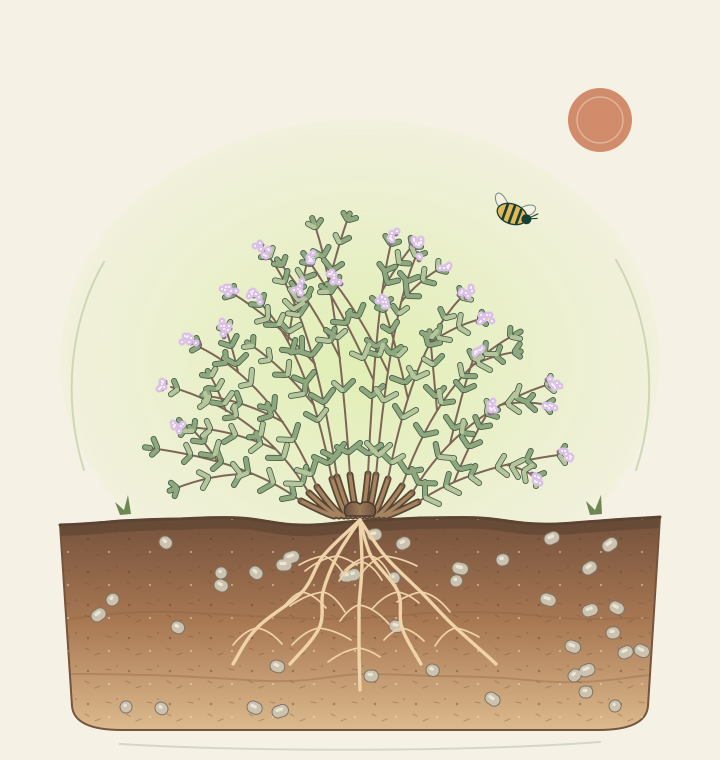
Common thyme with a woody base, many small opposite grey-green leaves, pale lilac flowers and branching roots in gritty, free-draining soil.
Common thyme is a low woody perennial: leafy shoots and pollinator flowers rise above a crown that needs sun and sharp drainage.

Know the crop

Crop profile

A small, woody evergreen perennial grown for aromatic culinary leaves and tender shoots. This entry concerns common thyme, Thymus vulgaris. Full sun and drainage drive success; light pruning preserves a compact plant, and summer flowers feed pollinators. A rooted plant may give light first-season pickings, while seed-grown thyme can need about a year to establish.

Crop essentials

Botanical name
Thymus vulgaris
Growth
First light harvest: about 3 months–1 year A healthy rooted plant may allow light picking after about three months of active growth, while thyme grown from seed can take about a year to become established enough to harvest. Do not strip a young plant; winter cold, wet soil, shade and weak growth can delay harvest.
Family
Lamiaceae
Origin
Southern Europe and the western Mediterranean
Habit
Low, bushy evergreen perennial subshrub with a woody base

Nutrition / fresh raw thyme

Nutrition, in context

High Editorial nutrient-density rank 3. This is Rooted’s qualitative category for protein, fibre, folate, iron and potassium in the site’s food comparison, with highlights adding context. It is not an official nutritional score or a promise of a health outcome.

Approximate values per 100 g fresh raw thyme, edible portion.
Nutrient Amount
Protein5.56 g
Fibre14 g
Folate45 µg
Iron17.45 mg
Potassium609 mg
  • The 100 g fresh reference contains vitamin C (160.1 mg), calcium (405 mg) and substantial iron and potassium by weight.
  • Thyme is normally eaten in teaspoon or sprig quantities, so a culinary portion supplies only a small fraction of the per-100-g amounts.
  • Fresh and dried thyme are not directly interchangeable per 100 g: drying removes water and concentrates nutrients and flavour by weight.

Basis: Approximate values per 100 g fresh raw thyme (Thymus vulgaris), edible portion (USDA FoodData Central SR Legacy 173470). View the USDA reference.

These figures describe fresh raw thyme, not cooked thyme, dried thyme, thyme tea or essential oil. The large reference amount is useful for comparison but is not a realistic serving. Refrigerate fresh cut herbs at 4°C (40°F) or below and dry only clean, sound sprigs thoroughly before airtight storage. Nutrient content does not show absorption or individual dietary needs.

At the table

Use thyme as a culinary herb

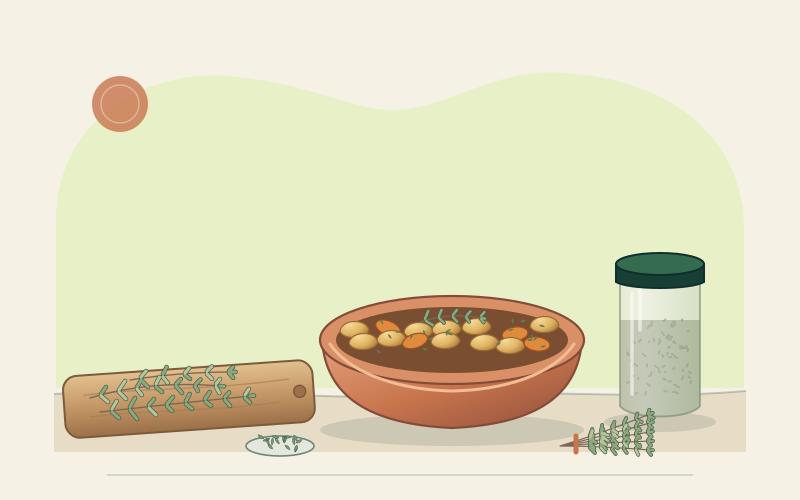
  • Beans, lentils and tomatoes — A varied savoury meal: Thyme adds aroma to protein- and fibre-containing pulses and vegetables without making the herb the meal’s nutritional centre. Tomatoes or a lemon finish also add vitamin C alongside the non-heme iron in plant foods. Simmer thyme with white beans, tomatoes and carrots, then remove any tough woody stems before serving.
  • Potatoes, squash, mushrooms or grains — Everyday culinary flavour: Fresh or dried thyme seasons roasted vegetables, mushroom dishes, rice and other grains. Use it as one flavour in a varied meal rather than as a health supplement. Add chopped thyme leaves to roasted potatoes and squash, or infuse a sprig in a mushroom barley soup.
  • Eggs, fish, chicken or tofu — Flexible protein pairing: Thyme works with many protein-containing foods and marinades. Choose according to dietary preferences and safe cooking practices; no single pairing is required. Use thyme with lemon on tofu or fish, or add a small amount to a vegetable omelette.

The essentials

From young plant to fragrant sprig

Six practical stages for Thymus vulgaris. Adapt propagation, watering, pruning and harvest to your climate and local growing advice.

  1. Choose sun and drainage before fertility

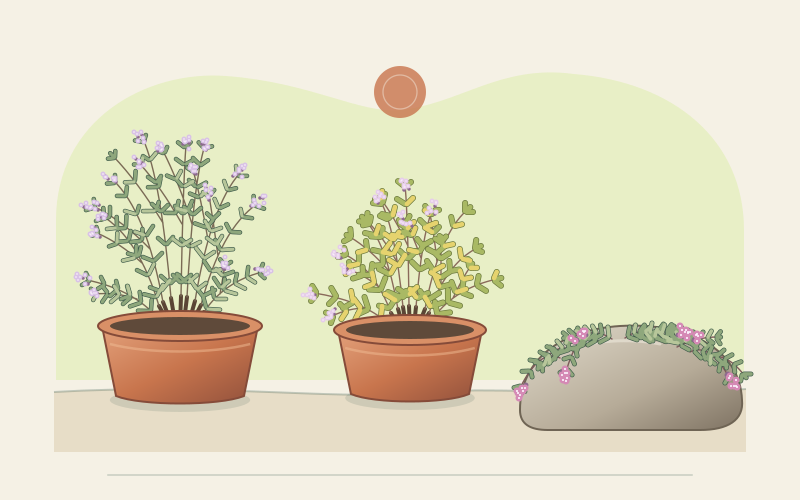
    Select the warmest, brightest practical spot with air movement and soil that never stays saturated. Common thyme suits light, rocky or sandy ground of modest fertility. On heavy or winter-wet soil, use a raised bed or a container with ample drainage holes and gritty peat-free compost. Avoid deep shade, crowded neighbouring plants and rich feeding that encourages soft, floppy growth.

  2. Start with a plant, or allow seed more time

    A healthy rooted plant, cutting or division is the quickest route to a known culinary type. Plant in locally mild, workable conditions after hardening off, at the same depth as before, with about 20–30 cm (8–12 in) between compact plants. For seed, sow thinly indoors in spring on moist compost at about 15–20°C, leaving the tiny seeds uncovered. Pot on sturdy seedlings and expect roughly a year of establishment before harvest.

  3. Water establishment, not a wet routine

    Water new plants thoroughly when the root zone begins to dry, adjusting for rain, heat and soil. Established garden thyme tolerates dry periods but is not independent of water during prolonged drought; containers and young plants need closer checks. Avoid frequent shallow sprinkling and never let the crown sit in water. A thin gravel mulch can lift low shoots from damp soil, but keep wet organic mulch away from the crown.

  4. Prune leafy growth and plan renewal

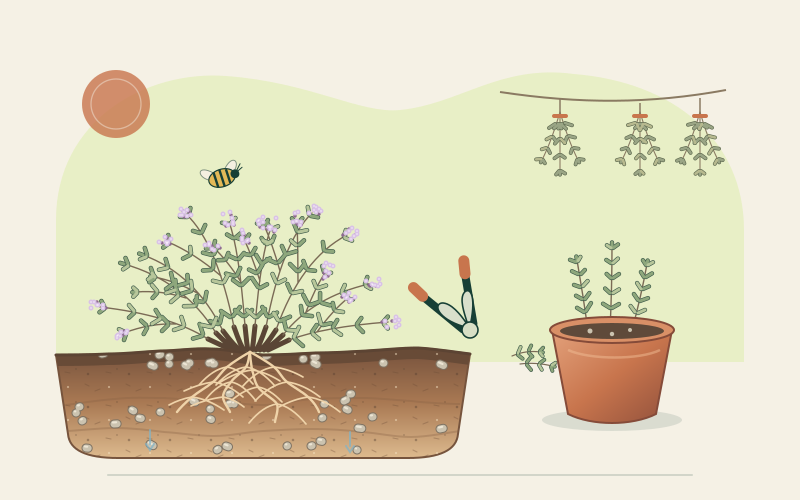
    Regular light picking helps keep plants bushy. Trim shrubby thyme lightly in mid- to late spring or soon after flowering, following green leafy shoots rather than cutting hard into leafless old wood, which may not reshoot. Leave some flowers if you want a pollinator display. Older plants eventually become straggly; take softwood or semi-ripe cuttings, or layer a low stem, so a rooted replacement is ready.

  5. Share the flowers and pick with restraint

    Harvest young shoots once a plant is established, ideally in a dry morning after dew has gone. Leave plenty of foliage and several inches of growth rather than shearing to the woody base. Just before full flowering is a useful drying stage, but there is no need to remove every bud: tiny white, pink or lilac flowers attract bees, butterflies and other pollinating insects. Avoid spraying plants in bloom and never use a product inconsistent with its label.

  6. Dry sound sprigs completely

    Discard dirty, bruised or mouldy material, rinse sound sprigs under cool running water and shake off surface moisture. Use a dehydrator at 35–43°C (95–110°F), or up to 52°C (125°F) in humid conditions, following its instructions; alternatively hang small bundles in a warm, dark, well-ventilated place. When leaves crumble and stems snap, strip and pack them into clean airtight containers, labelled and kept cool, dark and dry. Discard any batch with mould or persistent dampness.

Growing notes by place

Read your region, then read your weather

Compare broad growing conditions, then adjust for your own winter minimums, frost dates, altitude, rainfall, heat and soil.

Cool and often maritime, with mild summers, winter wet and local differences in exposure, frost and soil drainage.

Northwestern Europe

Common thyme grows well in a warm, sunny, free-draining position. Cold combined with persistent wet is a greater risk than rain alone, especially on heavy soil.

Indicative planting
Plant a rooted thyme from mid-spring to early summer after hardening it off. Start seed indoors in spring at about 15–20°C, prick out sturdy seedlings and allow about a year before expecting a harvestable plant.
Indicative harvest
Take light pickings from established plants in late spring and summer for the freshest growth; evergreen leaves can be picked sparingly year-round. Leave some shoots to flower for pollinators.
Soil and moisture
Full sun and light, sharply drained soil of modest fertility. Use a raised bed or a pot with drainage holes and gritty compost on heavy or winter-wet ground.

Field note: Trim lightly after flowering without cutting into leafless old wood, keep winter wet away from the crown and renew straggly plants from cuttings or layers.
Dates are indicative. Local frost forecasts, winter minimums, seasonal heat, rainfall and recent weather—not the calendar alone—should guide planting, pruning and harvest.

Cool-temperate Northern Hemisphere · example

A perennial herb’s rhythm

A compact planning guide, not a fixed schedule. Shift it with latitude, altitude, cultivar, protection and local conditions.

  1. December–February

    Check that containers drain and crowns are not buried in wet mulch. Pick only lightly from evergreen growth, protect from exceptional cold as locally needed and plan replacements for old woody plants.

  2. March–May

    Sow tiny seeds indoors or plant hardened-off rooted stock as conditions moderate. Trim leafy growth lightly, water new plants as roots establish and avoid rich feeding or waterlogged soil.

  3. May–August

    Pick young shoots without stripping the plant. Leave selected stems to open their flowers for bees and other pollinators, then trim lightly after flowering. Dry sound sprigs promptly in warm, ventilated shade or a controlled dehydrator.

  4. September–November

    Take modest fresh pickings, avoid a hard late cut and root cuttings or layers for renewal. Improve rain shelter or container placement where winter wet threatens; store only fully dried leaves airtight.

The 3-month–1-year range covers first light harvest from a rooted plant or slower establishment from seed. Thyme remains a perennial after that first picking; local cold, wet, heat and plant vigour determine how much can be harvested.

From the field journal

Grow, choose and use your thyme

Practical reading for perennial establishment, accurate plant choices, culinary nutrition and safe drying.

Your next harvest begins here

Start with one sunny, well-drained pot or bed.

Choose healthy common thyme, let its roots establish, and take only light pickings. A compact plant, some flowers for insects and a small jar of thoroughly dried leaves are rewards enough.

Open the growing guide