
Crop 035 / Phaseolus coccineus

Climb into summer. Pick pods or keep seed.

Give runner beans strong supports, deep moisture and warmth without prolonged excessive heat. Pick young pods for the kitchen or leave seed to mature and dry, then cook every harvest appropriately.

One vine, two harvests
Snap or dry Pick tender whole pods, or gather fully mature seed for drying and thorough cooking.
Typical crop window
60–150 days Early snap harvests come first; mature dry seed takes the longer window.
Lifecycle and climate
Usually grown annually A frost-tender tuberous perennial where conditions permit, favouring warm rather than excessively hot flowering weather.
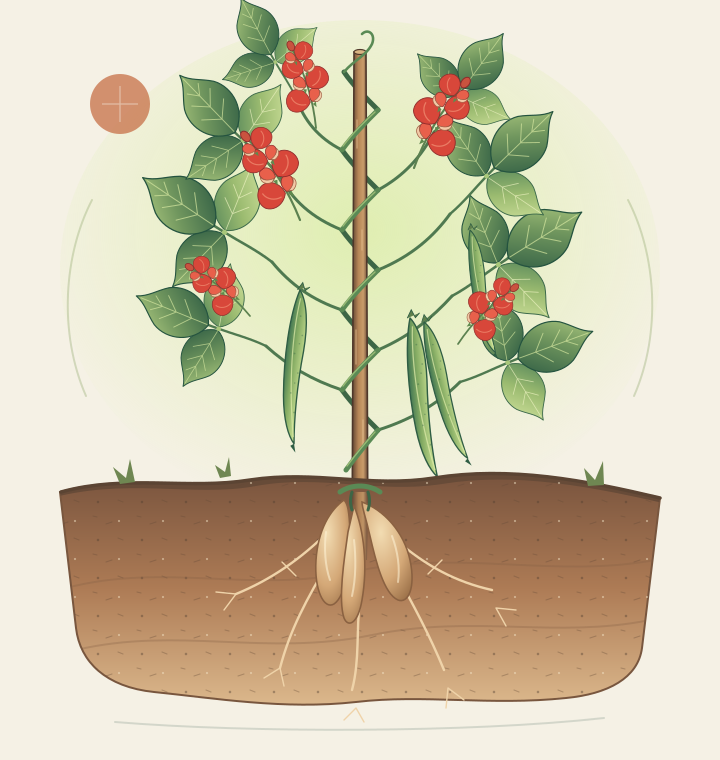
Runner bean vine climbing a wooden support, with trifoliate leaves, scarlet flowers, long green pods and a branching tuberous root system.
Trifoliate leaves and many-flowered racemes rise on twining stems; below ground, a branching root can become tuberous in suitable conditions.

Know the crop

Crop profile

A vigorous climbing bean grown for tender young pods or mature dry seed. It is a tuberous perennial in suitable frost-free conditions but is normally cultivated as a frost-tender annual. Runner beans favour warmth without excessive heat, steady moisture and insect pollination; their seed-saving and cooking needs differ from a simple common-bean rule.

Crop essentials

Botanical name
Phaseolus coccineus
Growth
60–150 days From sowing to first usable harvest. Early or dwarf snap cultivars can approach 60–75 days, while many climbing crops begin around 75–100 days. Mature dry seed commonly needs about 120–150 days. Cultivar, sowing method, temperature, moisture, day length and harvest weather shift both windows.
Family
Fabaceae
Origin
Mountainous regions of Mesoamerica, with domestication in Mexico
Habit
Usually a tall twining climber, with dwarf forms; frost-tender tuberous perennial normally cultivated as an annual

Nutrition / cooked green snap pods

Nutrition, in context

Moderate Editorial nutrient-density rank 2. This is Rooted’s qualitative category for protein, fibre, folate, iron and potassium in the site’s cooked-food comparison, with highlights adding context. It is not an official nutritional score or a universal ranking of foods.

Reference nutrients per 100 g green snap beans, cooked, boiled, drained, without salt; not a runner-bean-specific analysis
Nutrient Amount
Protein1.89 g
Fibre3.2 g
Folate37 µg
Iron0.8 mg
Potassium146 mg
  • Provides fibre, folate, potassium and non-heme iron in the cooked edible portion.
  • Contains vitamin C (12.2 mg) and vitamin K (47.6 µg) in the same 100 g cooked reference.
  • The reference is generic green snap bean, not an analysis specific to Phaseolus coccineus or to mature dry runner seed.

Basis: Approximate values per 100 g green snap beans, cooked, boiled, drained, without salt (USDA FoodData Central SR Legacy 168534). Values describe drained, boiled green snap pods, not raw pods, fresh shelled seed, dry seed or canned beans. Cultivar, pod maturity, cooking water and serving size change intake; nutrient content does not measure absorption or individual dietary needs. Cook young pods, and never eat mature runner seed raw or undercooked.

At the table

Build a varied meal around runner beans

  • Rice, maize or whole-grain bread — A varied meal. Grains make a runner-bean dish more substantial and have essential-amino-acid patterns that can complement those of legumes across the day. They do not need to share one meal. Serve cooked runner pods with rice, or combine thoroughly cooked dry runner beans with maize and vegetables.
  • Tomatoes, peppers, broccoli or citrus — Vitamin C and non-heme iron. Vitamin-C-rich produce can support absorption of non-heme iron from plant foods in the meal. The effect varies with the whole diet and iron status. Cook runner pods with tomatoes and peppers, or add a citrus-dressed salad alongside.
  • Eggs, fish, yogurt or tofu — Protein variety. These accompaniments add protein and different nutrients to a snap-pod meal. Choose according to preference and dietary needs; no single pairing is essential. Serve cooked runner beans with tofu and grains, or with fish and potatoes.

The essentials

From a secure frame to a safe harvest

Six practical stages for tender pods or dry seed. Adapt cultivar, timing and water to your frost-free season, flowering weather and local rainfall.

  1. Choose the species and harvest

    Confirm runner bean, Phaseolus coccineus, rather than assuming every climbing bean is the same crop. Select a climbing or dwarf cultivar and decide whether tender snap pods or mature dry seed is the priority; keeping pods for seed reduces further snap production.

  2. Build support before sowing

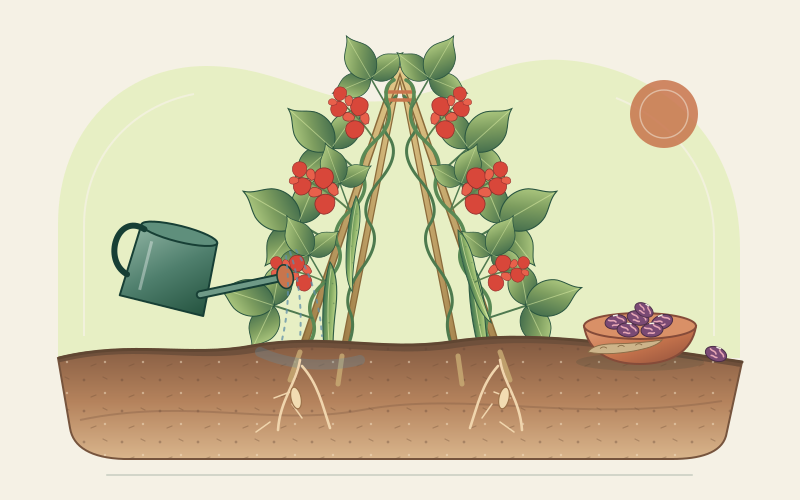
    For climbing types, install a well-anchored 2–2.5 m A-frame, wigwam, trellis or taut netting first. Use sound materials that can carry wet, mature vines and resist local wind. Keep the top within safe picking reach and pinch stems that grow beyond it.

  3. Sow after frost into warmed soil

    Direct-sow about 5 cm deep after local frost risk, once soil is around 12°C or warmer and workable. For an earlier start, sow singly in deep pots and transplant carefully after hardening off. Follow packet spacing; one plant per cane is a common starting point.

  4. Water for flowers, not just leaves

    Prepare deep, fertile, moisture-retentive but drained soil with mature compost. Water at the root zone through flowering and pod formation, mulch established plants and avoid both drought and saturation. Excess heat can reduce pod set despite abundant flowers; do not mistake this for a fertiliser deficiency.

  5. Pick by intended use

    Harvest snap pods every few days while young, tender and before seeds bulge; many are useful around 20–25 cm, depending on cultivar. For dry seed, leave chosen pods to mature and turn dry and brittle. Expect about 60–100 days to first snap pods and roughly 120–150 days to mature seed.

  6. Store and cook safely

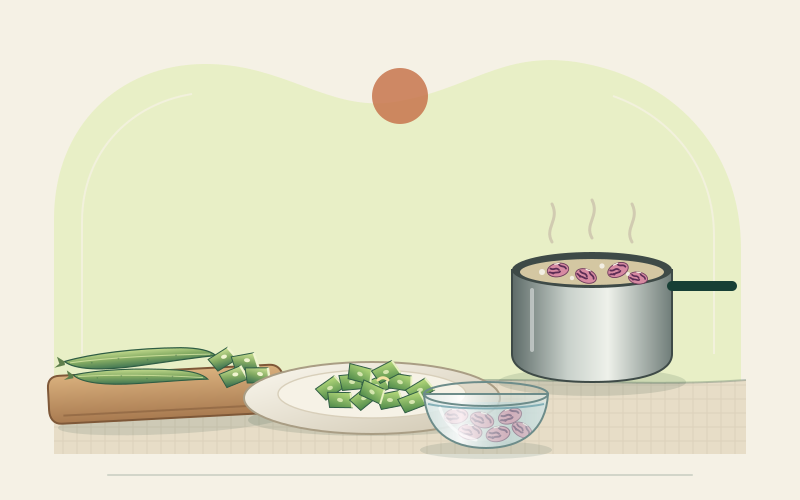
    Refrigerate fresh pods and cook them before eating. Dry mature pods under cover with airflow, shell and clean the seed, then store only fully dry, sound seed in a cool, dry, labelled container. Discard mouldy lots. Never eat mature runner seed raw or undercooked; soak, drain and rapidly boil in fresh water before simmering until fully tender.

Growing notes by place

Read your region, then read your weather

Compare broad growing conditions, then adjust for your own frost dates, altitude, summer heat, rainfall and soil.

Cool, temperate and often maritime, with milder western coasts and colder, shorter seasons in northern and upland districts.

Northwestern Europe

Runner beans suit much of Britain, Ireland, the Low Countries and nearby districts, especially where summer is not excessively hot. Exposure, late frost and wet autumn weather alter the calendar.

Indicative planting
Start seed in deep pots around mid-April–May for an early crop, or direct-sow from mid-May to June after local frost risk when soil reaches about 12°C. Plant hardened seedlings at their supports after frost.
Indicative harvest
Pick young snap pods from roughly July–October, often around 60–100 days after sowing. Leave a seed crop longer, commonly 120–150 days, and bring mature pods under ventilated cover before prolonged rain or frost.
Soil and moisture
Deep, fertile, moisture-retentive but well-drained soil in sun and shelter; add mature compost, avoid waterlogging and keep the root zone evenly moist through flowering.

Field note: Install a strong 2–2.5 m A-frame, wigwam or trellis before sowing. Water at the soil, mulch established plants and choose an early cultivar where autumn arrives soon.
Dates are indicative. Local frost forecasts, soil temperature, seasonal rainfall and recent weather—not the calendar alone—should guide sowing and harvest.

Northwestern Europe · annual climbing crop example

A warm-season climbing rhythm

A compact planning guide, not a fixed schedule. Shift it with cultivar, latitude, altitude, summer heat and local conditions.

  1. April–May

    Prepare a fertile, drained bed and anchor the support before sowing. Start seed in deep pots for an earlier crop, or wait to direct-sow after frost when soil reaches about 12°C.

  2. May–June

    Direct-sow or plant hardened seedlings at their canes. Protect young plants from slugs where needed, guide shoots onto the frame and establish even root-zone moisture.

  3. June–August

    Water through flowering and pod set, mulch and pinch growth above the support. Expect flower drop in unsuitable heat; begin picking tender pods when seeds are still small.

  4. July–October

    Pick snap pods every few days. For seed, leave selected pods to mature and dry, then finish them under ventilated cover before wet weather or frost and store only fully dry seed.

The first snap harvest commonly falls within about 60–100 days of sowing, while dry seed can take 120–150 days. In short seasons, an early cultivar and an earlier protected start are more useful than sowing into cold soil.

From the field journal

Support, select and cook your runner beans

Practical reading for a healthy climbing crop, informed cultivar and seed-saving choices, and balanced meals with an explicit cooked reference.

Your next harvest begins here

Start with a sound frame and a clear harvest.

A single wigwam is enough to learn flowering, pod set and seed maturation in your conditions. Choose a locally suited cultivar, keep notes through warm and hot spells, and plan safe drying and cooking before the first pod forms.

Open the growing guide