
Crop 018 / Vitis vinifera

Build the vine before the harvest.

Grow European grapes on a sunny, well-drained site with support sized for a mature woody vine. Train the roots and permanent framework first, prune within a local system, and wait for fully ripe fruit.

Perennial establishment
Roots and framework first Early clusters may be removed so a young vine can establish; full production can take longer.
First meaningful crop
2–3 years From planting a young vine, not an annual seed-to-harvest window or a guarantee of fruiting.
Season
Warmth, sun and winter survival Cultivar, rootstock, frost, heat accumulation and disease pressure determine local success.
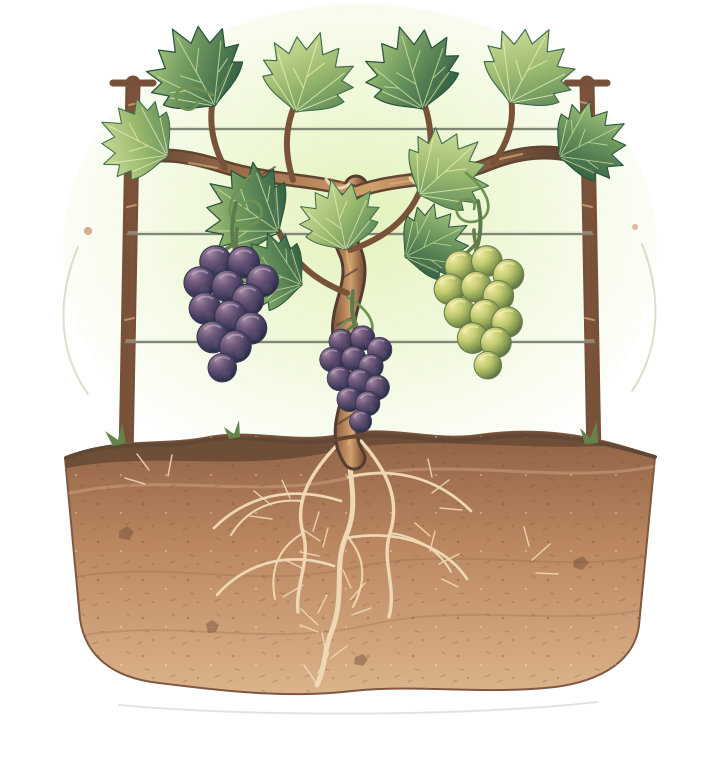
Trellised grapevine with a woody trunk, lobed leaves, coiling tendrils, ripe purple and green bunches, and deep perennial roots.
A grapevine is a long-lived woody perennial: its trellised framework and deep roots establish before the first meaningful fruit crop.

Know the crop

Crop profile

A perennial woody vine grown for fresh table grapes or processing. This entry concerns Vitis vinifera; cultivar, rootstock, winter cold, summer heat and disease pressure determine local establishment. The first meaningful crop normally follows two to three years of vine establishment, not two to three years of annual fruit production.

Crop essentials

Botanical name
Vitis vinifera
Growth
2–3 years From planting a young vine to its first meaningful crop. Small early clusters may be removed so roots and the permanent framework establish; full production can take longer. Planting material, pruning, cultivar, rootstock, heat accumulation, winter injury and local disease pressure can delay or prevent cropping.
Family
Vitaceae
Origin
Southwestern Asia and the Mediterranean region
Habit
Long-lived woody perennial vine, trained on durable support

Nutrition / raw fresh grapes

Nutrition, in context

Moderate Editorial nutrient-density rank 2. This is Rooted’s qualitative category for protein, fibre, folate, iron and potassium in the site’s food comparison, with highlights adding context. It is not an official nutritional score or a promise of a health outcome.

Approximate values per 100 g raw red or green European-type grapes, edible portion.
Nutrient Amount
Protein0.72 g
Fibre0.9 g
Folate2 µg
Iron0.36 mg
Potassium191 mg
  • Contains vitamin C (3.2 mg), vitamin K (14.6 µg) and potassium in the raw reference, with modest protein, fibre and folate.
  • These are explicitly raw fresh-grape values and are not directly interchangeable with the cooked vegetables, corn, wheat berries or buckwheat groats in this comparison.
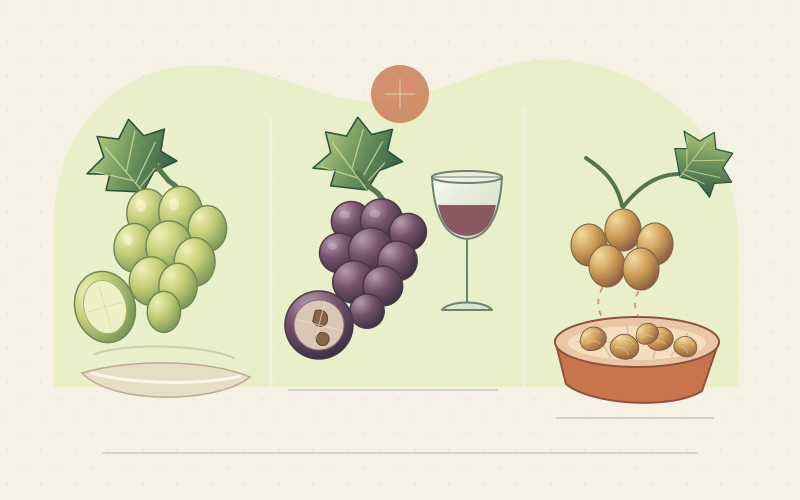
  • Raisins are dried grapes, not a separate crop: removing water concentrates sugar and calories per 100 g rather than turning them into a health food.

Basis: Approximate values per 100 g red or green European-type grapes (Vitis vinifera), raw edible portion (USDA FoodData Central SR Legacy 174683). View the USDA reference.

Fresh grapes are a food for prompt use or chilled storage; only sound fruit should be dried, using a reliable food-preservation method before sealed storage. Cultivar, ripeness, serving size and processing change intake. Raisins and fresh grapes have different per-100-g profiles, and neither the nutrient content nor drying predicts absorption or individual dietary needs.

At the table

Enjoy fresh grapes and raisins in context

  • Yogurt, cheese, nuts or seeds — A varied snack or breakfast: These foods add protein, fat and different nutrients alongside fresh grapes. Choose according to dietary preferences and needs rather than treating grapes as a required health ingredient. Serve fresh grapes with plain yogurt and walnuts, or with cheese and whole-grain bread.
  • Beans, lentils or tofu with vegetables — A varied meal: Protein-containing foods and vegetables make a grape-containing meal more substantial. Sweet fruit can be one component without carrying a nutritional or medicinal claim. Add a small amount of chopped fresh grape to a lentil and herb salad, or serve grapes beside a bean and vegetable meal.
  • Raisins with oats, nuts or seeds — Processing and practical portions: Raisins are a way to process and store grapes. Drying concentrates their sugar and calories by removing water, so use portions that fit the overall diet rather than treating dried fruit as automatically healthier. Mix a small portion of raisins into oatmeal with nuts or seeds instead of eating them as an unrestricted snack.

The essentials

From young vine to ripe bunch

Six practical stages for Vitis vinifera. Adapt planting material, training, pruning and harvest to your climate and local growing advice.

  1. Match the site, chill and frost risk

    Choose full sun, moving air and a site with enough seasonal warmth to ripen shoots and fruit, plus sufficiently cool dormancy for normal bud break. Match the exact cultivar and rootstock to local winter minimums and ripening season. Avoid frost pockets, shade and waterlogging; tender spring growth is more vulnerable than dormant buds. In severe-winter areas, seek local advice on hybrids or other grape species rather than assuming V. vinifera will survive.

  2. Install a durable trellis first

    Set sound posts, brace end posts against wire tension and use a trellis or other locally proven support sized for years of woody growth, foliage, fruit and wind. Leave room to prune, inspect, net and pick. During establishment, select and loosely tie the main shoot or shoots with soft ties, removing unwanted growth according to the chosen training system. Aim for an open, reachable framework rather than the greatest mass of leaves.

  3. Prune in dormancy by a named system

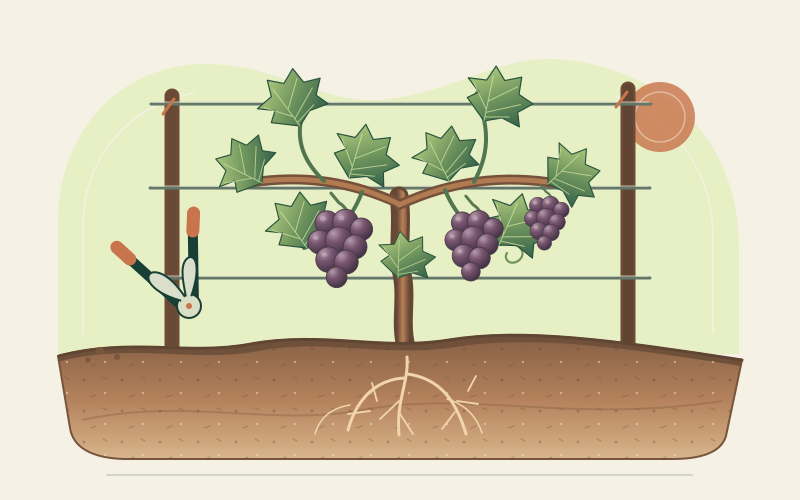
    Prune at the locally recommended dormant point between the harshest winter weather and bud swell, using clean, sharp tools. Cane and spur systems retain different lengths and ages of wood, and cultivars differ in basal-bud fruitfulness, so do not copy an unidentified diagram. Learn which one-year-old wood your local system retains; young vines need formative training, not an immediate hard fruiting prune. Keep an annual sketch and use local extension or experienced-grower guidance.

  4. Build deep soil and careful water habits

    Use deep, moderately fertile, free-draining soil and test before correcting pH or nutrients. Avoid excess nitrogen, which favours soft leafy growth, and keep a weed-free zone without cutting roots. Water young vines thoroughly when needed while roots spread, checking below the surface rather than keeping soil constantly wet. Direct water to the root zone, adjust for soil, heat and vine age, and avoid waterlogging; severe drought can still reduce fruit size and delay ripening.

  5. Prevent disease-friendly conditions and bird losses

    Buy healthy stock, prune for airflow, manage weeds, avoid prolonged leaf wetness where possible and remove infected or mummified fruit as local guidance directs. Inspect leaves, shoots and clusters; obtain a diagnosis before choosing any legally available control labelled for grapes and the target problem. As ripening begins, fit supported bird netting without reach-through gaps, check that animals cannot become trapped, and remove it after harvest. Fruit-safe bunch bags can suit a few vines.

  6. Harvest ripe fruit; dry raisins safely

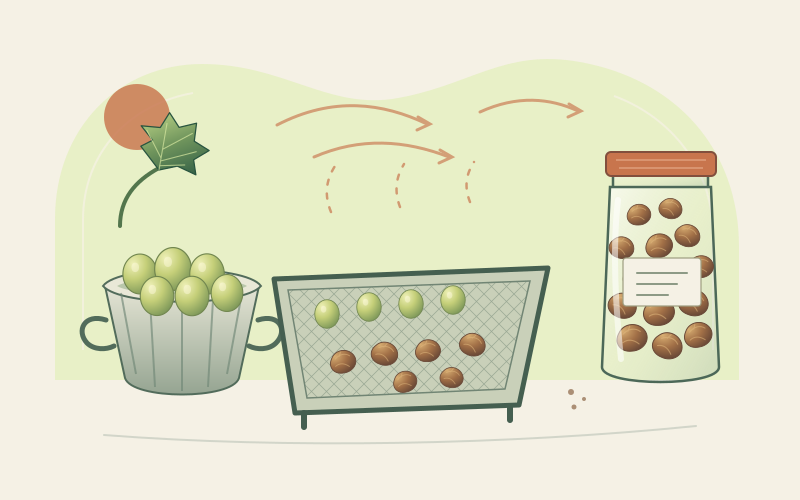
    Grapes do not sweeten appreciably after picking, so judge cultivar colour, plumpness and flavour from several clusters, then cut sound bunches with clean secateurs. For a raisin-processing preview, sort and wash only sound ripe grapes and use a reliable preservation method with controlled drying and airflow until cooled pieces are leathery to pliable with no wet centre. Condition the cooled batch for seven to ten days, shaking and inspecting daily; return underdried sound fruit to the dryer if moisture appears, and discard mouldy or spoiled food. Pack thoroughly dry, conditioned raisins in clean airtight containers, labelled and stored cool, dark and dry.

Growing notes by place

Read your region, then read your weather

Compare broad growing conditions, then adjust for your own winter minimums, frost dates, altitude, rainfall, heat and soil.

Cool, temperate and often maritime, with limited heat and substantial local differences in shelter, frost and autumn ripening conditions.

Northwestern Europe

Vitis vinifera is site-sensitive here. Warm south-facing walls and favoured southern sites can crop outdoors, while cover improves reliability in cooler or wetter districts.

Indicative planting
Plant a dormant container-grown or bare-root vine in early spring when soil is workable, after severe frost in colder sites. Install durable support before growth begins and expect establishment, not a full crop, in years one and two.
Indicative harvest
Once established, harvest ripe bunches roughly late summer–autumn according to cultivar and site; cool seasons can delay ripening. Judge flavour and maturity locally rather than forcing the first small clusters.
Soil and moisture
Deep, well-drained, moderately fertile soil in full sun; avoid frost pockets, shade and waterlogging, and avoid excessive nitrogen that favours soft leafy growth.

Field note: Choose a locally proven early table cultivar and suitable rootstock, prune during the appropriate dormant window and ventilate covered vines to reduce disease.
Dates are indicative. Local frost forecasts, winter minimums, seasonal heat, rainfall and recent weather—not the calendar alone—should guide planting, pruning and harvest.

Cool-temperate Northern Hemisphere · example

A perennial vine’s rhythm

A compact planning guide, not a fixed schedule. Shift it with latitude, altitude, cultivar, rootstock, protection and local conditions.

  1. December–February

    Inspect and repair support while the vine is dormant. Prune only in the locally appropriate dormant window, following the chosen cane or spur system and accounting for remaining winter cold.

  2. March–April

    Plant a young vine when soil is workable and severe frost is easing, keeping the graft union positioned as advised. Water during establishment and protect tender new growth where late frost threatens.

  3. May–August

    Train shoots within the chosen system, maintain root-zone moisture without saturation, and inspect canopy and fruit for local disease. Preserve useful foliage and fit secure bird netting as ripening begins.

  4. August–October

    Taste and inspect several clusters before harvesting fully ripe fruit. Chill sound table grapes promptly, or dry suitable fruit by a reliable method, condition it and check for moisture and mould before storage.

The 2–3 year window runs from planting a young vine to its first meaningful crop, not from annual sowing. Early fruit may be removed to favour establishment; winter injury, pruning, heat and disease can delay or prevent cropping.

From the field journal

Train, choose and preserve your grapes

Practical reading for perennial establishment, informed cultivar choices, and safe transformation of ripe grapes into raisins.

Your next harvest begins here

Start with one vine and a durable plan.

Choose locally proven planting material, install support before growth begins, and give the roots and framework priority. Patient establishment is the foundation of every later bunch.

Open the growing guide