Raisins are dried grapes, not another crop
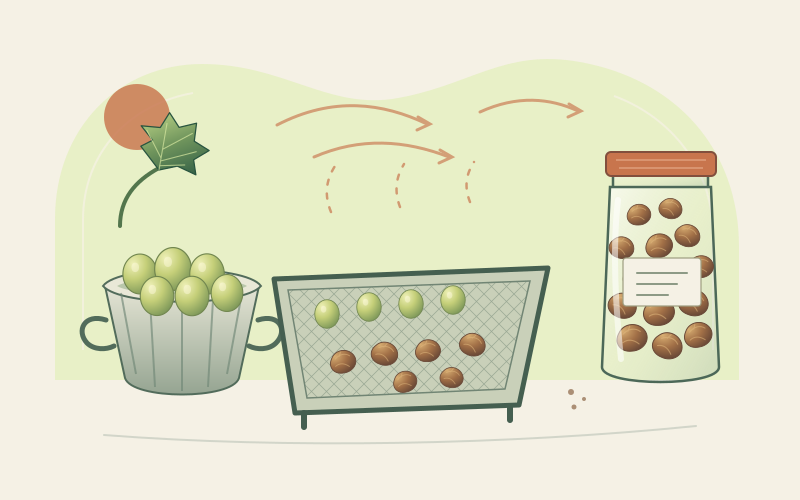
A raisin is grape fruit with enough water removed to resist spoilage when correctly handled and stored. Drying concentrates flavour and the grape’s natural sugars; it does not require added sugar, and it is not the same as canning, fermenting, or simply leaving bunches to shrivel. The safest home batches begin with fresh, sound fruit and continue through deliberate drying, conditioning, and moisture checks.
Fully ripe seedless grapes are the most convenient choice. Raisin cultivars are selected for drying, but suitable table grapes can also be used. Grapes do not become sweeter after picking, so green, underripe fruit will not develop the flavour of a ripe bunch on a tray. The variety guide explains skins, seeds, and drying types.
Select, sort, and wash before heating
-
Choose sound, fully ripe bunches
Look for plump, well-formed berries with full cultivar colour and sweet flavour, firmly attached to fresh stems. Sort out mouldy, leaking, sticky, fermented, insect-damaged, badly split, or shrivelled grapes. Do not dry decayed fruit in the hope that heat will make it wholesome, and do not mix doubtful berries into a good batch.
-
Stem, wash, drain, and sort again
Remove stems and rinse the grapes under cool running water in a clean workspace. Drain thoroughly and pat dry with a clean towel if needed; excess surface water slows the start. Remove any remaining stems and damaged fruit. Seedless grapes can be dried whole. Halve seeded grapes and scoop out the seeds, recognising that cut and whole fruit dry differently and should be checked separately.
-
Consider checking or another published pretreatment
Checking means briefly heating whole grapes so their skins crack, giving moisture an easier escape route. It is optional across home-drying approaches, but untreated thick-skinned grapes may dry slowly and unevenly. Use a grape-specific extension method rather than improvising. Utah State’s method, for example, uses steam or boiling water for 30–60 seconds until skins crack, followed by its measured acidic solution for ten minutes. If you use that procedure, follow all its quantities and steps; do not invent vinegar, lemon, or sulphite dips. Pretreatment does not replace final drying.
Choose equipment and conditions that actually dry
Arrange prepared grapes in a single layer on clean, food-safe trays, leaving space for air around them. Avoid deep piles, and keep different berry sizes or cut fruit on separate trays where practical. Rotate trays and turn or separate fruit as the equipment instructions direct. Record the cultivar, preparation, equipment setting, load size, and weather so the next batch benefits from evidence.
A dehydrator offers the most useful control
Use a dehydrator with a fan and adjustable thermostat, following the manufacturer’s fruit instructions and an extension drying guide. A controlled low drying temperature with moving air removes moisture without cooking the outside into a hard shell. Do not overload trays or block vents. “Medium” is not a universal temperature across machines, so use the actual setting recommended for grapes or fruit and verify the machine operates as intended.
An oven must be capable of safe low-temperature drying
Use an oven only if it can hold the low temperature specified by a reliable extension method and allow moist air to escape safely. Many ovens run too hot for drying at their minimum setting; a higher temperature can scorch or harden skins while centres remain wet. An oven thermometer helps reveal the real temperature, but does not make an unsuitable appliance suitable. Follow the manufacturer’s ventilation instructions, keep trays secure, and never leave an improvised setup unattended.
Sun drying has narrow weather limits
Outdoor drying depends on sustained hot, dry, breezy weather, not one sunny afternoon. University of Georgia guidance describes a minimum of 85°F (about 30°C) and says humidity below 60% is best; several suitable days may be needed. Use food-safe screens raised for airflow, protect fruit from dust, birds, and insects with a second screen or suitable cover, and shelter it at night and from rain so condensation does not return moisture. For fruit dried outdoors, also follow extension instructions for post-drying insect control before final storage. Where humidity, cloud, temperature, pollution, or sanitation cannot be controlled, use a dehydrator or suitable oven instead.
Dry to condition, then condition the cooled batch
There is no single safe drying duration for every batch. Berry size and skin, ripeness, checking, load, tray position, airflow, temperature, and ambient humidity all change the rate. Use time only to plan checks, not to declare completion. Cool a few representative raisins before testing because warm fruit feels softer. Finished raisins are wrinkled and leathery to pliable, without a wet or juicy centre when cut or squeezed; larger and darker pieces deserve particular scrutiny. If moisture remains, continue drying and test again.
Conditioning equalises residual moisture among pieces; it does not rescue wet fruit. Let the dried grapes cool completely, then pack them loosely into clean, dry glass or food-safe plastic containers and close the lids. Leave them at room temperature for seven to ten days, shaking daily to separate the pieces and inspecting for condensation or other visible moisture. If moisture appears, return the batch to the dryer promptly and repeat the drying and conditioning checks.
Inspect for moisture and mould before sealing for storage
After conditioning, examine the fruit and containers in good light. Sticky wet patches, condensation, fermentation, unusual odours, or mould mean the batch needs attention. Return merely underdried but otherwise sound fruit promptly for more drying when extension guidance permits. Discard mouldy or otherwise spoiled food rather than cutting off a spot, rinsing it, or tasting it to decide; when contamination is uncertain, seek local food-preservation advice.
Pack thoroughly dry, conditioned raisins in clean airtight moisture- and vapour-resistant containers, in useful portion sizes. Label the contents and date, exclude insects, and store in a cool, dark, dry place. Refrigeration or freezing can extend quality when packaging is suitable, but neither makes wet raisins safe. Open containers briefly expose fruit to humid air, so reseal promptly and inspect stored batches periodically for moisture, insects, off odours, or mould.
Understand concentrated sugar and sulphite differences
Removing water concentrates the grape’s natural sugar and calories in each gram of finished food. Raisins are therefore easy to eat in a much larger quantity, by original grape weight, than a handful of fresh grapes. “No added sugar” does not mean low sugar. Treat them as a concentrated dried fruit and choose portions accordingly; drying does not turn them into a medicine or a food with special cleansing or disease-preventing powers.
Home raisins can be sulphite-free: sulphites are not required to dry grapes safely. Untreated raisins commonly darken to amber or brown, which is an appearance difference, not proof of failure. Some commercial products use sulphites, often declared as sulfur dioxide, to preserve a lighter golden colour and influence flavour or storage quality; others are also unsulphured. Neither colour is a measure of dryness or safety. Read ingredient labels for the actual product, especially if a clinician has advised avoiding sulphites, and do not add sulphites at home without an appropriate tested procedure.
University extension preservation sources
- Utah State University Extension: How to Preserve Grapes—selection and drying
- University of Georgia National Center for Home Food Preservation: Sun Drying
- University of Georgia National Center for Home Food Preservation: Packaging and Storing Dried Foods
- Penn State Extension: Terms when Drying Foods
- Clemson Cooperative Extension: Drying Fruits