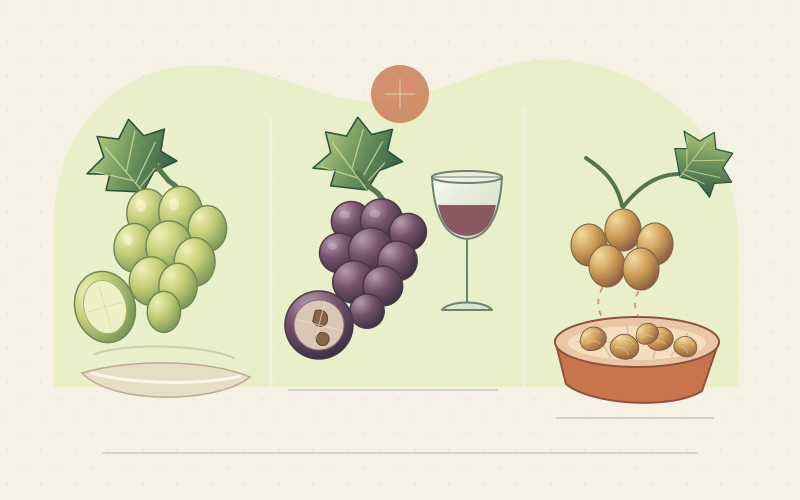
Begin with species, then intended use
The European grape, Vitis vinifera, includes thousands of cultivars used for fresh eating, winemaking, juice, and drying. “Table”, “wine”, and “raisin” describe selection and customary use, not separate species or impermeable categories. A sound, ripe table grape can be dried, and some cultivars serve more than one purpose well; the difference lies in the combination of berry size, skin, seeds, acidity, sugar, aroma, yield, and handling quality.
Outside the climates where V. vinifera performs reliably, locally adapted American species and interspecific hybrids can be better choices. They may have different flavours, slip skins, cold tolerance, and disease responses. Check the nursery’s full identification rather than assuming every grape offered locally is V. vinifera, or that a European cultivar famous elsewhere will ripen for you.
Table grapes put fresh texture first
Table cultivars are selected for an attractive bunch and pleasant eating directly from the hand. Crisp or tender pulp, a skin that is not distractingly tough, balanced sweetness and acidity, useful berry size, and acceptable seedlessness can all matter. Green, yellow, red, pink, purple, and black describe skin colour; they do not by themselves predict flavour or sugar. “Muscat” describes a distinctive aromatic family or flavour association, not a colour.
Some commercial table traits reflect handling as well as taste: berries should remain attached, resist splitting, and tolerate transport. In a home garden, flavour and reliable ripening may matter more than shelf life. Thin skin can be pleasant to eat yet more vulnerable to rain splitting or damage, while very large berries are not automatically sweeter. Pick fully ripe fruit because grapes do not continue to sweeten after harvest.
Wine grapes balance more than sweetness
Wine cultivars are chosen for the composition and character of their juice at harvest, including sugar, acidity, aroma, and—in many red styles—tannins and colour extracted from skins. Small berries or seeds are not defects in this context. A grape that tastes intensely sweet may still lack the acid balance wanted for a particular wine, and a cultivar’s wine reputation cannot guarantee suitable ripening in a different season or site.
Red wine commonly gains colour through contact with dark grape skins during fermentation; grape flesh is often pale. White wine can be made from pale grapes and, with appropriate handling, from some dark-skinned ones. Winemaking is a separate fermentation process with its own hygiene and legal considerations, not simply a harvest category. Home growers should select cultivars with local viticultural advice and realistic ripening targets rather than choosing only by the name of a favourite bottle.
Raisin grapes dry efficiently and remain sound
Raisin cultivars are valued for sweet, fully ripe berries that dry to a pleasant texture. Seedlessness avoids laborious deseeding, while relatively thin, tender skins and suitable berry size can help water escape. High natural sugar is expected in ripe drying grapes, but sugar alone does not prevent mould: fruit must still be dried, conditioned, inspected, and stored correctly.
Thompson Seedless, also known in some markets as Sultana, is a familiar multipurpose table and drying cultivar. Black Corinth is used for very small dried grapes, sometimes sold as Zante currants; these are not the fresh currants of the genus Ribes. Local names vary, so check the cultivar and botanical identity. Any sound ripe seedless table grape can be a small-batch drying candidate, though its time, colour, flavour, and yield may differ from a named raisin type.
Read seeded, seedless, skin, and pulp labels carefully
Seeded grapes contain noticeable mature seeds. They may offer excellent flavour or local reliability, but seeds add work when preparing some foods and are usually removed before home drying. Seedless cultivars form little or no noticeable mature seed through different biological mechanisms; occasional small, soft seed traces can occur and do not necessarily mean the label is wrong. Seedlessness says nothing by itself about colour, skin thickness, climate tolerance, or nutritional value.
Skin and pulp determine much of the eating experience. A thin, tender skin is different from a tough or astringent one, and crisp flesh differs from soft, juicy flesh. In slip-skin grapes, common in some American types, the skin separates readily from the pulp. Many V. vinifera table grapes have flesh that adheres more closely to the skin. Neither structure is universally better: use it to anticipate fresh texture, peeling, cooking, and drying rather than as a quality ranking.
| Label | Mainly describes | Does not guarantee |
|---|---|---|
| Table, wine, raisin | Selected or customary use | That other uses are impossible |
| Seeded or seedless | Presence of noticeable mature seeds | Sweetness, thin skin, or easy ripening |
| Slip-skin or adherent flesh | How skin and pulp separate | Flavour quality or disease resistance |
| Early, midseason, late | Relative harvest timing | A fixed date in every climate |
Use cultivar names as examples, not universal recommendations
Flame Seedless and Red Globe illustrate different red table-grape textures and bunch forms; Thompson Seedless illustrates the overlap between fresh and dried use. Chardonnay and Cabernet Sauvignon illustrate white- and red-wine selection, not a promise of winemaking success in every vineyard. Concord illustrates a strongly flavoured American grape used for juice, jelly, and fresh eating, with a noticeably different skin-and-pulp character from many European table grapes.
These names are reference points for reading catalogues, not a ranked shortlist. The same cultivar can perform differently with another rootstock, site, pruning system, or harvest season, and suppliers may use synonyms or local trade names. Ask for a complete description and compare it with independently reported local trials. A nursery’s “sweet”, “early”, or “resistant” claim should prompt questions: sweet at what ripeness, early compared with which cultivar, and resistant to which organism?
Let local performance make the final choice
Start with winter survival and the length of your growing season. Compare a cultivar’s usual ripening period with local heat accumulation, autumn frost, and rain patterns. “Early” is relative to other grapes, not a promise for a cold site. Spring frost risk also matters when cultivars break bud early, while humid ripening weather can favour bunch rots. A warm wall may improve a marginal site but cannot make every late cultivar dependable.
Then ask which diseases and pests recur nearby. Cultivar resistance can reduce risk from named problems, sometimes only particular strains, but does not replace airflow, dormant pruning, sanitation, and observation. Powdery mildew, downy mildew, black rot, botrytis, and phylloxera have different regional importance; rootstock and local plant-health rules may matter as well as the fruiting cultivar. Buy certified, healthy vines where available and ensure any grafted combination is recommended locally.
Finally, define your real use and capacity. A vigorous wine grape may be a poor choice for a small ornamental support, and a large seeded bunch may be less convenient for drying than a modest seedless crop. Trial one or two locally promising cultivars, record bud break, disease, ripening, flavour, and yield, and compare fruit picked at several stages. Our growing guide explains the support and annual pruning those trials will need.