
Crop 038 / Cucumis sativus

Lift the vine. Read the flower. Pick before the seeds grow coarse.

Grow cucumbers through warm, frost-free weather by direct sowing or careful transplanting. Match slicing or pickling types to their use, support the vines, and learn which flowers the cultivar needs for fruit set.

Flowers and fruit
Read the cultivar Many outdoor types need insects to carry pollen; parthenocarpic types can set fruit without pollination.
Typical first harvest
50–70 days From sowing for many cultivars; transplants spend about 3–4 weeks in a protected nursery first.
Season
Warm and frost-free Cold soil checks growth, while heat and uneven water can undermine fruit quality.
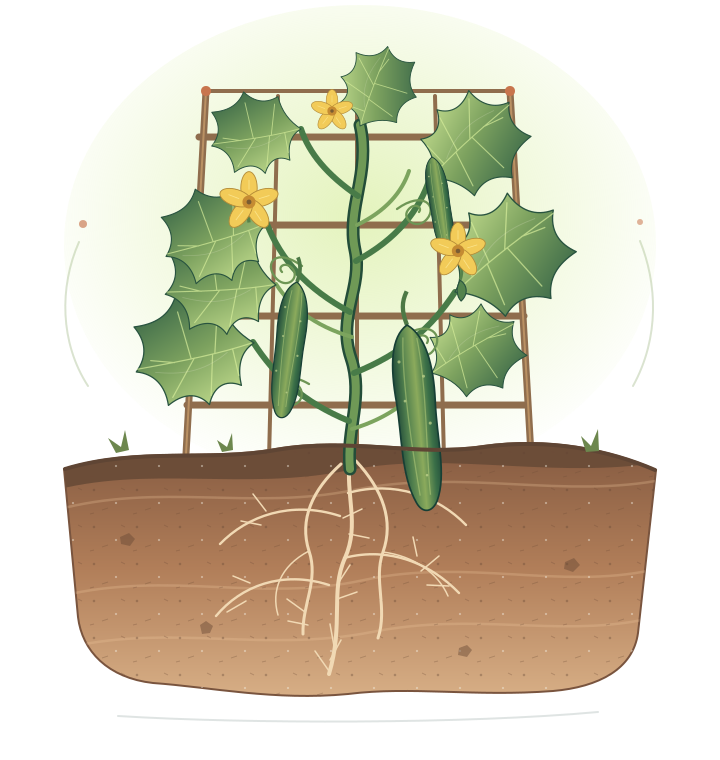
Cucumber vine climbing a wooden trellis, with lobed leaves, coiled tendrils, yellow male and female flowers, hanging green fruit and branching roots in a soil cutaway.
A female flower carries a tiny fruit behind its petals; whether it needs pollen depends on the cultivar.

Know the crop

Crop profile

A frost-tender, warm-season annual vine grown for immature fruit. Slicing and pickling cultivars differ in size, skin and intended use; support, pollination requirements and steady moisture depend on the named type and growing system.

Crop essentials

Botanical name
Cucumis sativus
Growth
50–70 days From sowing to first harvest for many cultivars under favourable warm conditions. Direct-sown and transplanted crops share this sowing-based guide; transplants usually spend 3–4 weeks in a protected nursery before planting out. Cultivar, warmth and stress shift the window.
Family
Cucurbitaceae, the gourd family
Origin
South Asia, with a long history of cultivation from the Indian subcontinent outward
Habit
Warm-season annual climbing or scrambling vine harvested for immature fruit

Nutrition / raw with peel

Nutrition, in context

Moderate Editorial nutrient-density rank 2. This is Rooted’s qualitative category for protein, fibre, folate, iron and potassium in the site’s food comparison, with highlights adding context. It is not an official nutritional score or a universal ranking of vegetables.

Reference nutrients per 100 g cucumber, with peel, raw
Nutrient Amount
Protein0.65 g
Fibre0.5 g
Folate7 µg
Iron0.28 mg
Potassium147 mg
  • Contains vitamin K (16.4 µg) and vitamin C (2.8 mg) in the same raw, peel-on reference.
  • Has modest protein, fibre, folate, iron and potassium concentrations compared with the cooked pulses in this comparison.
  • The values describe fresh raw cucumber with peel, not peeled cucumber, cooked cucumber or pickles in brine.

Basis: Approximate values per 100 g cucumber, with peel, raw (USDA FoodData Central SR Legacy 168409). Cultivar, peeling, slicing and serving size change intake; acid, salt and other ingredients make pickles a different food. Wash cucumbers under clean running water and scrub firm skin with a clean produce brush. Nutrient content does not measure absorption or individual dietary needs.

At the table

Build a varied meal around cucumber

  • Chickpeas, beans or lentils — A more substantial salad. Pulses add protein, fibre and folate alongside cucumber’s crisp texture and smaller nutrient concentrations. This is flexible meal variety, not a required food-combining rule. Toss cucumber with chickpeas, tomatoes, herbs and a grain or other preferred accompaniment.
  • Yogurt, eggs, fish or tofu — Protein variety. These foods add protein and different nutrients to a cucumber-based dish. Choose according to preference and overall needs rather than treating cucumber as a complete meal by itself. Serve cucumber with yogurt and herbs, or add it beside tofu, rice and leafy vegetables.
  • Whole grains and other vegetables — Texture and dietary variety. Grains make a fresh cucumber dish more substantial, while other vegetables broaden flavour, texture and nutrients. No particular pairing is essential. Build a grain bowl with cucumber, roasted vegetables, beans and a dressing suited to the meal.

The essentials

From warm soil to crisp, young fruit

Six practical stages. Adapt the route, support and harvest size to the cultivar, your season and whether you will serve the crop fresh or pickle it safely.

  1. Choose the use and pollination type

    Slicing cultivars are selected for fresh texture and larger fruit; pickling types are harvested small and often have thinner skins and suitable shape. Some can serve both uses at different sizes. Read whether the cultivar is monoecious with male and female flowers, predominantly female, or parthenocarpic and able to set fruit without pollination.

  2. Direct-sow or raise a short-lived transplant

    Wait until frost danger has passed and soil is warm. Direct-sow at the packet’s depth, or start one or two seeds in individual pots only 3–4 weeks before planting. Give seedlings warmth and bright light, harden them off gradually, and transplant with the root ball intact rather than leaving them pot-bound.

  3. Install a sturdy trellis early

    Choose full sun and fertile, free-draining soil. Put netting, strings or a rigid trellis in place at sowing or planting, anchored for mature vines and wet weather. Guide young stems loosely until tendrils attach. Trellising saves ground space and keeps fruit cleaner, but cultivar size and weight determine how strong the support must be.

  4. Make room for the required pollination

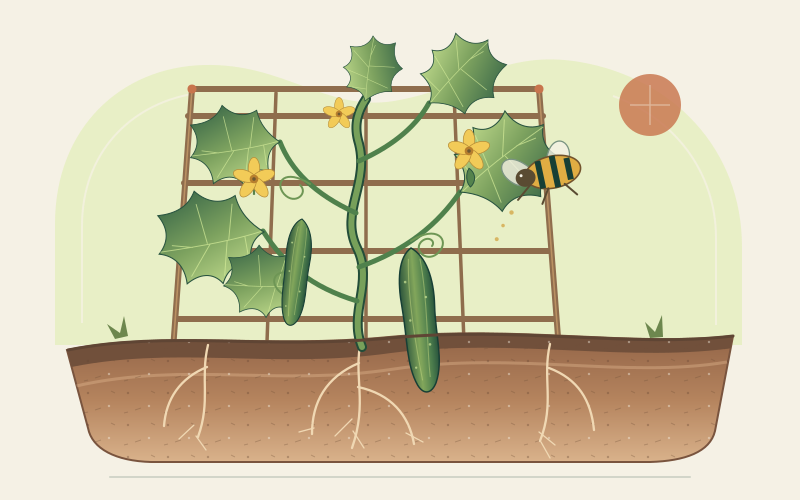
    On pollen-dependent types, female flowers have a small fruit behind the petals and male flowers do not. Bees must transfer pollen between them, so avoid broad-spectrum insecticides during bloom and do not remove male flowers. Parthenocarpic greenhouse types need a different approach: follow the packet, because unintended pollination can produce seedy or misshapen fruit in some cultivars.

  5. Steady water and reduce stress

    Check below the surface and water the root zone without persistent saturation, especially during flowering and fruit expansion. Mulch warm soil while keeping stems clear. Cucurbitacins can cause bitterness, often toward the stem end and skin; cultivar genetics matter, and heat, drought or other severe stress can increase the problem. Do not assume peeling guarantees removal.

  6. Pick young and handle food safely

    Cut fruit at the cultivar’s stated size while firm and before it yellows or develops coarse seeds. Wash hands and rinse cucumbers under running water, scrubbing firm skin with a clean produce brush; refrigerate cut produce promptly. For acidified pickles, use only a current tested recipe with its exact ingredients, acidity and process. Never improvise a shelf-stable brine or canning time.

Growing notes by place

Read your region, then read your weather

Compare broad growing conditions, then adjust for your own frost dates, altitude, rainfall and soil.

Cool, temperate and often maritime, with limited outdoor warmth and locally short frost-free seasons.

Northwestern Europe

Greenhouse cucumbers crop reliably under cover in Britain and nearby districts; outdoor or ridge types need a warm, sheltered summer site.

Indicative planting
Sow indoors in April–May, about 3–4 weeks before planting, or direct-sow outdoor types in late May–June after frost once soil is warm. Harden transplants off carefully.
Indicative harvest
Pick from July–September outdoors and often longer under cover. Cut fruit at the cultivar’s stated size while firm and green; regular picking encourages further production.
Soil and moisture
Fertile, moisture-retentive but free-draining soil or a large container; water evenly at the base, mulch warm soil and ventilate covered plants.

Field note: Choose an indoor or outdoor cultivar for the actual site. Follow the packet before removing male flowers: many outdoor types need insect pollination, while some all-female indoor types fruit without it.
Dates are indicative. Local frost forecasts, heat, seasonal rainfall and recent weather—not the calendar alone—should guide sowing and harvest.

Cool-temperate Northern Hemisphere · example

A warm-season rhythm

A compact planning guide, not a fixed schedule. Shift it with latitude, altitude, cultivar, protection and local conditions.

  1. April–May

    Choose slicing or pickling types and read their pollination needs. Start transplants indoors about 3–4 weeks before planting, with warmth for germination and bright light after emergence.

  2. May–June

    Direct-sow after frost into warm soil, or harden off young plants and transplant with roots intact. Prepare fertile, drained soil and install a secure trellis at planting.

  3. June–August

    Guide vines, water evenly and keep pollen-dependent flowers accessible to bees. Inspect foliage and local pests, ventilate covered crops and avoid broad-spectrum insecticide during bloom.

  4. July–September

    Cut fruit regularly at its intended size. Wash fresh cucumbers safely, refrigerate cut produce, and use only current tested recipes and processes for acidified pickles intended for storage.

The 50–70-day window runs from sowing to first harvest for many cultivars. Transplants usually spend 3–4 weeks in a protected nursery before planting out; cool weather, heat and plant stress can shift first harvest.

From the field journal

Grow, choose and serve your cucumbers

Practical reading for warm-season care, slicing and pickling choices, and fresh nutrition without health overclaims.

Your next harvest begins here

Start with the fruit and flowers you intend to grow.

Choose a locally suited slicer or pickler, install support before the vine runs, and keep water steady. A few plants picked often can provide fresh salads and a measured surplus for a tested pickle recipe.

Open the growing guide