
Crop 015 / Cicer arietinum

Give the pods a dry finish.

Grow chickpeas for mature seed by matching a direct-sown crop to mild-to-warm growing weather and a dry ripening period. Choose a locally suited desi or kabuli cultivar, protect the roots from waterlogging, and dry the harvest thoroughly before storage.

Two familiar seed classes
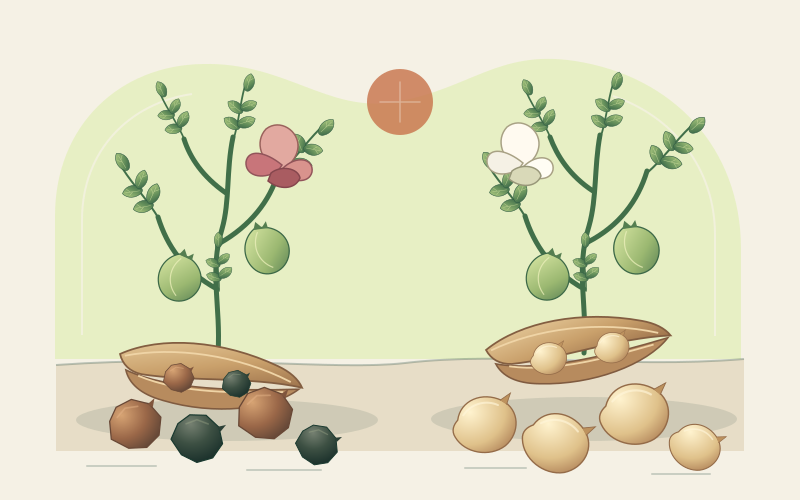
Desi or kabuli Compare seed colour and form, then use the cultivar’s actual maturity and local performance to choose.
Typical crop window
90–120 days From direct sowing to mature pods ready for harvest and drying; local conditions alter maturity.
Season
Mild to warm, ending dry Pods and seed need sufficiently dry weather to mature without prolonged wetness.
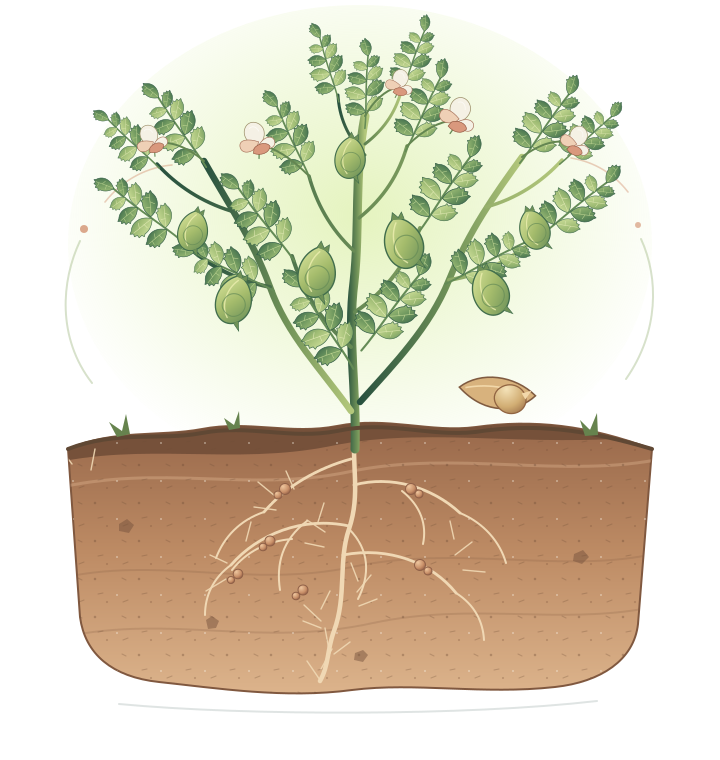
Branching chickpea plant with compound leaves, small pods and a branching root system in a soil cutaway.
Chickpeas grow as open, branching plants with small pods; mature dry pods and hard seed signal the storage harvest.

Know the crop

Crop profile

A cool-to-warm-season annual pulse grown for mature dried seed, with desi and kabuli types. Chickpeas need a season that ends dry enough for pods and seed to mature; they are not the same crop as garden peas or common beans.

Crop essentials

Botanical name
Cicer arietinum
Growth
90–120 days From direct sowing to mature pods ready for harvest and drying. Cultivar, temperature, day length, elevation and rainfall alter maturity. Plants need thorough drying before seed storage, and wet weather near harvest can delay or damage the crop.
Family
Fabaceae, the legume family
Origin
Southeastern Turkey and adjacent southwestern Asia
Habit
Cool-to-warm-season annual pulse with an open, low, branching habit; desi and kabuli are seed classes within the same species

Nutrition / boiled without salt

Nutrition, in context

High Editorial nutrient-density rank 3. This is Rooted’s qualitative category for protein, fibre, folate, iron and potassium in the site’s cooked-food comparison, with highlights adding context. It is not an official nutritional score or a universal ranking of pulses.

Reference nutrients per 100 g mature chickpeas, cooked, boiled, without salt
Nutrient Amount
Protein 8.86 g
Fibre 7.6 g
Folate 172 µg
Iron 2.89 mg
Potassium 291 mg
  • Provides protein, fibre and folate in concentrations comparable to the cooked lentil reference.
  • Contains non-heme iron and potassium in the cooked edible portion.
  • These figures describe mature boiled chickpeas, not dry raw seed, canned chickpeas or hummus with added ingredients.

Basis: Approximate values per 100 g mature chickpeas (garbanzo beans, Bengal gram), cooked, boiled, without salt (USDA FoodData Central SR Legacy 173757). Sort and rinse dried chickpeas, then cook in water until fully tender, following a reliable packet or pressure-cooker method; soaking can shorten cooking but methods differ. Do not assume the shorter cooking time for lentils is sufficient. Cultivar, soaking, water uptake and serving size change values per portion, and listed nutrients are not absorbed amounts.

At the table

Build a varied meal around chickpeas

  • Rice, bulgur or whole-grain flatbread — Complementary amino-acid patterns. Chickpeas and grains have different essential-amino-acid patterns that can complement each other in a varied diet. They need not be combined in the same meal. Serve chickpeas with rice and vegetables, or with bulgur and salad.
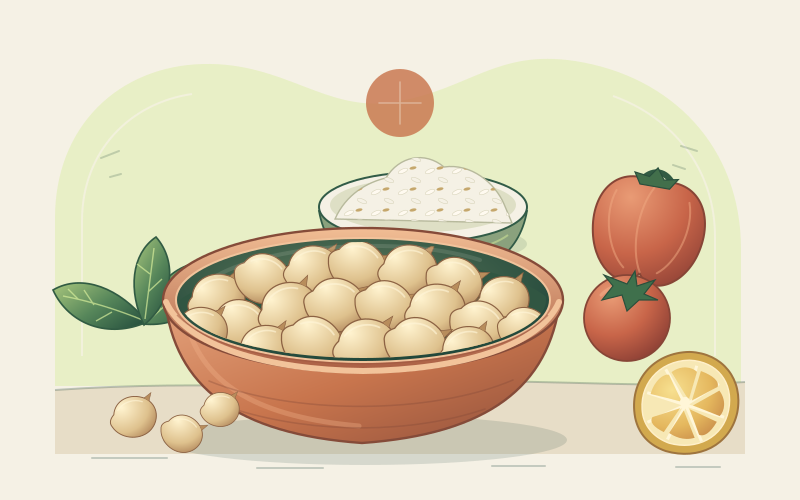
  • Tomatoes, peppers or lemon — Vitamin C and non-heme iron. Vitamin-C-rich foods can support absorption of non-heme iron from chickpeas and other plant foods. Actual absorption depends on the whole diet and iron status. Make chickpea stew with tomatoes and sweet peppers, or add lemon to chickpea salad.
  • Leafy greens, carrots or cabbage — Vegetable variety. Vegetables add flavours, textures and nutrients to a chickpea-based meal. No particular vegetable combination is essential. Cook chickpeas with spinach and carrots, or serve them with cabbage and grains.

The essentials

From direct sowing to a dry jar of seed

Six practical stages. Adapt cultivar, timing and harvest protection to your local growing season, rainfall and dry-down weather.

  1. Choose a type and a dry-finishing season

    Desi types generally have smaller, angular seeds with thicker, pigmented coats; kabuli types generally have larger, rounder seeds with thinner, pale coats. Both are Cicer arietinum, and neither class guarantees maturity or local performance. Select a locally proven cultivar that can mature before prolonged rain, damaging heat or frost.

  2. Direct-sow in the local growing window

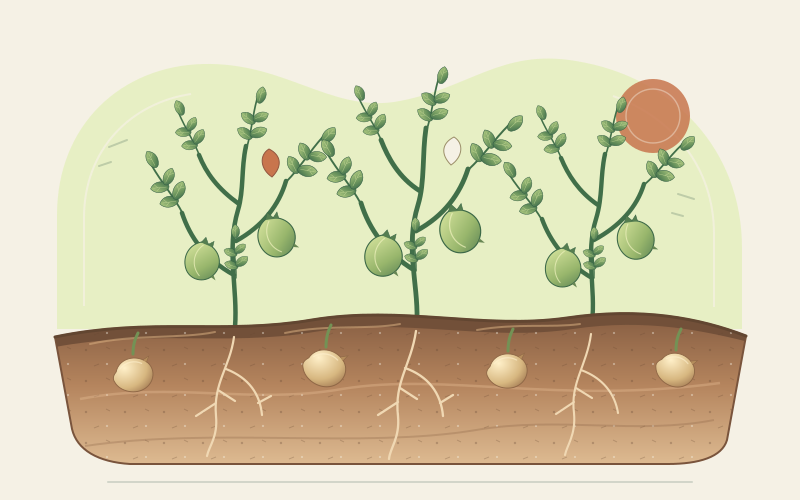
    Sow where the plants will grow once soil is workable and warming, not cold and saturated. As a general garden starting point, place seeds about 3–5 cm deep and 10–15 cm apart, following the packet and local guidance for the cultivar. Aim for mild-to-warm growth followed by a reasonably dry ripening period.

  3. Prioritise sun, drainage and open spacing

    Choose a sunny bed that sheds excess water; chickpeas are quickly injured by waterlogging. Relieve compaction and address drainage before sowing, using a raised bed where it suits the site. Leave enough room between plants and rows to weed and inspect the open, branching canopy; no trellis is needed.

  4. Keep nitrogen modest and water by need

    Avoid heavy nitrogen fertiliser, fresh manure and repeatedly rich feeding, which can favour vegetation and delay a useful dry harvest. Where compatible root-nodule bacteria are active, they can supply part of the crop’s nitrogen; use only a chickpea-compatible inoculant if one is recommended. Water at soil level when needed for establishment, flowering and pod filling without saturating the bed.

  5. Harvest mature pods before prolonged wet weather

    For a storage crop, let seeds mature fully and pods become straw-coloured to brown and dry. Gather selected ripe pods or whole plants when most pods are ready, before sustained rain can cause sprouting, staining or mould. If wet weather threatens, move cut or lifted plants under ventilated cover and spread them thinly rather than heaping them.

  6. Dry, inspect and store the seed

    Shell brittle pods or thresh gently, winnow away chaff and spread the seed on trays until thoroughly hard and dry. Discard mouldy, insect-damaged or doubtful seeds. Store in clean airtight containers in a cool, dark, dry place, label the type and year, and check for condensation or insects. Drying is not cooking: sort, rinse and cook dried chickpeas fully tender before eating.

Growing notes by place

Read your region, then read your weather

Compare broad growing conditions, then adjust for your own frost dates, altitude, rainfall and soil.

Cool, temperate and often maritime, with variable summer warmth and frequently damp harvest weather.

Northwestern Europe

Chickpeas are a marginal crop here and need a warm, sheltered, sunny site plus a dry finish. Short-season cultivars offer the best chance.

Indicative planting
Direct-sow April–May after local frost when soil is warming, not cold or saturated; use the earliest suitable cultivar.
Indicative harvest
Harvest mature pods around August–September and finish drying under cover before prolonged rain or frost.
Soil and moisture
Light to medium, well-drained soil with moderate fertility; avoid excess nitrogen and waterlogging.

Field note: Treat outdoor yields as uncertain in cool districts, give full sun and dry seed completely before storage.
Dates are indicative. Local frost forecasts, seasonal rainfall, harvest dry-down weather and recent conditions—not the calendar alone—should guide sowing and harvest.

Mediterranean lowlands · example

A spring-to-dry-summer rhythm

A compact planning guide, not a fixed schedule. Shift it with latitude, altitude, cultivar, frost and local rainfall.

  1. February–April

    Choose a locally adapted cultivar and prepare a sunny, well-drained bed. Direct-sow after locally damaging frost, earlier in mild lowlands and later in cold uplands.

  2. April–May

    Check emergence, thin severe overcrowding and remove weeds while small. Water at soil level only as needed for establishment and keep nitrogen feeding modest.

  3. May–June

    Maintain suitable moisture through flowering and pod filling without wetting foliage routinely or waterlogging roots. Inspect plants for local disease problems and seek identification when needed.

  4. June–July

    Harvest as pods and plants dry, before seed shatters or humid weather persists. Shell and finish drying the seed thoroughly, then inspect and store it in a labelled airtight container.

This example follows spring growth into a dry early-summer finish. Elsewhere, use the locally recommended season and the 90–120 day crop window as general context, not a universal date or promise of maturity.

From the field journal

Grow, choose and cook your chickpeas

Practical reading for a dry-finishing crop, informed desi and kabuli choices, and balanced meals grounded in the cooked reference food.

Your next harvest begins here

Start with a small, well-drained pulse bed.

A short row is enough to learn the crop’s rhythm from direct sowing to dry pods. Choose for your season, keep feeding modest and make thorough drying part of the harvest.

Open the growing guide