Crop 005 / Beta vulgaris subsp. vulgaris (Cicla Group)

Keep the heart, and the harvest continues.

Grow Swiss chard for tender young leaves or mature green blades and colourful stalks. Give this leaf beet room and steady moisture, then pick the outer leaves while the centre keeps producing.

One crop, two textures
Leaf and stalk Cook firm ribs a little longer than the tender blades.
First full-size leaves
50–65 days Baby leaves are earlier; weather and care shift the window.
Harvest habit
Cut and come again Take outer stalks and leave the growing centre intact.
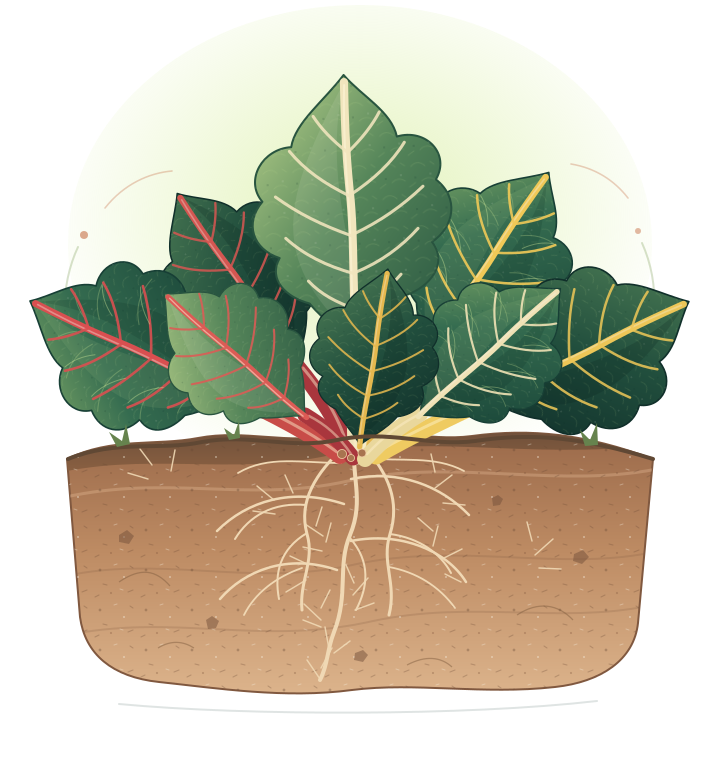
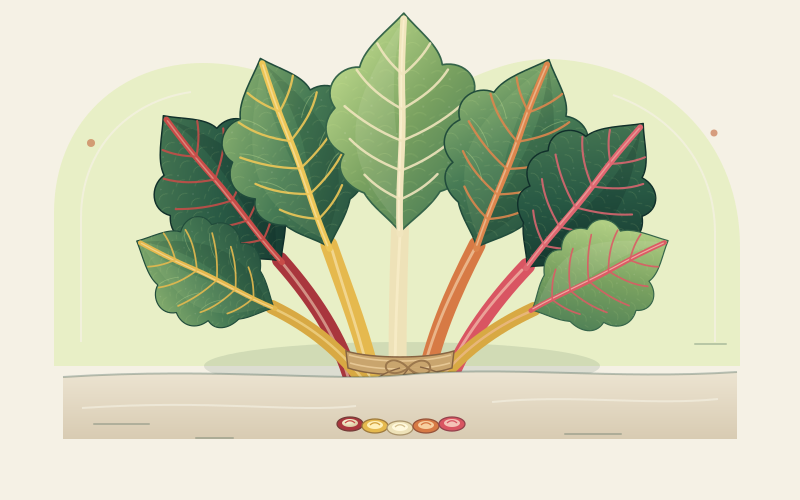
Swiss chard with dark green crinkled leaves, yellow, red and cream stalks, and a branching fibrous root system.
Swiss chard is a leaf beet: its edible blades and stalks are the crop, rather than a swollen storage root.

Know the crop

Crop profile

Swiss chard is a leaf-beet form of Beta vulgaris, selected for edible leaves and stalks rather than the enlarged root of beetroot.

Crop essentials

Growth
50–65 days From sowing to first full-size leaves. Baby leaves can be cut earlier, and established plants regrow after light pickings. Cold, heat and dry soil slow growth; leave the central leaves to support regrowth.
Botanical name
Beta vulgaris subsp. vulgaris (Cicla Group)
Family
Amaranthaceae
Origin
Mediterranean region
Habit
A biennial leaf beet usually grown as an annual for repeated leaf harvests

Nutrition / cooked

Nutrition, in context

Very high Editorial rank 4 of 4. This is Rooted’s qualitative category for protein, fibre, folate, iron and potassium density in the cooked-food comparison, with highlights adding context. It is not an official nutrient score, a health rating or a measure of absorption.

Approximate nutrients per 100 g Swiss chard, cooked, boiled, drained, without salt
Nutrient Amount
Protein 1.88 g
Fibre 2.1 g
Folate 9 µg
Iron 2.26 mg
Potassium 549 mg

Basis: Approximate values per 100 g Swiss chard, cooked, boiled, drained, without salt (USDA FoodData Central SR Legacy 170401).

The same 100 g reference contains vitamin K (327.3 µg), vitamin A (306 µg RAE) and vitamin C (18 mg). It provides potassium and non-heme iron, but little folate in this cooked reference.

Chard contains oxalate, which limits absorption of some minerals. Drained weight, boiling losses, the leaf-to-stalk mix and serving size affect intake; listed nutrients are not absorbed amounts. Raw leaves, stalk-only portions and beetroot values differ.

At the table

Build a varied meal around chard

  • Lentils or beans with grains. Legumes add protein, fibre and folate to a chard dish, while grains make the meal more varied. No particular combination is required at every meal. Try adding chard to lentil soup and serving it with bulgur or whole-grain bread.
  • Lemon, peppers or tomatoes. Vitamin-C-rich ingredients can support absorption of non-heme iron from chard and other plant foods. Actual absorption depends on the whole diet and iron status. Dress cooked chard and beans with lemon, or add chopped peppers.
  • Eggs, fish, cheese or tofu. These foods contribute protein and different nutrients alongside chard. Select options that fit dietary preferences and overall needs; serve chard with a tofu stir-fry or fold it into an omelette.

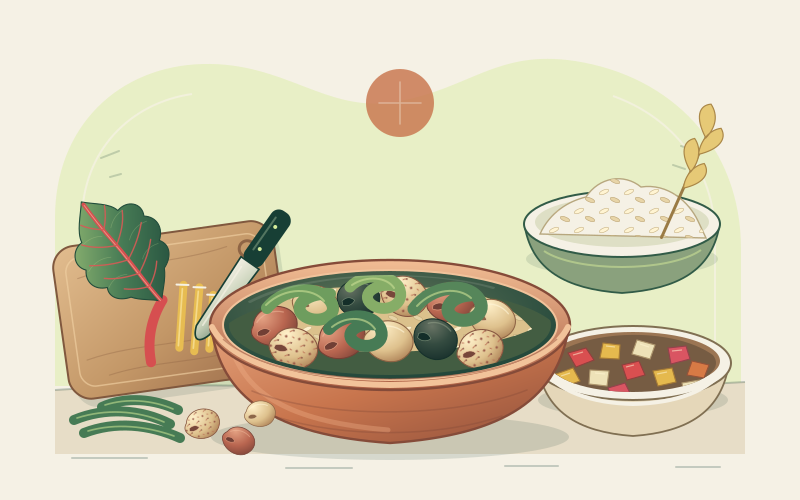
These are flexible meal ideas, not prescribed combinations or ratios. Cook sliced stalks first when they are firm, then add the leaf blades so both reach a pleasant texture.

The essentials

From clustered seedlings to repeated pickings

Six practical stages. Adapt sowing, spacing and protection to your weather, soil and intended leaf size.

  1. Direct sow or transplant gently

    Sow about 1–2 cm deep into workable soil when local conditions suit, following the seed packet. Alternatively, start in modules and plant out before seedlings become crowded or root-bound. Disturb the roots as little as possible and water transplants in gently.

  2. Thin for the harvest you want

    A chard seed can produce several seedlings, so thin emerging clusters instead of letting them compete. Snip seedlings where pulling would disturb their neighbours. Keep closer spacing for baby leaves and allow roughly 20–30 cm for full-size plants, adjusting to the cultivar and packet guidance.

  3. Give roots room and steady moisture

    Use fertile, moisture-retentive but free-draining soil, with full sun or light summer shade. Water the soil deeply when needed rather than following a rigid schedule; avoid both dry stress and saturation. Mulch established plants to reduce evaporation, weeds and soil splash.

  4. Prevent leaf damage early

    Protect young plants from slugs and snails, inspect after dusk and reduce damp hiding places. Check for leafminer tunnels, remove badly mined leaves and use securely edged fine mesh before adult flies arrive where they are troublesome. Encourage airflow, avoid prolonged leaf wetness and rotate away from related host crops where leaf spot is established; identify spots before choosing treatment.

  5. Use seasonal flexibility realistically

    Chard tolerates more summer heat than spinach and established plants can withstand light frost, but neither trait makes it invulnerable. Heat, drought, hard freezes and frozen ground can damage leaves or stop growth. Use light shade in intense heat and suitable cover for light cold, while keeping water available in dry spells.

  6. Pick outer leaves for a long harvest

    Begin with baby leaves or wait about 50–65 days for full-size growth. For cut-and-come-again harvest, cut older outer stalks cleanly near the crown, leaving the central bud and several young leaves. Pick little and often without stripping the plant bare, and reduce harvesting when stress or disease leaves too little healthy foliage for regrowth.

Growing notes by place

Read your region, then read your weather

Compare broad growing conditions, then adjust for your own frost dates, altitude, rainfall and soil.

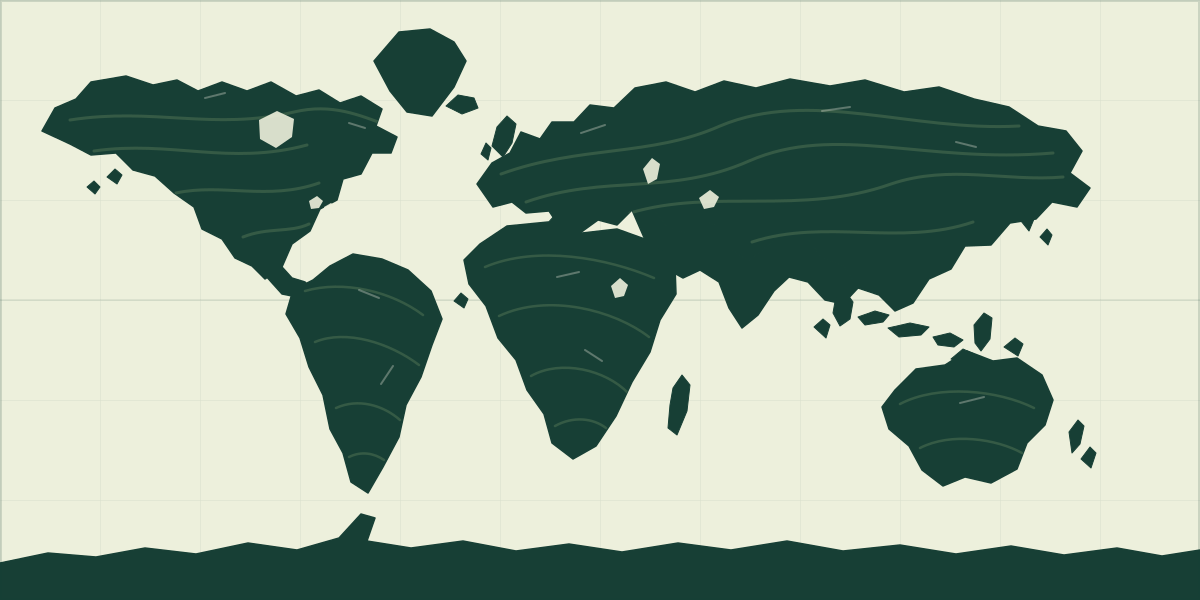
Cool, temperate and often maritime, with local differences in frost, exposure and summer warmth.

Northwestern Europe

Chard gives a long harvest in Britain, Ireland and nearby districts. A summer sowing can overwinter where cold is not severe.

Indicative planting
Sow outdoors April–July, or start earlier in modules for transplanting. Use small repeat sowings for baby leaf and protect young plants in cold spells.
Indicative harvest
Pick full outer leaves from early summer into autumn; July sowings may resume in spring. Baby leaves are earlier and regular light picking encourages regrowth.
Soil and moisture
Rich, moisture-retentive and free-draining soil with compost; full sun or light summer shade suits it.

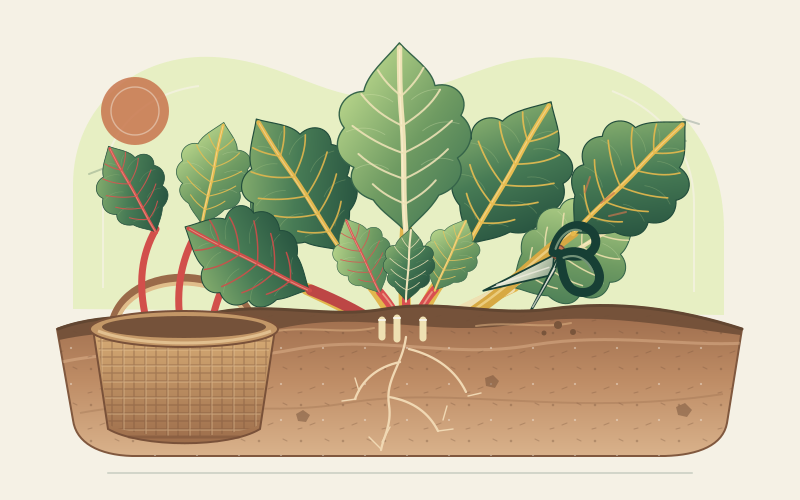
Field note: Thin for the leaf size wanted, water during long dry spells and cut outer stalks at the base while leaving the centre intact.
Dates are indicative. Local frost forecasts, soil conditions and recent weather—not the calendar alone—should guide sowing, protection and harvest.

Cool-temperate Northern Hemisphere · example

A long season of leaves

A compact planning guide, not a fixed schedule. Shift it with latitude, altitude, cultivar and local conditions.

  1. March–April

    Prepare a fertile, free-draining bed. Start early plants in modules or direct sow once soil is workable, protecting young growth in cold spells.

  2. April–July

    Direct sow or transplant, thinning clustered seedlings to suit baby or full-size leaves. Make small repeat sowings where the season allows.

  3. May–October

    Maintain even moisture, watch for slugs, leafminers and leaf spot, and begin taking outer leaves while preserving each growing centre.

  4. July onward

    Make a later sowing for autumn leaves and possible spring regrowth where winters are not severe. Use suitable cover, but expect hard cold to check or damage the crop.

Baby leaves can be ready before the 50–65-day full-leaf window. Repeated light pickings extend harvest well beyond the first cut; local weather determines when growth slows or restarts.

From the field journal

Grow, choose and cook your chard

Practical reading for a long harvest, a well-suited selection and flexible meals that use both leaves and stalks.

Your next harvest begins here

Start with a small, steady picking patch.

A few well-spaced plants are enough to learn the rhythm of chard. Thin early, keep moisture steady and leave the centre intact each time you gather outer leaves.

Open the growing guide