
Crop 010 / Brassica oleracea var. italica

Cut the central head, then pick again.

Grow heading broccoli for tight immature flower buds and, in many cultivars, a later flush of tender side shoots. Raise sturdy transplants, keep growth steady through cool weather, and cut before the buds open.

More than one harvest
Central head and side shoots Leave suitable plants in place after the first cut for smaller later shoots.
Typical first central-head harvest
60–100 days From sowing under favourable conditions, including the seedling-raising period.
Season
Cool and steadily moist Moderate temperatures and uninterrupted growth support tight heads.
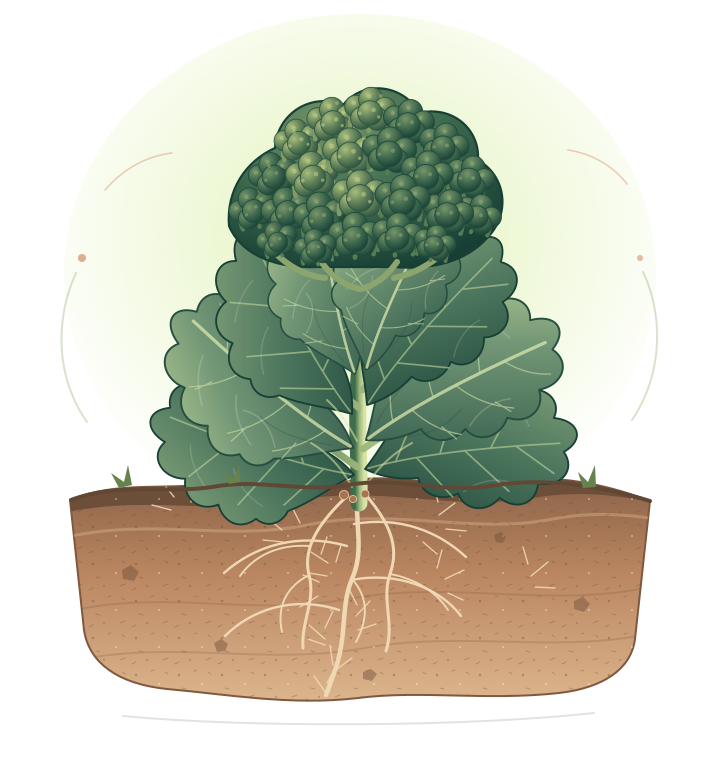
Broccoli plant with a dense central head, broad leaves, smaller side shoots and branching roots in a soil cutaway.
Harvest the tight central head with a short stalk, leaving the lower plant intact so suitable cultivars can produce side shoots.

Know the crop

Crop profile

A cool-season brassica grown for its central flower head and, in many cultivars, later side shoots. This entry concerns heading broccoli or calabrese rather than long-season sprouting broccoli; steady moisture and moderate temperatures support tight heads.

Crop essentials

Botanical name
Brassica oleracea var. italica
Growth
60–100 days From sowing to first central-head harvest under favourable conditions, including the seedling-raising period. Transplanting changes the time spent outdoors but does not remove nursery weeks. Cultivar, heat, cold and plant stress shift maturity.
Family
Brassicaceae, the brassica family
Origin
Mediterranean region
Habit
Cool-season heading brassica, with later side shoots in many cultivars

Nutrition / boiled and drained

Nutrition, in context

Very high Editorial nutrient-density rank 4. This is Rooted’s qualitative category for protein, fibre, folate, iron and potassium in the site’s cooked-food comparison, with highlights adding context. It is not an official nutritional score or a universal ranking of vegetables.

Reference nutrients per 100 g broccoli, cooked, boiled, drained, without salt
Nutrient Amount
Protein 2.38 g
Fibre 3.3 g
Folate 108 µg
Iron 0.67 mg
Potassium 293 mg
  • Contains vitamin C (64.9 mg), vitamin K (141.1 µg) and vitamin A (77 µg RAE) in the same cooked reference.
  • Provides fibre and folate alongside modest amounts of protein and potassium.
  • The drained boiled reference is not interchangeable with raw, frozen, roasted or stir-fried broccoli.

Basis: Approximate values per 100 g broccoli, cooked, boiled, drained, without salt (USDA FoodData Central SR Legacy 169967). Boiling and draining can reduce water-soluble nutrients, while the edible stem-to-floret ratio changes the profile. Values describe the reference food, not absorbed amounts or individual dietary needs.

At the table

Build a varied meal around broccoli

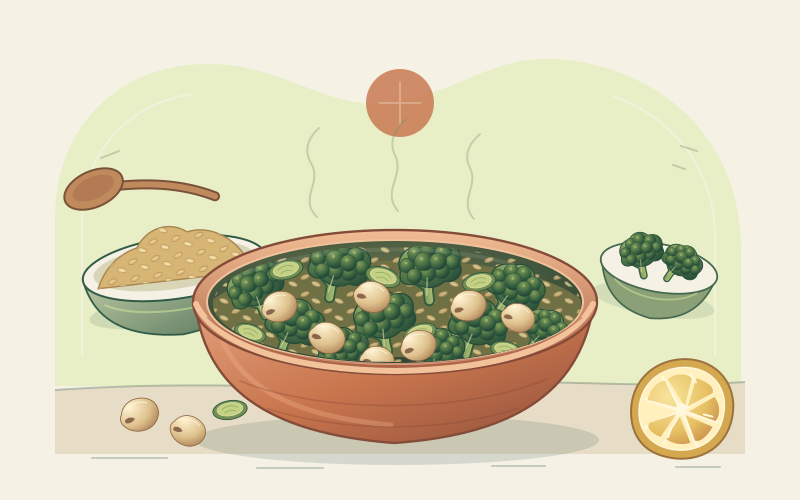
  • Beans, chickpeas or lentils — Protein and fibre. Pulses make a broccoli meal more substantial and add protein, fibre and iron. Their amino-acid patterns can complement grains across the day. Serve broccoli with chickpeas and rice, or add it to a lentil and vegetable stew.
  • Potatoes, rice or whole-grain pasta — A varied meal. These foods add energy and their own nutrients alongside broccoli. Choose accompaniments that fit dietary preferences and needs. Toss broccoli and white beans with whole-grain pasta, or serve it with potatoes and tofu.
  • Eggs, fish, yogurt or tofu — Protein variety. These accompaniments add protein and different nutrients to a broccoli dish. No particular food is required to make the vegetable useful. Try broccoli in a tofu stir-fry or serve it with fish and potatoes.

The essentials

From sturdy transplants to tender side shoots

Six practical stages. Adapt timing, cultivar and protection to your rainfall, summer heat, winter cold and local pests.

  1. Time a cool-season crop

    Aim for leafy establishment without a severe check, then head development before hot weather. Spring transplants suit many temperate gardens; elsewhere, use a late-summer planting for autumn harvest. Local frost dates, elevation, rainfall and cultivar matter more than a universal month.

  2. Raise and transplant sturdy seedlings

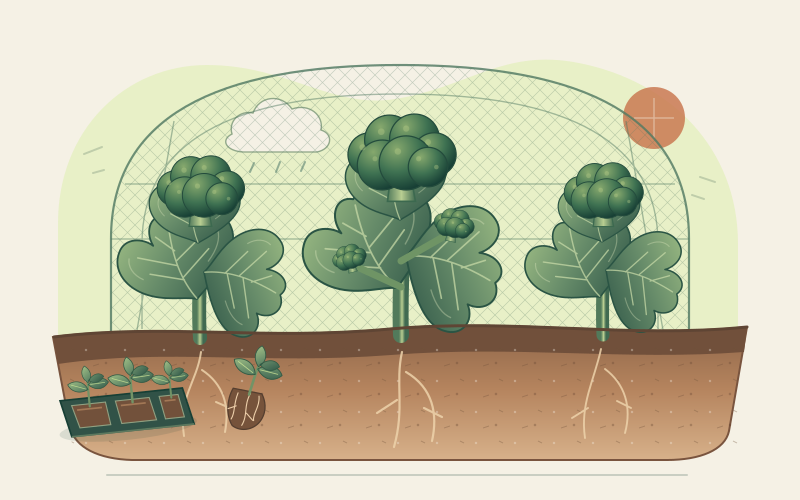
    Sow in clean modules or seed trays for an early crop, giving seedlings bright light and enough space. Harden them off gradually over about a week, then transplant while they are still growing actively. Keep the root ball intact, avoid severe cold or hot spells, and water before and after planting.

  3. Prepare fertile soil and allow room

    Choose soil that holds moisture without remaining saturated, and use a soil test to guide pH and fertiliser. Firm loose soil before planting. Full-sized heading broccoli commonly needs roughly 30–45 cm between plants and 45–60 cm between rows; follow the supplier’s directions for the cultivar.

  4. Maintain even moisture

    Check below the surface and water thoroughly when the root zone begins to dry, especially during establishment and head formation. Mulch around established plants to limit evaporation and weeds, keeping it clear of stems. Avoid both repeated drought checks and waterlogged roots, and diagnose slow growth before adding fertiliser.

  5. Prevent heat stress and pest damage

    Suitable timing, vigorous transplants and steady care reduce the risk of small button heads, loose growth and premature flowering. Fit fine insect mesh before egg-laying, support it above the leaves and secure every edge without trapping pests inside. Rotate with other brassicas, use clean transplants and tools, and seek local advice if clubroot appears.

  6. Cut the head, then pick side shoots

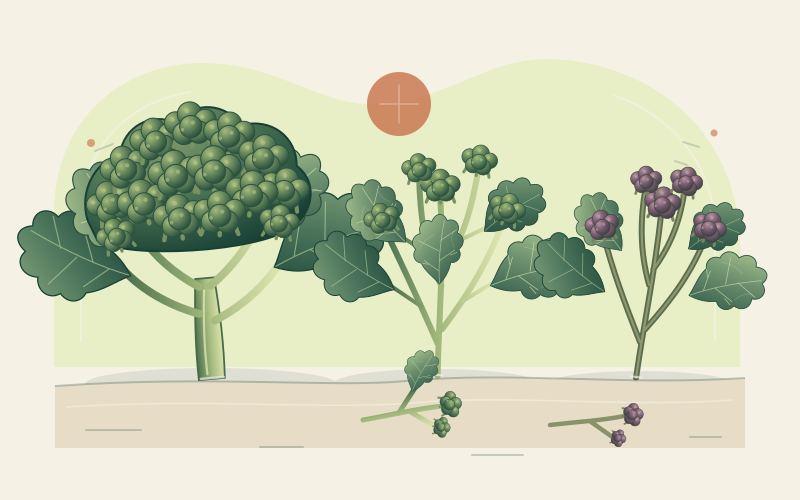
    Cut the central head at a usable size while its dome is firm and buds remain tight; harvest promptly if buds begin to open. Use a clean, sharp knife and leave the lower plant intact. Many heading cultivars then produce smaller side shoots, so inspect every few days and pick them before flowers open.

Growing notes by place

Read your region, then read your weather

Compare broad growing conditions, then adjust for your own frost dates, altitude, rainfall and soil.

Cool, temperate and often maritime, with colder springs and more exposure in northern and upland sites.

Northwestern Europe

Heading broccoli suits spring and early-summer sowing in Britain, Ireland and nearby districts. This is not the calendar for overwintering sprouting types.

Indicative planting
Sow March–May, starting under cover where spring is cold, and transplant April–June after hardening off. Use repeat sowings where space allows.
Indicative harvest
Cut central heads from July–October while buds remain tight, then leave suitable plants for side shoots.
Soil and moisture
Fertile, firm and moisture-retentive but free-draining soil with organic matter; avoid waterlogging and acidic clubroot-affected beds.

Field note: Net against caterpillars and birds, water through head formation and harvest before flowers open.
Dates are indicative. Local frost forecasts, heat, seasonal rainfall and recent weather—not the calendar alone—should guide sowing and harvest.

Cool-temperate Northern Hemisphere · example

A cool-season rhythm

A compact planning guide, not a fixed schedule. Shift it with latitude, altitude, cultivar and local conditions.

  1. March–May

    Prepare a fertile, drained bed and sow spring crops, starting under cover where spring is cold. Give seedlings bright light and enough room to grow sturdy stems.

  2. April–June

    Harden off and transplant sturdy seedlings at their final spacing. Water them in, firm the soil and fit pest barriers before damage begins.

  3. June–August

    Maintain even moisture as heads form, weed and inspect leaf undersides. Start autumn crops around June–July where the local season suits them.

  4. July–October

    Cut central heads while buds remain tight, then pick side shoots from suitable plants. Harvest autumn heads before buds open or severe freezes damage them.

The 60–100 day window runs from sowing to first central-head harvest under favourable conditions and includes the seedling-raising period. Heat, cold and plant stress shift maturity; judge harvest by bud size and tightness.

From the field journal

Grow, choose and cook your broccoli

Practical reading for tight heads and later pickings, informed variety choices and balanced meals without superfood claims.

Your next harvest begins here

Start with a small, steady broccoli bed.

A few well-spaced plants can teach you the rhythm of transplanting, protecting and picking. Match the season to your climate, keep moisture steady and leave suitable plants in place for side shoots.

Open the growing guide