
Crop 052 / Ocimum basilicum

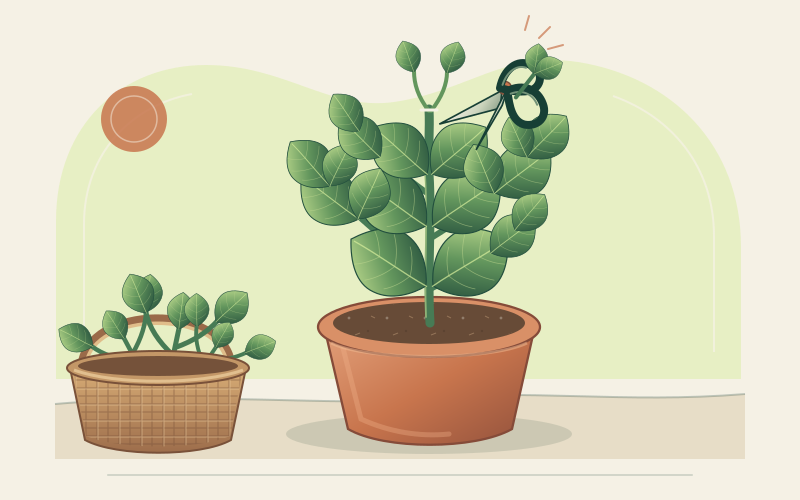
Pinch the tips, and gather the branches.

Grow sweet basil in genuine warmth, after frost and cold nights. Harvest shoot tips above a leaf pair, remove buds when leaves are the priority, and handle the aromatic harvest gently to limit bruising and blackening.

Harvest
Tips and paired leaves Cut above a leaf junction so side shoots can branch; avoid stripping one stem bare.
First substantial pick
50–70 days From sowing in warm conditions; small established-plant tip harvests can begin earlier.
Season
Warm and frost-free Cold can damage leaves above freezing; use shelter where summer nights are cool.
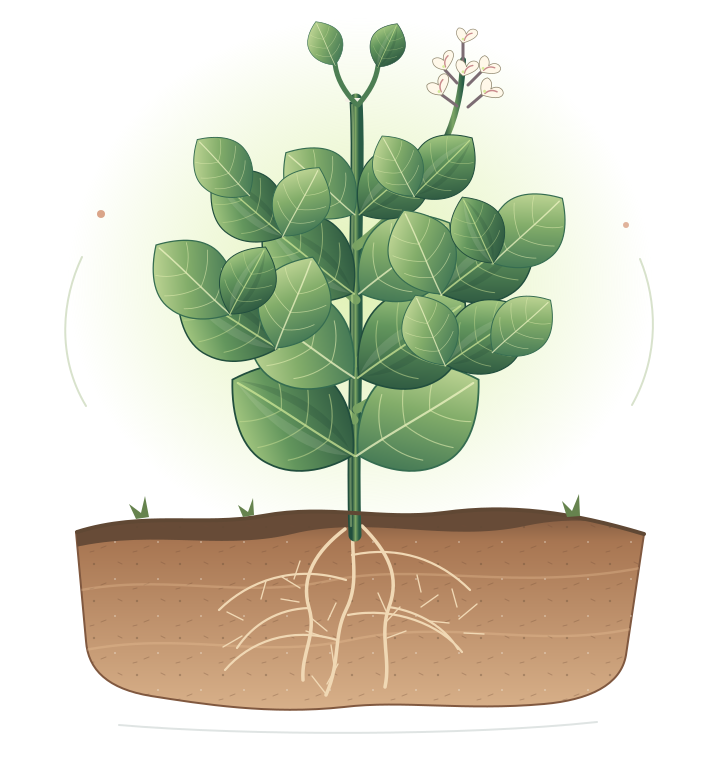
Sweet basil with opposite oval green leaves, a pinched branching stem, a small white-flowered spike, and fibrous roots in a soil cutaway.
Sweet basil carries opposite leaves on square mint-family stems. Regular tip harvest encourages branching; a flower spike marks the shift towards seed production.

Know the crop

Crop profile

Sweet basil is a warm-season culinary herb in the mint family. It is frost-sensitive and usually grown as an annual, although it can behave as a short-lived perennial in suitable tropical conditions. Repeated leafy harvests—not roots, fruit or dried seed—are the crop here.

Crop essentials

Botanical name
Ocimum basilicum
Growth
50–70 days From sowing to a first substantial leafy harvest under warm, suitable conditions. Small tip pickings can begin once plants are established; transplant raising, cool weather and cultivar shift the window. Repeated cutting extends harvest beyond the first pick.
Family
Lamiaceae, the mint family
Origin
Tropical regions of Africa and Asia; now cultivated widely as a culinary herb
Habit
A warm-season, frost-sensitive herb usually grown as an annual; potentially short-lived perennial where cold never checks it

Nutrition / fresh leaves, raw

Nutrition, in context

High Editorial nutrient-density rank 3. This is Rooted’s qualitative category for protein, fibre, folate, iron and potassium in the site’s raw-leaf comparison, with highlights adding context. It is not an official nutrient score, health rating or measure of absorption.

Approximate nutrients per 100 g fresh basil, raw edible portion
NutrientAmount
Protein3.15 g
Fibre1.6 g
Folate68 µg
Iron3.17 mg
Potassium295 mg
  • The same raw reference contains vitamin K (414.8 µg), vitamin A (264 µg RAE), vitamin C (18 mg) and calcium (177 mg) per 100 g.
  • Per 100 g, fresh basil provides folate, potassium and non-heme iron, but a typical garnish or pesto serving uses much less than 100 g of leaves.
  • These raw-leaf values are not interchangeable with dried basil, cooked basil, pesto or concentrated essential oil.

Basis: Approximate values per 100 g fresh basil, raw edible portion (USDA FoodData Central SR Legacy 172232). A 100 g reference is a comparison basis, not a recommended serving. Actual intake depends on the amount of leaf used and the other ingredients. Listed content does not measure absorption or establish a health benefit; basil is a culinary herb, not a medicine or essential-oil dosage guide.

At the table

Use basil for aroma, then build the meal

  • Tomatoes, peppers or citrus — Fresh flavour and vitamin C. These foods add vitamin C and contrasting flavour to a basil dish. Vitamin C can support absorption of non-heme iron from plant foods in the same meal, but the effect depends on the whole diet and iron status. Add fresh basil to a tomato and bean salad, or finish a pepper and chickpea stew with chopped leaves.
  • Beans, lentils or grains — A more substantial meal. Basil contributes aroma while legumes and grains provide more substantial energy, protein or fibre. This is dietary variety, not a required nutrient-combining formula. Stir basil into minestrone with beans and pasta, or serve it with lentils and rice.
  • Eggs, cheese, tofu, nuts or seeds — Protein and texture. These ingredients make a basil preparation more varied and filling. Cheese, nuts and oil also change the nutrient profile of pesto well beyond the values for basil leaves alone. Fold basil into a tofu scramble, or make a small batch of pesto with nuts or seeds and chill it promptly.

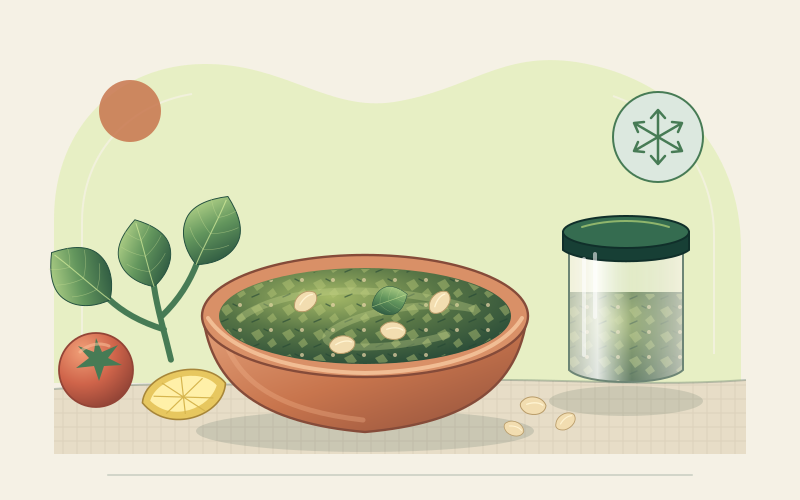
Pesto is perishable: prepare with clean hands and utensils, refrigerate promptly at 4°C (40°F) or below, and use within 3–4 days or freeze. Never keep homemade basil, garlic or herb mixtures in oil at room temperature; oil does not make them shelf-stable.

The essentials

From warm seed to fragrant shoot tips

Six practical stages for a small bed or container. Adapt warmth, spacing and protection to local frost, night temperature, rain and humidity.

  1. Sow warm, thinly and shallowly

    Start basil indoors in a warm, bright place, or direct-sow only after frost when soil and nights are warm. A germination temperature near 20°C is useful; follow the packet for depth and spacing, generally covering seed only very lightly. Keep the medium moist, not saturated, and provide bright light as soon as seedlings emerge.

  2. Transplant after cold has genuinely eased

    Grow seedlings on without crowding, then harden them off gradually. Plant after local frost and cold nights into full sun and shelter; cold soil and temperatures around 10°C can check or damage basil even without frost. Space full-size plants roughly 20–30 cm apart, adjusting for compact cultivars and airflow.

  3. Keep roots moist and the canopy open

    Use fertile, well-drained soil or a sufficiently deep container with drainage. Water the root zone when needed rather than keeping foliage wet or roots saturated; containers dry faster. Avoid excessive feeding and crowded growth. In severe heat, light afternoon shade can reduce stress while preserving good light.

  4. Pinch early and manage flowering

    Once plants have several leaf pairs, pinch or cut the main tip just above a pair so side shoots can grow. Repeat across the plant and remove flower buds promptly when leaf production is the goal. Flowering is natural and can feed bees; leave a chosen plant to bloom if pollinators or seed matter more than maximum leafy harvest.

  5. Inspect before disease spreads

    Protect young plants from slugs and check for aphids. For downy mildew, inspect leaf undersides for grey-purple growth beneath yellowing areas, provide airflow and avoid overnight leaf wetness. Remove badly affected plants according to local guidance. Where disease recurs, choose a locally trialled resistant cultivar; resistance is specific, not immunity.

  6. Harvest gently and choose storage by product

    Expect a substantial first harvest around 50–70 days from sowing in warmth, with light tip picks earlier on established plants. Cut above leaf pairs without stripping stems. For short fresh storage, keep clean cut stems loosely in water at room temperature away from sun, because refrigeration can blacken leaves. For pesto, the rule reverses: refrigerate promptly at 4°C or below, use within 3–4 days or freeze.

Growing notes by place

Read your region, then read your nights

Compare broad conditions, then adjust for your own frost dates, night temperatures, altitude, rainfall and soil.

Cool, temperate and often maritime, with short outdoor heat in northern, upland and exposed sites and marked local frost differences.

Northwestern Europe

Representative of Britain, Ireland, the Low Countries and nearby districts. Basil usually needs an indoor or greenhouse start and a warm, sheltered summer position; outdoor performance is less certain in cool districts.

Indicative planting
Sow indoors around March–May near 20°C, then harden off and plant out around late May–June only after frost and cold nights have eased. A greenhouse, bright windowsill or sheltered container can replace outdoor planting in cool sites.
Indicative harvest
Take small tip pickings once established and expect a first substantial harvest roughly 50–70 days after sowing, often July–September. Move containers under cover before cold nights or frost.
Soil and moisture
Fertile, moisture-retentive but sharply drained soil or peat-free container mix in full sun and shelter; avoid cold, wet roots and overcrowded supermarket-style clumps.

Field note: Pinch above a leaf pair and remove flower buds for leaf production. Ventilate protected plants, avoid wet foliage overnight and use locally available downy-mildew-resistant cultivars where the disease recurs.
Dates are indicative. Local frost forecasts, night temperatures, seasonal rainfall and recent weather—not the calendar alone—should guide sowing, protection and harvest.

Cool-temperate Northern Hemisphere · example

One warm season, many small cuttings

A compact planning guide, not a fixed schedule. Shift it with latitude, altitude, cultivar, night warmth and local conditions.

  1. March–May

    Sow indoors thinly near 20°C in bright conditions. Prick out crowded seedlings, keep the medium moist but not wet, and make a small succession sowing for later tender plants.

  2. Late May–June

    Harden off transplants gradually. After frost and cold nights, plant into a warm, sheltered, drained bed or container; keep cool-site plants under cover rather than rushing them outside.

  3. June–September

    Pinch tips above leaf pairs, remove buds for leaf production and water the root zone. Inspect for slugs, aphids and downy mildew, especially in humid or crowded plantings.

  4. July–first cold

    Harvest repeatedly, with a substantial first pick around 50–70 days after warm-season sowing. Handle leaves gently, keep fresh stems out of cold storage, and refrigerate or freeze prepared pesto promptly.

The 50–70-day window is an indicative first substantial harvest, not the end of cropping. Cool nights slow growth and can blacken leaves; regular branching cuts extend harvest until cold or disease ends the stand.

From the field journal

Grow, choose and prepare your basil

Practical reading for warm growing, informed culinary choices, raw-leaf nutrition and storage without superfood or medicinal claims.

Your next harvest begins here

Start with one warm pot and a pair of snips.

A few well-spaced plants are enough to learn basil’s rhythm. Wait for warm nights, pinch above leaf pairs, and decide plant by plant whether the next stage is more leaves or flowers for visiting insects.

Open the growing guide