A warm-season herb, not a hardy windowsill staple
Sweet basil, Ocimum basilicum, belongs to the mint family. Its opposite leaves, square stems and upright flower spikes are characteristic, while leaf size, colour and aroma vary among cultivars. Although basil can persist as a short-lived perennial in suitable tropical conditions, gardeners normally raise it as an annual because frost kills it and chilly weather checks growth.
“Frost-sensitive” does not mean only 0°C matters. Cold soil and chilly nights can stunt plants, and extension guidance notes blackening and damage around 10°C (50°F). Wait for both frost-free weather and genuine warmth before planting out. A sunny position exposed to cold wind may perform worse than a sheltered container that can be moved under cover.
Rooted’s 50–70 days is an indicative window from sowing to a first substantial leafy harvest under warm conditions. It is not a rule to leave every plant untouched for that long. Once a young plant is established and has enough foliage, a small tip harvest is useful pruning. Transplant production, cool nights, heat stress and cultivar all shift the calendar; repeated harvest continues beyond the first cut.
Sow and transplant without a cold setback
-
Start thinly in warmth and bright light
Sow indoors in a clean seed tray or small pots, following the supplier’s depth guidance; basil seed is generally covered only very lightly. A medium temperature around 20°C (68°F) supports germination. Keep it evenly moist but not saturated, and ventilate any cover as seedlings emerge. Bright light prevents weak, stretched growth. Damping-off is more likely in wet, stagnant, overcrowded conditions.
-
Give each seedling room before planting out
Move crowded seedlings into individual modules or pots once they can be handled, retaining moist compost around the roots. A dense supermarket pot contains many competing plants rather than one vigorous specimen; it can be divided carefully for longer growing, but immediate kitchen use is also a legitimate choice. Compact bush cultivars need less final space than large Genovese or lettuce-leaf plants.
-
Harden off, then wait for warm nights
Acclimatise indoor plants gradually to outdoor light and air over several days, bringing them in if cold or strong wind threatens. Transplant after local frost when the soil has warmed and cold nights have eased. In cool-temperate districts this may be late May or June, but local weather takes priority. Full sun and shelter suit basil; severe summer heat may call for light afternoon shade.
-
Space for the mature, branched plant
A starting range of roughly 20–30 cm between full-size plants allows branching and airflow, with compact types closer where local guidance supports it. Do not use spacing as a substitute for inspection. A greenhouse canopy can still become humid, and a widely spaced plant watered overhead every evening can still stay wet. Containers need drainage holes and enough depth to avoid constant drying.
Moist roots, open foliage and moderate feeding
Basil grows best in fertile, moisture-retentive but free-draining soil. Check below the surface and water the root zone when needed rather than applying a fixed daily amount. Both extremes cause trouble: dry stress slows growth and can hasten flowering, while saturated soil deprives roots of air. Morning watering at soil level leaves less opportunity for foliage to remain wet overnight. Mulch can reduce evaporation and splash, but keep it from sealing wet material against stems.
Heavy feeding is not a route to better flavour. Excess nitrogen and very lush growth can produce a soft, crowded canopy. Use a soil test for bed amendments and a balanced container feed only when the growing medium and plant condition justify it. Ventilate greenhouses without exposing plants to chilling drafts, and avoid handling wet leaves more than necessary.
Pinch above a leaf pair, then repeat
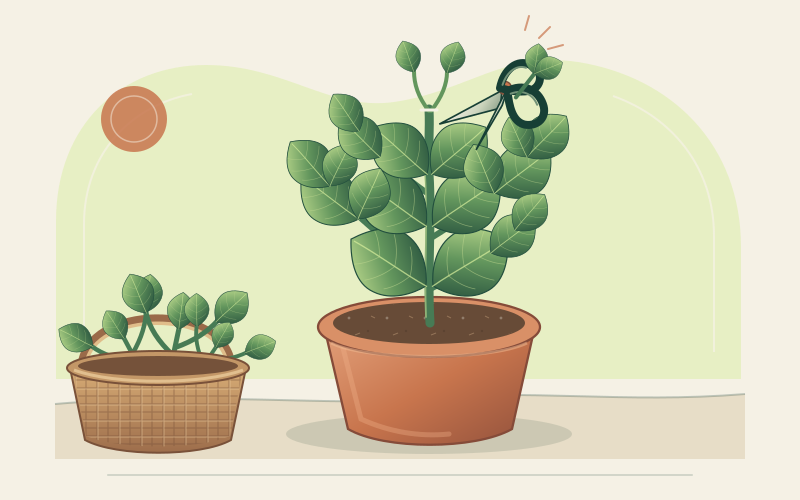
The growing tip at the end of a stem suppresses some side-shoot growth. Removing that tip just above a healthy pair of leaves redirects growth into shoots from the leaf axils. Start when the plant has several leaf pairs and enough leaf area to recover. Use clean fingers or snips; leave the paired leaves and avoid tearing the stem. The removed tip is the harvest, not waste.
Repeat light cuts across the plant rather than taking every leaf from one stem. This creates a rounded, branched plant and spreads harvesting over time. If a stem becomes tall and sparse, cut back to sound lower growth while retaining enough foliage. Severe cutting of a stressed or diseased plant can prevent recovery.
Flower management is a choice, not an emergency. Pinch buds as soon as they appear when tender leaves are the priority, because flowering changes growth allocation and leaf flavour can decline. Basil flowers are edible and attractive to bees and other insects. With several plants, leave one to bloom for pollinator observation or seed, while keeping the others pinched. Do not claim that pinching makes a plant perennial or indefinitely productive.
Recognise downy mildew and reduce favourable conditions
Basil downy mildew often begins as yellowing on the upper leaf surface, sometimes bounded by veins, with grey to purple fuzzy growth on the underside. Leaf blackening alone is not a diagnosis: chilling, bruising, ageing and other diseases can also discolor basil. Turn leaves over and seek local identification when symptoms are uncertain.
Start with reputable seed and plants, space for airflow, avoid prolonged leaf wetness and inspect regularly, especially during warm, humid or wet weather. Remove badly affected plants rather than composting or treating them without following local disease guidance. Replanting elsewhere may be more realistic than trying to restore a collapsing stand. The pathogen is a plant-disease problem, not a human toxin, but decayed or otherwise contaminated leaves are not good food.
Where downy mildew recurs, ask local extension about resistant cultivars. ‘Prospera’, ‘Rutgers Obsession’, ‘Rutgers Devotion’ and related resistant selections are examples named by extension programmes. A resistance claim applies to the specified disease and sometimes particular pathogen strains; it does not prevent every leaf spot, wilt, cold injury or pest. See the variety guide for selection details.
Cut, cool gently and keep fresh leaves out of damaging cold
Harvest when leaves are dry and before the day becomes excessively hot where possible. Cut tips above leaf pairs, gather loose sprigs rather than compressing them into a wet heap, and discard diseased, slimy or badly damaged tissue. Rinse under clean running water before use and drain or dry gently; do not use soap or produce washes unless local food-safety guidance specifically directs otherwise.
Fresh basil is vulnerable to chilling injury and blackening. For short storage of clean, sound cut stems, place the stem ends loosely in a glass of water at room temperature, out of direct sun, and keep leaves above the water. Do not seal bruised wet foliage in a warm bag. Illinois Extension specifically warns that refrigeration can discolor fresh basil. This is a quality issue, not permission to leave prepared pesto or other perishable mixtures at room temperature.
For longer culinary storage, freeze clean chopped leaves or pesto in small portions, or dry leaves using a reliable herb-drying method until thoroughly dry before airtight storage. Drying changes flavour and nutrient concentration and needs protection from dust, condensation and mould. Homemade pesto must be refrigerated promptly at 4°C (40°F) or below and used within 3–4 days or frozen; never store basil or garlic in oil at room temperature. The nutrition and kitchen guide explains the distinction.