Start with the exact reference: fresh basil, raw
The figures below describe fresh basil, raw edible portion, not a generic herb product. USDA FoodData Central SR Legacy entry 172232 is the reference. Per 100 grams, it reports 3.15 g protein, 1.6 g dietary fibre, 68 µg folate, 3.17 mg iron and 295 mg potassium. These are approximate food-composition values, not a laboratory analysis of your garden harvest.
| Nutrient | Amount per 100 g | Context |
|---|---|---|
| Protein | 3.15 g | Not a high-protein serving when only a few leaves are used |
| Dietary fibre | 1.6 g | Actual intake scales with leaf weight |
| Folate | 68 µg | Raw food folate, not a supplement dose |
| Iron | 3.17 mg | Non-heme iron; content is not absorbed amount |
| Potassium | 295 mg | One mineral among many in the wider diet |
| Vitamin K | 414.8 µg | A concentrated leafy-herb reference value |
| Vitamin A | 264 µg RAE | Expressed as retinol activity equivalents |
| Vitamin C | 18 mg | Storage and preparation can change the amount |
| Calcium | 177 mg | Content does not establish bioavailability |
Rooted’s High, editorial rank 3 of 4 is a qualitative comparison using protein, fibre, folate, iron and potassium, with highlights for context. It is not an official score, a universal food ranking or a health claim. A herb can have concentrated values per 100 g and still contribute small absolute amounts when used as a garnish.
The serving and the recipe change the arithmetic
One hundred grams of basil is a large volume of leaves for many households, not a standard garnish. A few leaves on pasta may weigh only a few grams; a batch of pesto uses more, but the batch is shared and mixed with oil, nuts or seeds, cheese and other ingredients. Multiply by the actual leaf weight and divide by portions if estimating a recipe. Do not assign the whole batch’s nutrients to one spoonful.
Raw and dried weights are not interchangeable. Drying removes water and changes the amount that fits in a spoon, while cooking can change moisture and water-soluble nutrients. Pesto values depend on its complete recipe. Essential oil is not basil leaf, and these food values cannot be used to infer a safe or effective oil dose. This article makes no medicinal or essential-oil treatment claims.
Use basil to add aroma and variety to vegetables, legumes, grains, eggs, fish, tofu or dairy foods. Tomatoes, peppers and citrus contribute vitamin C, which can support non-heme iron absorption in the same meal; the response depends on the whole diet and iron status. No pairing treats deficiency or replaces appropriate care. People with individual dietary instructions should follow those instructions rather than a generic herb ranking.
Prevent blackening without creating a safety exception
Basil leaves blacken for several reasons. Chilling injury can occur at refrigerator temperatures; rough handling damages tissue; ageing and decay cause deterioration; and downy mildew or other plant disease can discolor attached leaves. Check where and when the discoloration appeared. Yellow upper surfaces with grey-purple growth underneath suggest a different problem from uniformly cold-damaged harvested leaves.
For short storage of sound fresh sprigs, Illinois Extension recommends a glass of water at room temperature. Keep only stem ends in clean water, leave leaves above the waterline, avoid direct sun and change the water as needed. Handle leaves gently and do not pack wet sprigs tightly. Rinse under clean running water just before preparation and drain or pat dry with a clean towel. FDA advises running water, not soap, for fresh produce.
This storage advice applies to intact fresh herb quality. It does not apply to pesto, chopped garlic in oil, herb oil, cooked pasta or other mixed perishable food. Those products require refrigeration. When in doubt about a prepared mixture’s storage history, discard it rather than tasting to check safety.
Pesto: clean preparation, prompt chilling and a short clock
-
Prepare a small, clean batch
Wash hands and clean the work surface, utensils and food processor. Rinse sound basil under running water and dry it gently. Keep produce away from raw meat, poultry and seafood and their utensils. Use fresh ingredients in good condition. Cheese, garlic, nuts and seeds bring their own storage and allergen requirements; read labels and account for anyone being served.
-
Refrigerate within two hours—and sooner in heat
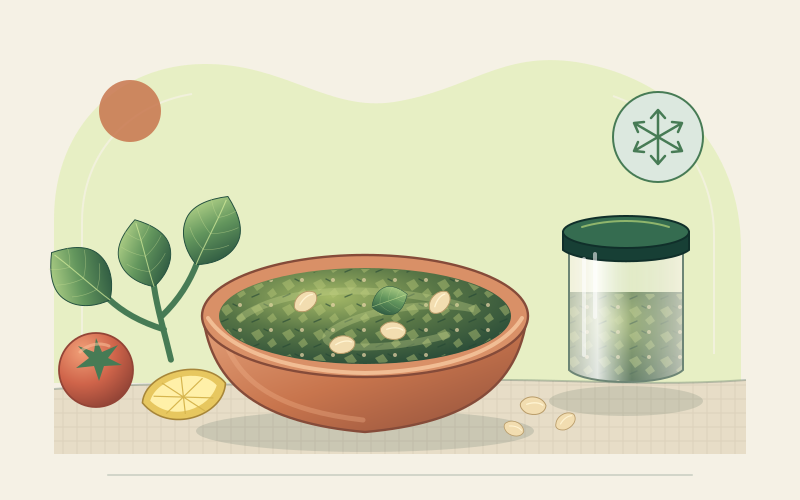
Transfer pesto promptly to a clean, shallow, covered container and refrigerate at 4°C (40°F) or below. USDA guidance sets a two-hour limit for perishable food at room temperature, reduced to one hour above 32°C (90°F). A layer of oil on top does not make the mixture shelf-stable. Do not can or seal homemade pesto for cupboard storage unless following an authoritative process specifically developed for that exact product; ordinary pesto is not such a preserve.
-
Use within 3–4 days or freeze
Use refrigerated pesto within 3–4 days, following USDA leftover guidance, or freeze it promptly in small clean portions. Ice-cube trays or shallow containers can make useful portions; once frozen, protect them from contamination and freezer drying in a sealed food-safe container. Label the date. Thaw in the refrigerator rather than on the counter, and do not refreeze food that has been left at unsafe temperatures.
-
Take garlic and herb oils seriously
CDC identifies chopped garlic in oil as a source of foodborne botulism and advises refrigerating homemade oils made with garlic or herbs and discarding them after four days. Oil limits oxygen, and low-acid moist ingredients can create a hazardous environment when temperature control fails. The toxin cannot be detected reliably by looking, smelling or tasting. Never store homemade pesto or basil-garlic oil at room temperature.
Freezing and drying preserve different qualities
Freezing is useful for prepared pesto or clean chopped leaves when cold storage would blacken fresh sprigs. Freeze promptly in small portions so only what is needed is thawed. Flavour and texture still change; thawed leaves are best in cooked or blended dishes rather than as a crisp garnish. Freezing pauses microbial growth but does not make contaminated food safe.
Drying suits plain herb rather than moist pesto. Spread clean leaves in a suitable food-dehydration setup or use another research-based herb-drying method, avoiding high heat that scorches aroma. Leaves must become thoroughly dry before airtight storage; trapped moisture and condensation can support mould. Store in a clean labelled container away from light and humidity, inspect before use and discard anything mouldy or off-odoured. Dried basil has a different flavour and measuring basis from the raw USDA entry.
Add leaves late and keep claims ordinary
Fresh basil’s aroma is often best when leaves are torn or chopped and added near serving. Whole leaves suit salads and sandwiches; thin ribbons scatter evenly over soups, grains and tomato dishes; pesto coats pasta, beans or vegetables. Excess cooking can dull fresh aroma. Bruising during preparation is normal, but serve or chill the food promptly rather than leaving a darkening chopped mixture on the counter.
Basil contributes flavour and nutrients within a varied diet. It is not a detox, cure or substitute for medical care, and concentrated essential oil is outside this culinary guide. The useful routine is simpler: grow or buy sound leaves, handle them gently, measure the actual amount used, and manage prepared food by temperature and time.
Sources and specialist references
- USDA FoodData Central: Basil, fresh, SR Legacy 172232
- University of Illinois Extension: Basil harvest and fresh storage
- US Food and Drug Administration: Safe Food Handling—clean, separate, cook and chill
- USDA Food Safety and Inspection Service: Leftovers and Food Safety
- CDC: Preventing foodborne botulism, including garlic and herb oils