Name the cooked food before quoting a value
The reference here is sweet potato, cooked, baked in skin, flesh, without salt, USDA FoodData Central SR Legacy entry 168483. Values below are approximate amounts per 100 g of that cooked edible portion. The root is baked in its skin, but only the flesh is eaten. That description matters: it does not cover raw roots, skin included in the portion, fries, sweetened casserole, or a different cooking method.
Food-composition values describe analysed or compiled samples rather than reading nutrients from your own harvest. Cultivar, flesh colour, maturity, storage, cooking time, water loss, and portion weight all change what reaches the plate. “One medium potato” is not a reliable substitute for weighing when an exact comparison matters, and 100 g is a reference amount rather than a recommended serving.
Rooted places sweet potato in nutrient category rank 3, “High”. This is a qualitative editorial comparison among the site’s crops on stated cooked bases. It is not an official nutrient-density score, a universal vegetable league table, or a statement that sweet potato should replace other foods. Nutrient categories cannot capture every nutrient, dietary need, or meal.
| Component | Amount | Food context |
|---|---|---|
| Protein | 2.01 g | A contribution, not a high-protein substitute for legumes or other protein foods |
| Dietary fibre | 3.3 g | Intact cooked flesh differs from strained juice or many processed products |
| Folate | 6 µg | One of many possible food sources; needs vary by life stage |
| Iron | 0.69 mg | Plant-derived non-heme iron; absorption depends on the person and meal |
| Potassium | 475 mg | A mineral contribution within the wider diet, not a treatment dose |
| Beta-carotene | 11,509 µg | A carotenoid associated with orange flesh; the body can convert it to vitamin A |
| Vitamin A | 961 µg RAE | Retinol activity equivalents account for carotenoid activity; this is not all preformed retinol |
Beta-carotene and vitamin A are related, not identical
Beta-carotene is a food pigment and provitamin A carotenoid. The body can convert it into vitamin A, but vitamin A activity from food carotenoids is not measured as though every microgram became retinol. The unit µg RAE means micrograms of retinol activity equivalents. Under the convention used for dietary beta-carotene, 12 µg contributes activity equivalent to 1 µg RAE. This bookkeeping explains why the beta-carotene and vitamin A figures in the table have different numbers and units.
Orange colour offers a useful clue, not an assay. Pale orange and deep orange roots can contain different amounts, and white-fleshed sweet potatoes should not inherit the values of an orange reference entry. Purple sweet potatoes contain other pigments, including anthocyanins, but their colour does not justify transferring the same beta-carotene claim to them. Use a matching food-composition entry where one is available.
Vitamin A is an essential nutrient involved in normal vision and other body processes, but an ordinary food serving is not a treatment for an eye condition or any other disease. Nor is more always better: concentrated vitamin A supplements and preformed retinol raise different safety questions from eating cooked orange vegetables. Keep supplements and individual deficiency concerns within qualified professional advice.
Keep potassium, fibre, and smaller contributions in proportion
Potassium is a normal mineral component of sweet potato and many other vegetables, fruits, legumes, dairy foods, and alternatives. The 475 mg reference value belongs to the stated baked flesh. Boiling can move some minerals into cooking water, while baking changes water content. People prescribed a potassium-restricted diet should use their own clinical guidance rather than treating a general “healthy food” label as permission or prohibition.
Fibre remains in the intact cooked root even when its flesh becomes soft. Whole sweet potato therefore differs from juice, and a peeled or highly processed product may differ again. Fibre across the day also comes from beans, lentils, grains, other vegetables, fruits, nuts, and seeds. No single root has to supply the entire intake.
The entry also contains modest amounts of protein, folate, and iron. These contributions are real but should not be inflated. Iron here is non-heme iron; a vitamin-C-containing vegetable or fruit in the same meal can support its absorption, without creating iron or treating deficiency. Beans, lentils, eggs, fish, meat, tofu, and other protein foods can take the larger protein role when they are part of your diet.
Cook and pair the root without a nutritional formula
Bake, steam, boil, roast, or mash sound roots until tender, choosing a method that suits the meal. There is no single method that preserves every water-soluble vitamin, minimises every change, and maximises every carotenoid at once. Discarded cooking water carries away some soluble components; soup that retains it is a different preparation. Added oil, butter, salt, sugar, and toppings also change the finished dish, so the plain reference values no longer describe the whole recipe.
| Starting point | Sweet-potato addition | Other useful components |
|---|---|---|
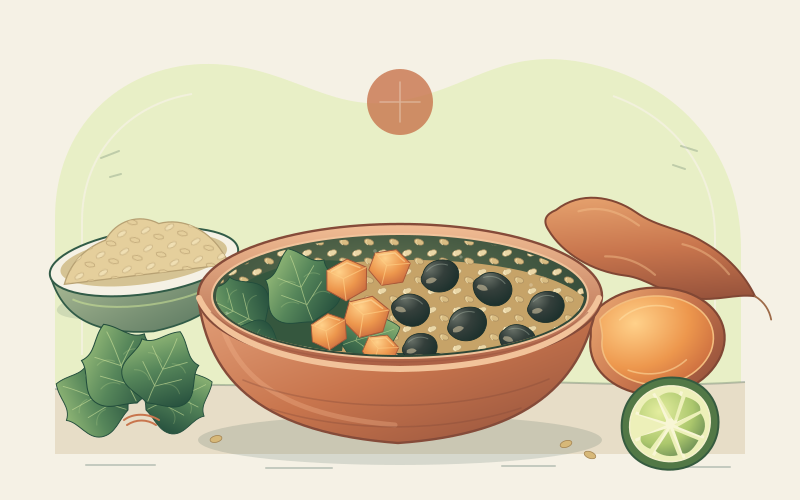
| Beans and grains | Baked orange cubes beside black beans and rice | Tomato salsa, peppers, cabbage, or another vegetable |
| Lentils | Diced cooked root in a lentil stew | Onion, tomatoes, leafy greens, and bread or grain |
| Eggs, tofu, fish, or meat | Roasted pale or purple flesh as one side | Broccoli, salad, or another colourful vegetable |
| Cooked greens | Mashed root alongside chickpeas and greens | Wholegrain flatbread or another preferred staple |
These combinations add variety, texture, and different nutrient contributions. Beans and grains need not be combined in a special ratio, and no particular flesh colour completes a meal by itself. A little fat in an ordinary mixed dish can accompany carotenoid-containing food, but that is not a licence to turn every preparation into a supplement strategy.
Avoid blood-sugar promises and confused identities
Sweet potato contains carbohydrate and natural sugars. Cooking method, portion, the rest of the meal, and individual circumstances all matter to its place in a diet. This article makes no claim that sweet potato lowers, stabilises, or otherwise controls blood sugar, and no claim that it prevents, treats, or cures diabetes or any other condition. People managing diabetes should follow their own care plan and qualified advice rather than a universal serving rule from a crop guide.
Finally, check which food is on the plate. Sweet potato is Ipomoea batatas. True yams are Dioscorea species, with separate cooked database entries and nutrient profiles. In some shops, moist orange sweet potatoes are labelled “yams”; that wording does not make the USDA sweet-potato values transferable to true yam. Leaves also have a different nutrient profile from roots and require their own cooked-food reference.
Sources and specialist references
- USDA FoodData Central: Sweet potato, cooked, baked in skin, flesh, without salt (SR Legacy 168483)
- NIH Office of Dietary Supplements: Vitamin A and Carotenoids fact sheet
- NIH Office of Dietary Supplements: Potassium fact sheet
- NIH Office of Dietary Supplements: Iron and non-heme iron absorption
- University of Maryland Extension: Sweet potato identity, edible parts, curing, and storage