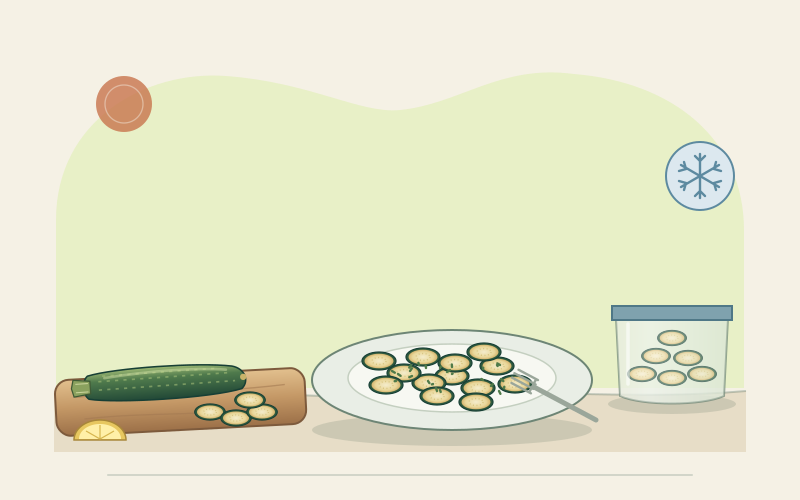
One reference portion is not every squash dish
Summer squash includes zucchini or courgette, yellow crookneck and straightneck, pattypan and other immature fruits. Their shapes and nutrient composition differ. Preparation matters as well: raw, boiled and drained, baked, fried, pickled and frozen products are separate foods, not interchangeable entries.
The figures below use approximately 100 g of summer squash, zucchini, includes skin, raw edible portion, USDA FoodData Central SR Legacy entry 169291. They describe that reference food rather than a universal garden harvest, a peeled portion, a cooked dish or mature winter squash.
A household portion may be smaller or larger than 100 g, and added oil, butter, cheese, salt or sauce changes the finished dish. Cooking can change water content and nutrient concentrations per 100 g. Compare like with like, and treat database figures as useful approximations rather than measurements of the squash on your own plate.
Read the raw values by nutrient
| Nutrient | Amount | Context |
|---|---|---|
| Vitamin C | 17.9 mg | A raw-reference value; cooking and storage can change vitamin C content |
| Potassium | 261 mg | A mineral contribution that varies by squash and preparation |
| Folate | 24 µg DFE | Dietary folate equivalents, not the amount of folic acid in a supplement |
| Dietary fibre | 1.0 g | A modest amount per 100 g; portion and the rest of the meal matter |
| Iron | 0.37 mg | Non-heme iron; content does not measure absorption |
| Protein | 1.21 g | A small amount, so include other protein-containing foods as desired |
Vitamin C contributes to the raw portion’s nutrient profile. It has normal roles in connective tissue, wound healing and absorption of non-heme iron, but a serving of zucchini does not prevent or treat disease. Heat, air, water and storage can reduce vitamin C, so do not transfer 17.9 mg automatically to boiled, fried or long-stored squash.
Potassium and folate add to overall intake. They are not reasons to prescribe squash for blood-pressure control, pregnancy or any medical purpose. People advised to manage a nutrient because of a condition or treatment should follow their clinician’s guidance rather than general food rankings.
The reference contains modest fibre, iron and protein. Zucchini’s water content helps explain why these nutrients are not highly concentrated per 100 g. That does not make it a “negative-calorie” food or a medical weight-loss tool. It is one vegetable that can add texture and variety to a meal.
Vitamin-C-rich vegetables or fruit in a mixed meal can support absorption of non-heme iron from plant foods, but no pairing treats a diagnosed deficiency. Nutrient content alone does not show absorption or individual requirements.
Keep the crop rank qualitative and the plate varied
Rooted places summer squash in the Moderate, density rank 2 editorial nutrient category. This is qualitative shorthand for protein, fibre, folate, iron and potassium, with highlights adding context. Because this entry is explicitly raw, it is not directly interchangeable with the site’s cooked-food comparisons. The rank is not an official score, a medical recommendation or proof that one cultivar outranks another.
Use squash as one ingredient among many. Beans and lentils add protein, fibre, folate and minerals; grains add energy and varying protein, fibre and micronutrients; other vegetables broaden flavour and nutrient variety. Bean-and-grain proteins can contribute complementary amino-acid patterns across the day without mandatory same-meal combining.
| Base | Squash addition | Other produce |
|---|---|---|
| Brown rice or another cooked grain | Sautéed zucchini with chickpeas | Tomatoes, peppers or a lemon dressing |
| Lentils | Crookneck simmered briefly in a stew | Tomatoes, onion or leafy greens |
| Wholegrain toast or flatbread | Grated courgette with white-bean spread | Peppers, tomatoes or a mixed salad |
| Corn tortillas | Pattypan with black beans | Tomato salsa, peppers or cabbage |
Adapt these combinations to allergies, preferences, availability and individual advice. Tender squash needs no “superfood” label.
Store tender squash differently from winter squash
Chill sound fruit promptly
Use bruised or damaged fruit immediately. Keep sound whole squash dry and refrigerate it in a clean bag or container, aiming to use it within about a week. Quality and storage life vary, so inspect for soft patches, mould, slime or shrivelling. Do not cure summer squash on a rack as if it were mature butternut or another winter keeper.
Wash before cutting
Wash hands and clean the board and knife. Rinse whole squash under clean running water just before preparation and use a clean produce brush if needed. Do not use soap or household disinfectant on food. Cut away minor damage only when the rest is sound; discard produce with extensive mould, slime, leakage or decay.
Chill cut flesh and leftovers promptly
Once cut, summer squash is perishable. Cover and refrigerate unused raw pieces, and refrigerate cooked dishes promptly in clean, shallow containers. Do not leave perishable food at room temperature for more than two hours, or more than one hour above 32°C. Reheat leftovers thoroughly and follow local refrigerator-storage guidance.
Discard unusually bitter squash
Cultivated cucurbits can occasionally contain high levels of bitter compounds called cucurbitacins. If raw or cooked squash tastes unusually bitter, stop eating it and discard the fruit; cooking does not make that bitterness safe to ignore. Do not use such fruit for preserves or seed.
Preserve a surplus with a tested method
Freezing is a practical option for a surplus, but texture softens after thawing. Follow a current extension or National Center for Home Food Preservation recipe for selecting young squash, washing, cutting, blanching, rapid cooling, draining and packaging. Blanching instructions depend on the cut; do not improvise a single time for every shape. Label and freeze promptly, and use frozen squash in cooked dishes where a softer texture works.
For pickles or relishes, use a tested recipe with the specified squash preparation, vinegar acidity, jar size and processing method. Do not reduce vinegar, replace it arbitrarily or invent a shelf-stable canned plain-zucchini product. Drying also needs a reliable method, suitable pieces and complete drying before protected storage; moisture left inside can support mould.
Whatever the method, begin with sound, freshly harvested squash and clean equipment. Discard jars or packages that leak, swell, spurt, smell abnormal or show mould. Preservation changes texture and nutrient values, so the raw table above does not describe the finished product.
Sources and specialist references
- US Department of Agriculture: Squash, summer, zucchini, includes skin, raw (169291)
- NIH Office of Dietary Supplements: Vitamin C fact sheet for consumers
- UC Davis Postharvest Research and Extension Center: Summer squash
- National Center for Home Food Preservation: Freezing summer squash
- US Food and Drug Administration: Raw produce—selecting and serving it safely
- US Department of Agriculture: Leftovers and food safety