
Crop 039 / Cucurbita pepo

Pick the fruit tender, and keep the plant producing.

Grow zucchini, courgettes and other summer squash for immature, soft-skinned fruit. Sow after frost into warmth, let pollinators reach the separate flowers, and pick every few days rather than waiting for a hard storage rind.

Harvest
Young and tender Pick while the skin is glossy and easily marked, before seeds harden; frequent picking encourages further fruit.
Typical first-harvest window
45–65 days From sowing under suitable warm conditions, including a protected seedling period.
Season and storage
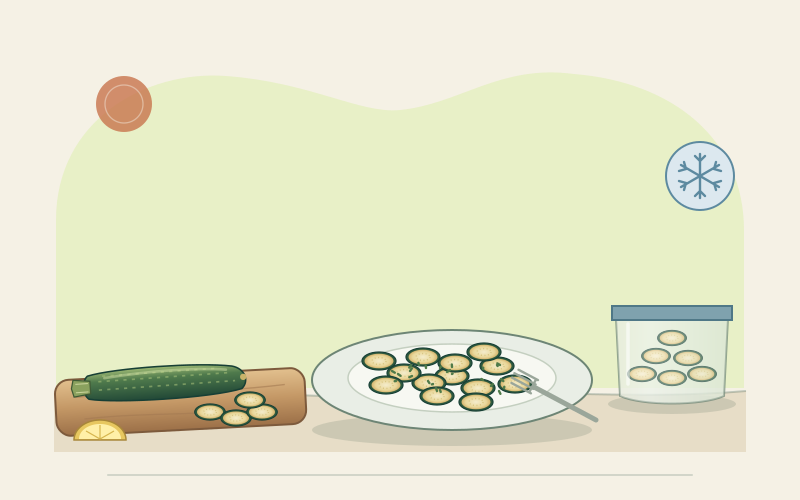
Warm; harvests perishable This frost-sensitive annual yields repeatedly. Chill sound fruit promptly; do not cure it for winter storage.
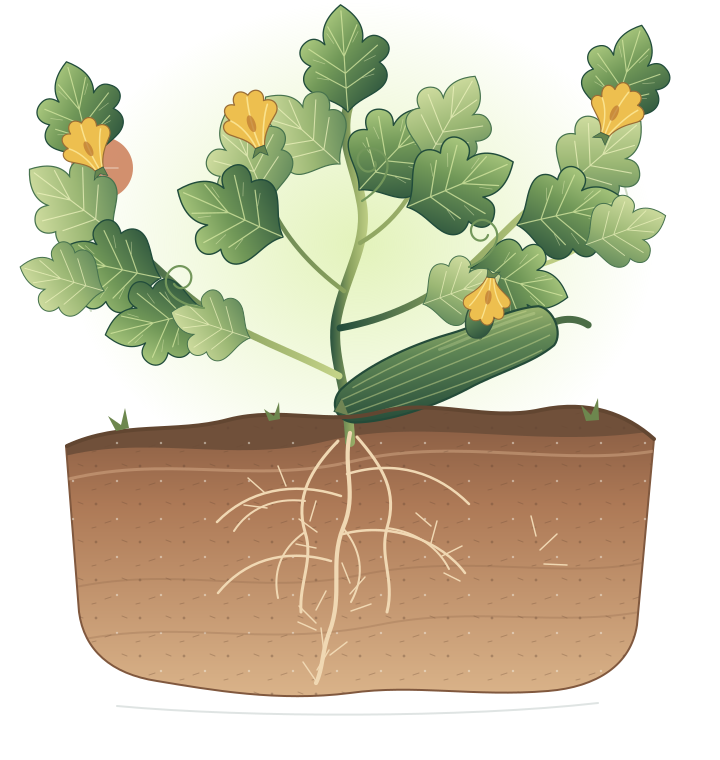
Compact summer squash plant with broad lobed leaves, golden male and female flowers, a young ridged zucchini, and branching roots in a soil cutaway.
A small fruit behind a flower marks the female bloom. Harvest zucchini while the rind is tender and the fruit is still young; leaving it to mature does not turn it into a keeping winter squash.

Know the crop

Crop profile

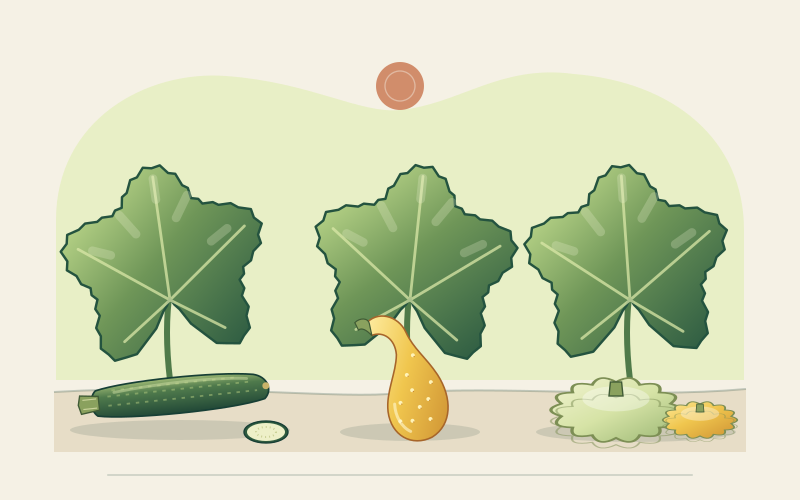
A fast, warm-season annual grown for immature fruit such as zucchini or courgette, crookneck and pattypan. Unlike winter squash, summer squash is harvested before the rind and seeds harden, producing over several weeks with repeated picking. Its fruit is eaten fresh or preserved promptly, not cured for long storage.

Crop essentials

Botanical name
Cucurbita pepo
Growth
45–65 days From sowing to first tender-fruit harvest under favourable warm conditions, including any protected seedling period. Cultivar, temperature, pollination and water affect timing. Pick every few days once production begins; oversized fruit are edible promptly but are not winter-storage squash.
Family
Cucurbitaceae
Origin
The Americas
Habit
Warm-season, frost-sensitive annual with compact bush and trailing forms

Nutrition / raw zucchini with skin

Nutrition, in context

Moderate Editorial nutrient-density rank 2. This is Rooted’s qualitative category for protein, fibre, folate, iron and potassium, with highlights adding context. This explicitly raw reference is not directly interchangeable with cooked-food entries, and the rank is not an official score or universal vegetable ranking.

Reference nutrients per 100 g summer squash, zucchini, includes skin, raw
Nutrient Amount
Protein1.21 g
Fibre1.0 g
Folate24 µg
Iron0.37 mg
Potassium261 mg
  • Contains vitamin C (17.9 mg) in the same raw zucchini reference.
  • Provides some folate and potassium, with modest protein and fibre per 100 g.
  • These are raw zucchini-with-skin values, not cooked squash, mature winter squash or squash blossoms.

Basis: Approximate values per 100 g summer squash, zucchini, includes skin, raw edible portion (USDA FoodData Central SR Legacy 169291). This is one raw summer-squash reference, not an average for every cultivar or fruit shape. Cooking method, water loss, peeling, added ingredients and serving size change intake; values do not measure absorption or individual dietary needs. Summer squash is perishable: refrigerate promptly and use within several days rather than curing it like winter squash.

At the table

Build a varied meal around summer squash

  • Beans, chickpeas or lentils — Protein and fibre. Pulses add protein, fibre, folate and iron to a meal containing water-rich summer squash. This is dietary variety, not a requirement to combine particular foods. Sauté zucchini and serve it with chickpeas, or add it to a lentil and vegetable stew.
  • Maize, rice or other grains — A varied meal. Grains make a squash dish more substantial and contribute their own nutrients. Include pulses, tofu, eggs, fish or another protein-containing food as preferred. Serve crookneck squash with maize and beans, or courgette with rice and tofu.
  • Tomatoes, peppers or leafy greens — Vegetable variety. Other vegetables broaden the flavours and nutrients in the meal. No particular pairing is essential, and squash does not need a superfood label. Cook summer squash with tomatoes and peppers, or serve it beside beans and leafy greens.

The essentials

From warm soil to frequent, tender harvests

Six practical stages. Adapt timing, cultivar, plant spacing and protection to your frost-free season, rainfall and local pests.

  1. Choose a summer type and sow for warmth

    Summer squash is a frost-sensitive annual. Choose zucchini, yellow straightneck or crookneck, pattypan, or another cultivar suited to your space and local disease pressure. Direct-sow after frost once soil warms, or start compact seedlings under cover roughly two to four weeks before planting out in a cool, short season.

  2. Prepare fertile soil and allow adult spread

    Choose full sun and fertile, moisture-retentive but well-drained soil, using a soil test to guide corrections. Follow the packet’s spacing: as general guidance, allow about 90 cm between bush planting stations and at least 1.5 m between trailing ones. Harden off transplants, keep root balls intact and water them in.

  3. Water roots and manage plant covers

    Check below the surface and water thoroughly when needed, especially during establishment, flowering and fruit growth. Direct water to the soil and mulch established plants, keeping damp material clear of stems. Ventilate temporary cold covers and open insect barriers once flowering begins so pollinators can work.

  4. Support pollination and prevent mildew

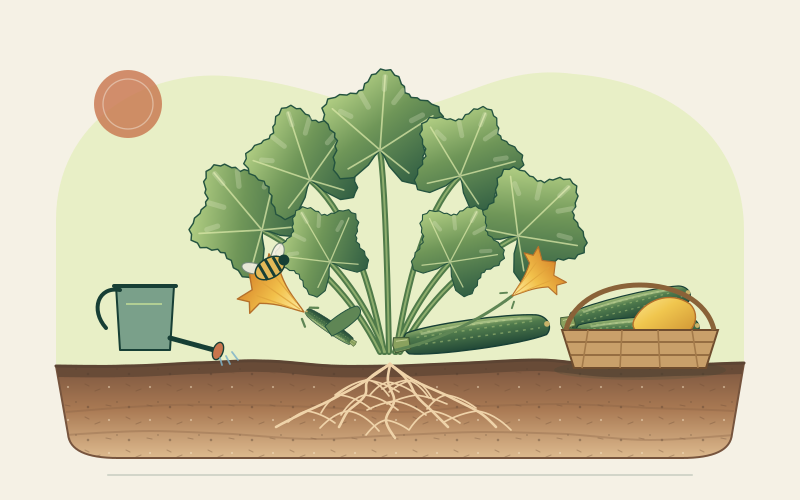
    Male flowers have plain stalks; female flowers carry a tiny fruit behind the petals. Bees normally transfer pollen. Avoid broad-spectrum insecticide around flowers, or hand-pollinate freshly opened flowers on a dry morning if necessary. Give plants sun and space, maintain root moisture and choose resistant cultivars to reduce powdery-mildew risk.

  5. Pick young fruit every few days

    Begin when fruit reaches the cultivar’s useful young size, with glossy, tender skin and soft seeds; many zucchini are picked around 15–20 cm, but follow the type rather than one universal measurement. Cut fruit with a short stem attached. Check plants every one to three days in warm weather because fruit grows quickly and repeated picking encourages production.

  6. Chill promptly; do not cure for storage

    Summer squash is not a long-keeping winter squash. Use damaged fruit immediately, keep sound fruit dry and refrigerate it in a clean bag or container, ideally using it within about a week. Wash just before preparation, refrigerate cut pieces and cooked leftovers promptly, and discard mouldy, slimy or unusually bitter squash rather than tasting more.

Growing notes by place

Read your region, then read your weather

Compare broad growing conditions, then adjust for your own frost dates, altitude, rainfall and soil.

Cool, temperate and often maritime, with summer warmth and frost dates varying by site.

Northwestern Europe

Courgettes crop well in warm, sheltered British, Irish and nearby gardens; northern and upland sites need a later start and an early cultivar.

Indicative planting
Sow April–May under cover and transplant late May–June after frost, or direct-sow into warm soil in late May–June; make a later sowing only if the season allows.
Indicative harvest
Pick from roughly July–October, usually every few days, while fruit is small and skin remains tender; stop before cold and frost end production.
Soil and moisture
Fertile, moisture-retentive but free-draining soil in full sun; mulch established plants and avoid waterlogged or heavily shaded sites.

Field note: Water at the roots during dry spells and choose powdery-mildew-resistant cultivars where available; late-season leaf mildew often coincides with cooling weather.
Dates are indicative. Local frost forecasts, heat, seasonal rainfall and recent weather—not the calendar alone—should guide sowing and harvest.

Cool-temperate Northern Hemisphere · example

A fast crop, then a steady picking rhythm

A compact planning guide, not a fixed schedule. Shift it with latitude, altitude, cultivar and local conditions.

  1. April–May

    Prepare a sunny, fertile, free-draining bed. Where spring is cool, start compact transplants under cover only shortly before planting out; choose a locally reliable cultivar.

  2. May–June

    Direct-sow into warm soil after frost, or harden off and transplant with roots intact. Water in and manage temporary covers so bees can reach flowers once blooming starts.

  3. June–August

    Maintain root-zone moisture, inspect leaves and flowers, and begin picking about 45–65 days after sowing. Harvest every few days while fruit is tender; make only successions that still have time to crop.

  4. September–October

    Continue picking while plants remain healthy and frost stays away. Refrigerate sound fruit promptly, preserve surpluses with tested methods, and remove spent plants rather than trying to cure soft-rinded fruit.

The indicative 45–65 day window runs from sowing to first tender harvest and includes any protected seedling period. Cool weather, poor pollination and water stress delay cropping; warm weather accelerates fruit growth, so days between picks matter as much as days to first harvest.

From the field journal

Grow, choose and cook your summer squash

Practical reading for productive warm-season plants, informed cultivar choices and varied meals without superfood claims.

Your next harvest begins here

Start with one plant and a daily glance.

A sunny, well-spaced planting station is enough to learn the crop. Give it warm soil, water and pollinator access, then harvest young fruit before it becomes oversized.

Open the growing guide