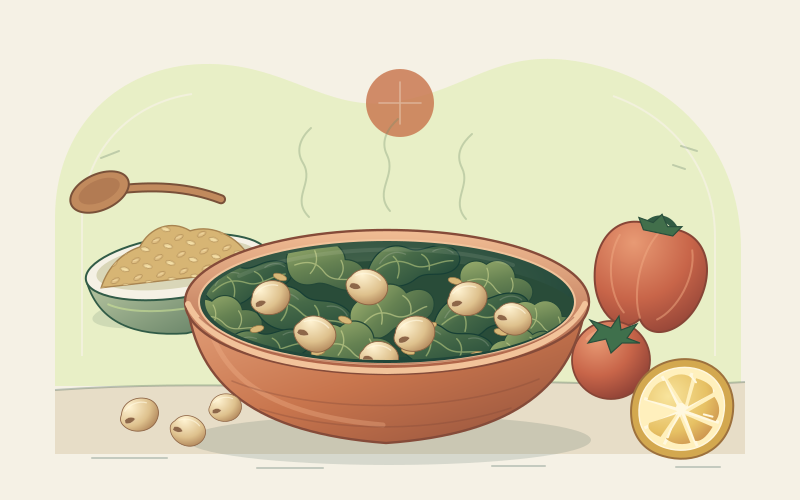
Start with a cooked portion and the whole diet
Kale is a leafy brassica eaten raw or cooked. Rooted gives it nutrient category rank 4, “Very high”, as a qualitative editorial comparison among the crops covered on this site. It is not an official nutrient score, a universal ranking of vegetables, or evidence that kale must displace other greens. Different databases and ranking methods ask different questions, and a label cannot describe an individual’s nutritional needs.
A cooked context matters because leaves shrink substantially during heating. A spoonful on a plate and a generous serving piled into a pan before cooking do not represent the same amount. Comparing 100 grams of raw leaves with 100 grams of cooked leaves also compares different starting quantities as water is lost or gained. Portion weights, whether cooking liquid is drained, added salt or oil, cultivar, growing conditions, and storage all affect the final values.
For practical purposes, think of cooked kale as one vegetable among many. It can add colour, texture, fibre, and micronutrients to soups, grains, beans, eggs, or other dishes. It does not “detox” the body, cancel out less nutritious choices, or prevent and treat disease by itself. Normal liver and kidney processes handle metabolic waste; no kale juice, cleanse, or concentrated powder is needed for that work.
What cooked kale can contribute
FoodData Central lists nutrient values for specific raw and cooked kale entries, including boiled and drained kale without salt. Those records are references, not exact readings from every bunch. The table below describes contributions rather than assigning a percentage that could imply false precision.
| Component | What the food contributes | Practical context |
|---|---|---|
| Vitamin K | Green leaves are a notable source of phylloquinone | Relevant to normal blood-clotting processes; consistency matters with warfarin |
| Vitamin A | Carotenoids that the body can use to form vitamin A | Database vitamin A values are not the same thing as preformed vitamin A |
| Vitamin C | A water-soluble vitamin present in kale | Losses vary with heat, water, storage, and whether liquid is consumed |
| Fibre | Plant structure that contributes to dietary fibre intake | Beans, whole grains, fruits, nuts, seeds, and other vegetables also contribute |
| Minerals | Amounts of calcium, potassium, magnesium, and iron, among others | Content and absorption vary; kale is not a sole-source mineral plan |
Vitamins K, A, and C are not interchangeable
Vitamin K in leafy vegetables is chiefly phylloquinone. It acts in vitamin-K-dependent processes including normal clotting, which explains its interaction with vitamin K antagonist medicines. Kale’s vitamin A value comes largely from carotenoids; this differs from preformed vitamin A found in some animal-derived foods and supplements. Vitamin C has separate roles and also enhances absorption of non-heme iron from plant foods when eaten in the same meal.
Cooking is not simply “destroying nutrition”. It softens leaves, changes volume, and can make a useful serving easier to eat. Some vitamin C and other water-soluble compounds may be lost into cooking water or affected by heat, while other nutrients remain. Steaming, sautéing, brief cooking, and using cooking liquid in a soup produce different results. There is no single method that maximises every nutrient, so choose a safe, enjoyable preparation you will actually use.
Fibre and minerals need a broader frame
Cooked kale contributes fibre, but a serving does not remove the need for other fibre-containing foods. Calcium, potassium, magnesium, and iron also appear in varied amounts across legumes, grains, dairy or fortified alternatives, nuts, seeds, and other vegetables. The iron in kale is non-heme iron, whose absorption is influenced by the rest of the meal and a person’s iron status. Diagnosed deficiency or a medically restricted mineral intake needs individual professional advice, not a generic kale prescription.
Make the leaves practical in everyday meals
Wash the leaves well, especially curly forms that can trap grit. Strip or slice a thick midrib if it is tough, and chop the leaf to suit the dish. Tender young leaves can be used raw, but raw is not inherently superior. Add mature leaves to a soup near the end of cooking, sauté them with garlic, or stir them into a bean stew long enough to become tender. Save the cooking liquid when it is part of the recipe rather than discarding it unnecessarily.
| Base | Kale addition | Useful companions |
|---|---|---|
| Bean soup | Stir in sliced leaves and simmer until tender | Tomatoes, onions, herbs, and bread or potatoes |
| Rice or other grains | Fold sautéed kale through warm grains | Lentils or beans, lemon, and a pepper or tomato salad |
| Eggs or tofu | Cook chopped kale before combining | Wholegrain toast, mushrooms, or roasted vegetables |
| Pasta | Add ribbons to the sauce or cooking pot near the end | White beans, tomatoes, or a simple garlic sauce |
Pair with legumes and grains for an ordinary, balanced plate
Kale is not a high-protein substitute for a serving of beans or lentils. Legumes and grains bring protein and energy along with their own fibre and micronutrients. Their amino-acid patterns can complement one another across a varied diet, but they do not have to be combined in the same mouthful or even at the same meal. Kale fits alongside them as a vegetable rather than completing a special nutritional formula.
Try kale with white beans and wholegrain bread, lentils and rice, chickpeas and bulgur, or black beans and corn tortillas. Add tomatoes, peppers, citrus, broccoli, or another vitamin-C-containing food to a meal containing plant sources of iron. Kale itself can contribute vitamin C, but cooking losses and portion size make it sensible to use a range of vegetables and fruits rather than relying on one leaf to do every job.
With warfarin, aim for consistency—not kale avoidance
People taking warfarin do not need to avoid kale automatically. Warfarin and some related anticoagulants interact with vitamin K. NIH guidance advises maintaining a consistent intake of vitamin K from foods and supplements because sudden changes can increase or decrease the anticoagulant effect. The important principle is a reasonably steady dietary pattern, not a kale-free diet.
Keep the anticoagulation clinic, pharmacist, or prescribing clinician informed about your usual intake, especially before a major change such as drinking kale smoothies daily, starting a supplement, or eating much larger or smaller quantities of leafy greens than usual. Follow their monitoring and dose instructions. Do not change or stop warfarin yourself, and do not try to compensate for an unusually large serving by altering a tablet dose.
Other anticoagulants work differently, so warfarin-specific vitamin K guidance should not be transferred to every “blood thinner”. Anyone uncertain about their medicine, supplement, or dietary change should ask their own clinical team. This article provides food context, not an individual medication plan.