Plan for a perennial, not a quick annual
This guide centres on the European grape, Vitis vinifera, a long-lived woody vine grown for table, wine, juice, and drying fruit. It climbs with tendrils but cannot support a mature crop by itself. Fruit forms on shoots arising from one-year-old wood, so the way old and young growth is retained matters as much as feeding or watering.
Under suitable conditions, a first meaningful crop often arrives about two to three years after planting. That is an establishment range, not a guarantee: a weak plant, poor site, frost, pest damage, or an unsuitable cultivar can delay fruiting, while local pruning systems differ in how soon they permit clusters to remain. Prioritise roots and a well-shaped framework during the first seasons; follow local advice on removing early flower clusters rather than letting a small vine carry an exhausting crop.
Match site and cultivar to winter, heat, and frost
Choose full sun and good air movement. Grapes need enough seasonal warmth to ripen their shoots and fruit, while sufficiently cool dormancy allows normal bud break. V. vinifera is not one uniform climate type: cultivars differ in winter cold tolerance, bud-break date, ripening period, and heat requirement. A famous variety from a warm wine region may never mature reliably in a short, cool season.
Avoid low frost pockets where cold air collects, waterlogged ground, and deep shade. A gentle slope or elevated, open position can help cold air drain, but exposed sites need secure supports and protection from damaging wind. Dormant buds are generally hardier than tender spring shoots; a late frost after bud break can destroy the first growth even when the trunk survives. In severe-winter areas, locally tested hybrids or other grape species may be more dependable than V. vinifera. Ask nearby growers and extension which cultivars both survive winter and ripen before autumn frost.
Plant certified, healthy stock where available, at the season and depth recommended locally and by the supplier. Keep graft unions positioned as advised for the planting system, and do not assume a buried graft is desirable. A grape’s thick roots do not make saturated soil safe.
Install support before the vine needs it
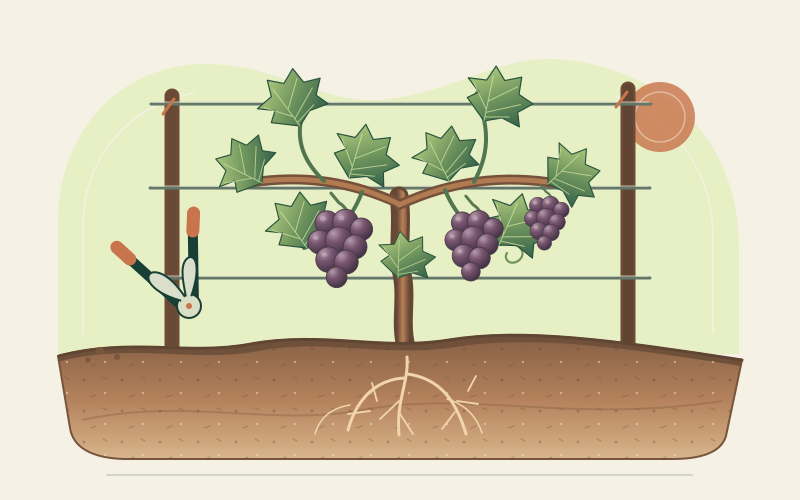
Use a durable trellis, wires on sound posts, or another locally proven structure sized for the mature vine. Set posts deeply and brace end posts against wire tension; a light garden arch can deform under years of woody growth, foliage, fruit, and wind. Leave working space for pruning, inspection, netting, and picking, and keep tendrils away from gutters, trees, or neighbouring plants.
During establishment, select and tie the main shoot or shoots loosely as they grow. Use soft ties with room for the trunk to thicken, check them regularly, and remove unwanted shoots according to your chosen training system. The aim is an open, reachable framework, not the greatest mass of leaves. Summer shoot positioning can expose fruit and improve airflow, but stripping large amounts of foliage can stress the vine and sunburn berries.
Prune during dormancy, following a named system
Annual pruning balances vegetative growth and fruiting wood. Without it, vines commonly become tangled, shaded, and difficult to manage. Prune while the vine is dormant, at the locally recommended point between the harshest winter weather and bud swell. Timing matters in cold climates because early cuts do not protect a vine from later winter injury. Use clean, sharp tools and make deliberate cuts at the positions specified for the training system.
Do not copy a pruning diagram without knowing its system. Cane pruning and spur pruning retain different lengths and ages of wood, and cultivars vary in how fruitful their basal buds are. Removing too little leaves an overcrowded canopy; removing nearly everything, or keeping only the wrong wood, can sacrifice the crop. Young vines need formative training rather than an immediate hard fruiting prune. Learn from local extension or an experienced grower, identify the one-year-old wood before cutting, and keep a simple annual sketch of what was retained.
Pruning can limit disease by opening the canopy and removing some infected wood, but it is not a cure-all. Dispose of diseased canes as local guidance recommends, and clean tools between vines when spreading infection is a concern.
Build soil and water habits around establishment
Grapes prefer soil that roots can explore deeply without remaining waterlogged. Test soil before planting and amend pH or nutrients according to the result; broad, heavy fertiliser applications are no substitute for drainage and sunlight. Excess nitrogen can encourage soft, leafy growth at the expense of ripening and winter readiness. Keep a weed-free zone around young vines without slicing their roots, and use mulch where appropriate while keeping it away from the trunk.
New vines need consistent moisture while roots spread, but “consistent” does not mean constantly wet. Check below the surface, water thoroughly when needed, and allow rainfall, soil texture, heat, and vine age to set the interval. Established vines often tolerate dry periods better than newly planted ones, yet severe drought can reduce fruit size and delay ripening. Direct water to the root zone, avoid frequent shallow sprinkling, and reduce unnecessary late-season lush growth. Containers and sandy soils usually need closer monitoring.
Prevent bird losses and disease-friendly conditions
Birds notice colour and sweetness, sometimes before the grower judges the crop ready. Fit well-supported bird netting as ripening begins, close gaps around the canopy, and keep mesh from resting where beaks can reach through. Check that birds and other animals cannot become trapped, and remove or store netting after harvest so it does not grow into the vine. Bags around individual bunches can suit a few vines if they are designed for fruit and used according to instructions.
Local disease pressure should shape cultivar choice and canopy management. Powdery mildew, downy mildew, black rot, botrytis bunch rot, and other problems occur in different regions and weather. Buy healthy stock, prune for airflow, manage weeds, avoid prolonged leaf wetness where possible, and remove mummified or infected fruit according to local advice. Inspect leaves, shoots, and clusters throughout the season; a dusting, spot, or shrivelled berry is not enough for a reliable diagnosis.
Resistance is specific, not immunity. Ask extension to identify persistent damage and choose legally available controls only when justified. Any product label must cover grapes and the target problem, including required timing and pre-harvest interval. Do not improvise sprays on fruit close to harvest.
Harvest ripe fruit, because it will not ripen later
Grapes do not continue to sweeten appreciably after picking. Judge ripeness within the cultivar, not by calendar date or colour alone. Look for the expected full colour, plump berries, and a characteristic balance of sweetness and acidity; seeds in seeded cultivars typically darken as maturity approaches. Taste several berries from different parts of the vine, since exposed and shaded clusters may mature unevenly. Growers measuring soluble sugar or acidity should use locally appropriate targets for the intended use.
Cut clusters with clean secateurs rather than pulling berries from their stems, support the bunch, and handle the natural waxy bloom gently. Pick during cool, dry conditions when possible, leaving mouldy, leaking, or badly damaged fruit behind. Chill sound table grapes promptly and avoid washing until use. For raisins, ripeness and sound skins are essential before drying; follow the raisin-making guide rather than treating shrivelled fruit on the vine as preserved food.