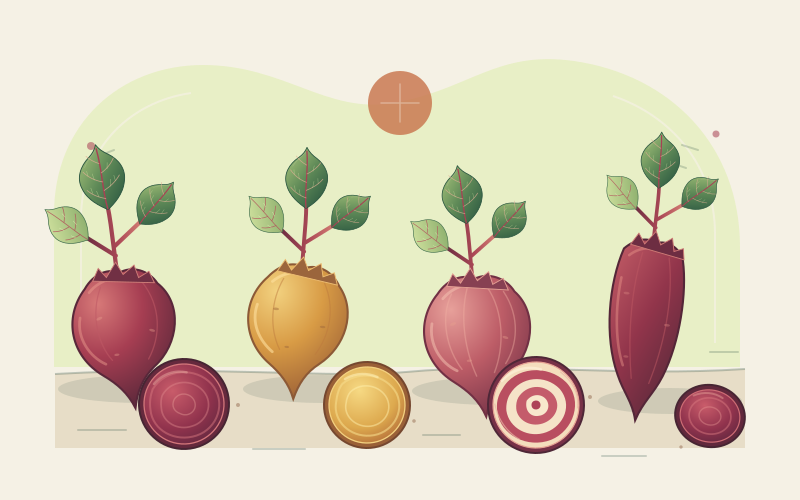
Many names, one varied species
Garden beetroot, table beet, leaf beet, Swiss chard, sugar beet, and fodder beet are all selections within Beta vulgaris. They have been bred for different plant parts and purposes. A cultivar name can therefore describe root colour, root shape, leaf quality, agricultural use, or several traits at once. Colour alone does not tell you how quickly it will grow or how well it will store.
Most garden roots reach a useful first harvest roughly 50–75 days after sowing, but that range is indicative, not a promise. Baby roots may be gathered earlier; leaves can be picked sooner still; a keeping crop may be left longer. Weather, site, spacing, and cultivar shift every date. Read the packet for local days, final size, disease resistance where independently verified, and suitability for early or late sowing.
The groups below are practical descriptions rather than strict botanical divisions. Named cultivars within a group can differ, and the same name may be marketed with somewhat different claims by different suppliers. Local trials and a small home comparison are more useful than a universal “best variety” list.
Four useful root forms
Round red: familiar colour, compact habit
Globe-shaped red beets are the standard garden form. Their compact shape suits rows, blocks, and sufficiently deep containers, and small roots are convenient for cooking whole or pickling. Flesh ranges from crimson to very dark purple-red, often with paler internal zones. Red pigment can stain hands, boards, and other ingredients, so prepare them separately when distinct colours matter. Detroit Dark Red and Boltardy are familiar examples of round red types, not recommendations for every climate.
Many red cultivars produce edible green leaves with red stems or veins. “Bolt-resistant” on an early cultivar describes reduced risk under specified conditions, not immunity: cold exposure followed by warming and lengthening days can still trigger flowering.
Golden: yellow flesh and less red staining
Golden beets typically have orange-toned skin and yellow to golden flesh. They can be roasted, boiled, steamed, or grated much like red roots, but their pigments do not turn an entire dish burgundy. Their flavour is often described as mild, although sweetness and earthiness depend as much on cultivar, maturity, and growing conditions as on colour. Burpee’s Golden is a longstanding example; newer golden cultivars may differ in uniformity and bolting behaviour.
Golden roots can be harder to judge by exterior colour alone. Lift a sample at usable size rather than waiting for a deeper shade. Keep the same careful thinning and watering regime you would use for red beets.
Striped Chioggia-type: rings for the cutting board
Chioggia-type beets have alternating red or pink and white concentric rings. The pattern is most striking when roots are sliced across, and can become less contrasting with some cooking methods. Roast or cook whole before slicing, or serve thin raw slices if you want to retain a clear pattern. Skin colour and ring intensity vary among roots and selections; a striped cultivar is not necessarily striped on the outside.
Chioggia is often used for both the named heirloom and a broader striped type. Check the supplier’s description if seed lineage matters to you. Rings are a visual trait, not evidence of higher nutrient value or a particular storage life.
Cylindrical: length for even slices
Cylindrical or long-rooted beets, including Cylindra and Forono types, produce elongated roots that yield many slices of similar diameter. This can be useful for pickling, roasting, and orderly preparation. Their shape requires loose, deep soil without stones or compacted layers that obstruct growth. They are generally less suited to shallow containers than compact globe cultivars.
Harvest at the size recommended for the cultivar rather than pursuing maximum length. As with other beets, drought, overcrowding, heat, and overmaturity can produce tough flesh. A cylindrical shape does not guarantee better keeping quality.
| Type | Example names | Useful feature | Keep in mind |
|---|---|---|---|
| Round red | Detroit Dark Red, Boltardy | Compact, familiar all-round root | Strong red pigment stains |
| Golden | Burpee’s Golden and newer selections | Yellow flesh without red staining | Flavour and vigour vary by cultivar |
| Striped | Chioggia types | Pink-and-white internal rings | Pattern may soften during cooking |
| Cylindrical | Cylindra, Forono | Many similarly sized slices | Needs deep, unobstructed soil |
Root beet, leaf beet, and the beet on your plate
Garden beetroot is selected primarily for its swollen root, although its leaves are edible when sound and properly prepared. Some cultivars, such as Bull’s Blood, are also valued for dark decorative foliage. Any root cultivar can yield a few greens, but repeated heavy picking reduces the leaf area available to fill the root.
Leaf beet and Swiss chard are selected for leaves and stalks rather than a large storage root. Their roots remain part of the plant, but they are not the plump garden beetroot promised on a root-crop packet. Choose chard for repeated leafy harvests and beetroot for a substantial root, rather than expecting one plant to excel equally at both. The root-and-leaf harvest guide explains how to take greens without sacrificing the root.
Do not substitute sugar beet or fodder beet for a named garden cultivar. Sugar beet has been bred for industrial sugar extraction and fodder beet for livestock feed, often with large roots and field-scale management in mind. They share a species with beetroot but are not interchangeable seed choices for a tender kitchen harvest. Buy seed labelled for garden or table use from a reputable supplier.
Choose with the packet—and your plot—in mind
Start with timing. For an early, cool sowing, look for a locally tested bolt-resistant cultivar. For a warm or dry season, prioritise reliable establishment and harvest promptly at usable size. For a late keeping crop, select a cultivar described as suitable for storage and protect it from damaging frost. Root colour and shape come after those practical limits.
Next, check the seed form. Traditional multigerm seed is a cluster that can produce several seedlings, so thinning is normally necessary. Monogerm seed generally produces one seedling per fruit and simplifies precise sowing, though crowded sowings still need thinning. Neither label predicts flavour, colour, or disease resistance.
Finally, plan the meal. A mixed packet can provide variety for salads and roasting, but different colours and cultivars may mature unevenly. Keep labels, sow short trial rows, and record emergence, root size, texture, leaf quality, and storage performance. A modest red globe beside a golden or striped type teaches more about your preferences than a long cultivar list. Our seed-to-storage guide covers the shared growing method.