
Crop 006 / Beta vulgaris

Two harvests, rooted in cool soil.

Grow garden beetroot for tender roots and useful leafy tops. Direct sow in a suitable cool window, thin the seedlings decisively, and keep moisture steady as the roots swell.

Root and leaf harvests
One plant, two foods Pick a few young leaves without sacrificing root growth.
Typical crop window
50–75 days Baby roots can be earlier; storage roots may need longer.
Season
Cool and evenly moist Heat, drought and prolonged cold can disrupt growth.
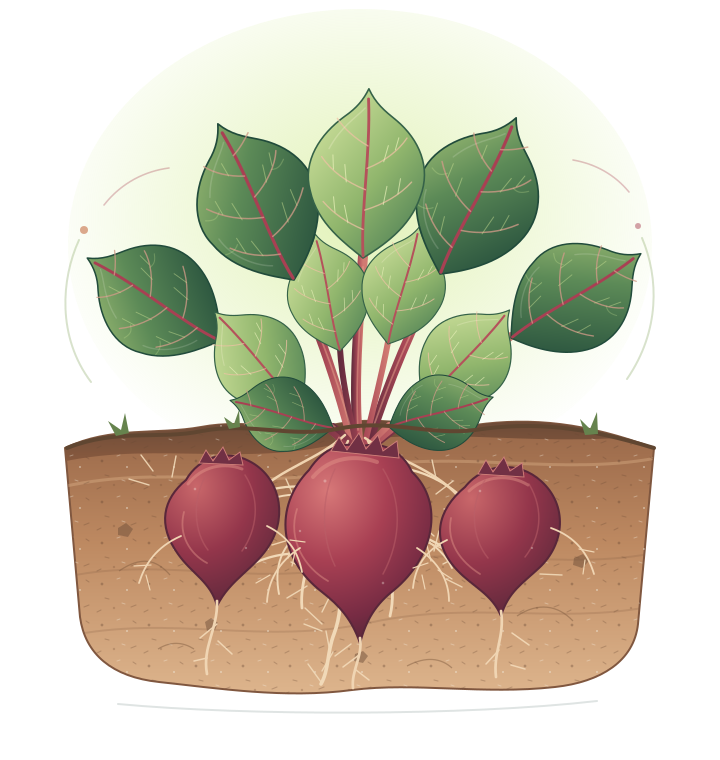
Beetroot plant with broad green leaves, crimson stems and round burgundy roots with fine branching roots below ground.
Garden beetroot offers edible leafy tops above ground and a swollen storage root below; each has its own nutrient profile.

Crop profile

Garden beetroot, from row to plate

A cool-season root crop with edible leaves, harvested young for baby beets or later for larger and storage roots. Local heat, frost and moisture determine the useful sowing windows.

Botanical name
Beta vulgaris subsp. vulgaris (Conditiva Group), the garden-beet group
Family
Amaranthaceae
Origin
Mediterranean region
Growth
50–75 days From sowing to usable roots. Young leaves and baby beets can be harvested earlier; larger roots for storage may need the longer end. Cultivar, spacing, temperature and even watering affect root size and quality.

Nutrition / cooked beet roots

High nutrient density · editorial rank 3

“High” is Rooted’s qualitative editorial category, based on protein, fibre, folate, iron and potassium density in cooked foods. It is not an official nutrient score or a promise of a health outcome.

Approximate values per 100 g cooked beet roots, boiled and drained.
Nutrient Amount
Protein1.68 g
Fibre2 g
Folate80 µg
Iron0.79 mg
Potassium305 mg

Basis: Approximate values per 100 g beets, cooked, boiled, drained (USDA FoodData Central SR Legacy 169146). View the USDA reference.

Roots are not leafy tops. These values are for beet roots only; edible beet leaves have a different, leafy-green nutrient profile and must not be assigned the figures above. The plain cooked root provides folate and potassium and a little vitamin C (3.6 mg per 100 g in the same reference); boiling and draining can reduce water-soluble nutrients.

This USDA record is titled cooked, boiled, drained and does not specify salt in its title. Values are not interchangeable with raw, roasted, pickled or canned beets; preparation and serving size change intake.

At the table

Build a varied meal around beetroot

  • Lentils or beans with grains — protein and fibre: Beetroot has modest protein, so legumes and grains can make the meal more varied and filling. Amino-acid complementarity can occur across the day, not only in one bowl. Try beetroot with lentil salad and whole-grain bread.
  • Citrus, peppers or tomatoes — vitamin C and non-heme iron: When beetroot is served with beans, lentils or other plant sources of non-heme iron, vitamin-C-rich foods can support iron absorption. The response varies between meals and people. Try a beetroot and bean salad with orange segments or peppers.
  • Yogurt, eggs, fish or tofu — protein variety: These accompaniments add protein and different nutrients to beetroot. Choose according to dietary preferences and overall needs rather than a required pairing rule. Serve beetroot with yogurt and herbs, or with tofu and leafy greens.

The essentials

From seed cluster to storage box

Six practical stages. Adapt the timing and cultivar to your soil, seasonal temperatures and intended harvest.

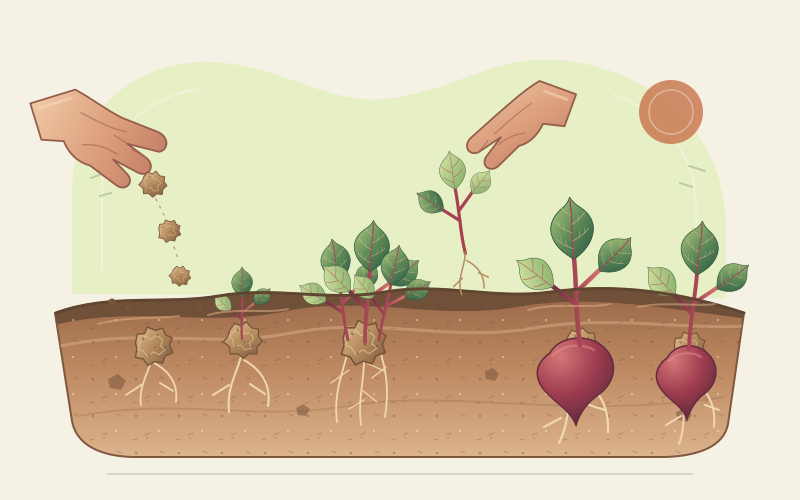
  1. Choose a cool growing window

    Prepare fertile, deep, stone-free and well-drained soil. Sow in spring or another locally mild period, avoiding very cold, wet ground and high summer heat. For early sowing, choose a bolt-resistant cultivar: prolonged cold followed by longer, warmer days can trigger flowering, and hot, dry conditions can also cause bolting.

  2. Direct sow cluster or single-germ seed

    Sow where the crop will grow, about 1–2.5 cm deep in a fine, moist seedbed. Traditional multigerm “seed” is a corky fruit cluster that can produce several seedlings; monogerm fruit contains one embryo and makes precision spacing easier. Monogerm seed does not guarantee germination, and either kind may still need thinning.

  3. Thin and space for the root

    Once seedlings are large enough to handle, reduce each multigerm cluster to one strong plant, snipping unwanted shoots at soil level to avoid disturbing the roots that remain. A common final spacing is 7–10 cm for typical round roots; allow more for large or long cultivars and follow the packet. Sound young thinnings can be eaten.

  4. Keep moisture steady

    Water thoroughly when needed during establishment and root swelling, without waterlogging. Repeated drying can make roots tough or woody, while drought followed by heavy watering can contribute to splitting. Weed gently and shallowly; mulch after the soil warms to limit evaporation, keeping it clear of crowded stems.

  5. Pick greens and lift roots

    Take only a few sound young outer leaves from each plant, leaving a healthy centre and enough foliage to fill the root. Lift baby beets at the size you prefer; for full-size roots, loosen the soil beside the plant and pull gently without cutting or bruising. Harvest by root condition and cultivar rather than waiting for the largest possible root.

  6. Store sound roots before hard frost

    Established plants tolerate light frost, but hard freezes damage tops and exposed roots. Lift mature, unblemished storage roots before damaging frost or prolonged saturation. Separate tops from roots, leaving a short stem stump, and store roots cool, humid and frost-free; use the greens soon. Do not seal wet roots in an airtight container, and inspect stored roots regularly.

Growing notes by place

Read your region, then read your weather

Compare broad growing conditions, then adjust for your own frost dates, altitude, rainfall and soil.

Cool, temperate and often maritime, with colder springs inland and in upland districts.

Northwestern Europe

Beetroot suits spring and summer sowing in Britain, Ireland and nearby areas. Early crops need bolt resistance and protection in cold soil.

Indicative planting
Direct-sow from late March or April through July once soil reaches about 7°C, using cloches for early sowings. Sow small batches every few weeks.
Indicative harvest
Lift baby roots from early summer and later roots through autumn. June–July sowings can provide mature storage roots; lift before severe ground frost.
Soil and moisture
Fertile, deep, stone-free and well-drained soil with compost; keep moisture even to reduce woody or split roots.

Field note: Thin seedlings for the root size wanted, leave several leaves when picking greens and store only sound, undamaged mature roots.
Dates are indicative. Local frost forecasts, soil temperature and recent weather—not the calendar alone—should guide sowing and harvest.

Cool-temperate Northern Hemisphere · example

A cool-season rhythm

A compact planning guide, not a fixed schedule. Shift it with latitude, altitude, cultivar and local conditions.

  1. March–April

    Prepare a deep, stone-free bed. Begin direct sowing when soil is workable and warming; use a bolt-resistant cultivar and cloche protection for an early crop.

  2. April–July

    Sow small batches every few weeks. Thin multigerm clusters promptly and establish final spacing suited to the cultivar and root size wanted.

  3. May–September

    Weed shallowly and maintain even moisture through root swelling. Take a few young outer leaves at a time, and lift baby or full-size roots as they reach the preferred stage.

  4. August–October

    Finish later sowings as conditions allow. Lift sound mature storage roots before severe ground frost, separate the tops, and move the roots into a cool, frost-free store.

Early cold exposure and later heat can encourage bolting, while irregular watering can reduce root quality. Use local forecasts and plant condition to refine the calendar.

From the field journal

Sow, select and savour your beetroot

Practical reading for growing garden beets, choosing a root form, and bringing both roots and leafy tops to the table.

Your next harvest begins here

Start with one short row.

A small sowing is enough to learn how beetroot responds to your soil and weather. Thin with purpose, keep the moisture steady, and enjoy both parts of the plant.

Open the growing guide