Species, group, cultivar and marketing name
This crop entry centres on sweet basil, Ocimum basilicum. Within that species are large-leaf Genovese forms, compact small-leaf bushes, purple selections and cultivars with different aromas. A cultivar is a maintained cultivated selection, usually sold under a quoted name such as ‘Genovese’ or ‘Spicy Globe’. A group name or packet mixture need not be equally uniform.
Catalogue vocabulary is not perfectly standardised. “Sweet basil” can mean the broad culinary crop or a particular seed line; “Greek basil” usually suggests a compact small-leaf plant; and “lettuce leaf” describes foliage rather than one universally defined pedigree. Check the botanical name, plant size, leaf size, days to harvest and any resistance statement. A photograph cannot show whether the selection fits your nights or local disease pressure.
Not every plant called basil is O. basilicum. Holy basil or tulsi is generally Ocimum tenuiflorum (syn. O. sanctum), while lemon basil may be listed as O. basilicum or O. × citriodorum depending on the material and supplier. Thai culinary types are commonly selections of O. basilicum. Use the supplier’s botanical identification rather than transferring a growing or flavour assumption across species.
Leaf form and culinary use
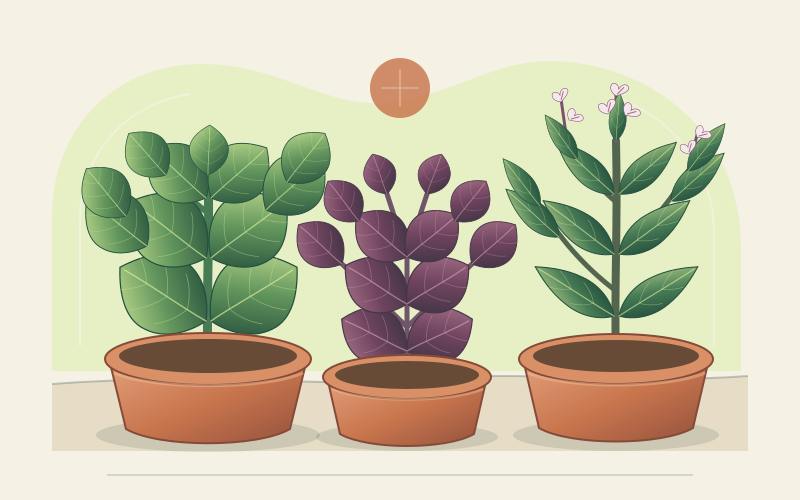
Genovese and large sweet types are the familiar choice for pesto and tomato dishes. ‘Genovese’ describes a classic large-leaf form associated with Genoa, but individual seed lots and cultivars vary. ‘Napoletano’ is a lettuce-leaf example with broad, textured foliage. Large leaves make a bulk harvest quick to pick and clean, but the plants still need branching cuts and enough space.
Compact bush types such as ‘Spicy Globe’, ‘Green Globe’ and ‘Pluto’ form dense mounds of smaller leaves. They suit pots, edging and small repeated garnishes. Small leaves do not remove the need for airflow or pinching. A tight dome can stay damp inside, and a root-bound plant can flower early. Harvest sprigs around the plant instead of cutting a hole in one side.
Purple types such as ‘Dark Opal’ and ‘Red Rubin’ offer dark foliage for garnish and mixed planting. Some plants may show green or bronze sectors, especially in mixtures or less stable selections. Colour can dull or bleed with preparation; it does not guarantee stronger flavour, greater yield or superior nutrition. If a uniform purple packet matters, compare supplier descriptions and local trials.
Thai, lemon, lime and cinnamon aromas broaden the kitchen palette. Thai basil commonly has an anise- or liquorice-like note and a sturdy stem and flower habit; ‘Siam Queen’ is a named example. Lemon and cinnamon labels describe aroma families, not precise interchangeable chemistry. Taste a small leaf from a known culinary plant and follow the recipe’s intended type rather than assuming every basil is a substitute.
| Form or cultivar | Typical plant and leaf | Selection point |
|---|---|---|
| Genovese | Upright, branching; broad tender green leaves | Classic pesto harvest; check exact seed line |
| Napoletano | Large, textured lettuce-like leaves | Bulk leaf harvest and broad wrapping leaves |
| Spicy Globe or Pluto | Compact dome; small leaves | Containers, edging and small garnishes |
| Dark Opal or Red Rubin | Purple to bronze-green foliage | Colour and garnish, not a quality ranking |
| Siam Queen | Thai type with sturdy stems and distinctive aroma | Anise-like culinary note; confirm intended cuisine |
| Prospera | Genovese-type foliage; resistant selection | Locally relevant downy-mildew resistance |
| Rutgers Obsession or Devotion | Sweet-basil forms bred for disease resistance | Compare habit, flavour and local trial results |
Read downy-mildew resistance precisely
Basil downy mildew can devastate a warm, humid planting. Resistant cultivars give growers another tool, alongside clean plants, airflow, leaf-underside inspection and avoidance of prolonged leaf wetness. Maryland Extension names ‘Obsession’, ‘Devotion’, ‘Prospera’ and ‘Amazel’ among resistant options. NC State trial reports highlight ‘Prospera’, ‘Rutgers Passion’ and ‘Rutgers Obsession’ in its conditions, with comments on flavour and habit as well as disease response.
Resistance is not immunity and not a promise for every location. Pathogen populations differ, and a label may use terms such as “intermediate resistance” or specify particular strains. Check the supplier’s current technical description and local extension trials. A resistant plant can still suffer cold blackening, Fusarium wilt, other leaf spots, aphids or slug damage. Do not discard every other management practice because the packet carries three letters.
Match plant habit to your weather and kitchen
In a short, cool summer, an early compact plant in a movable container can be more useful than a large late selection. In a long hot season, succession sowings may maintain quality better than one planting pushed through heat and drought. Humid districts should put locally proven downy-mildew resistance high on the list. Every region still needs warm nights and frost-free transplanting; no cultivar makes basil hardy.
Choose leaf form for the work you actually do. A weekly pesto batch rewards broad leaves and productive branching; a daily garnish may favour a small bush beside the kitchen. If flowers for bees are a goal, any healthy allowed-to-flower plant can contribute, but keeping more than one plant lets you pinch some and bloom others. First substantial leafy harvest remains indicatively 50–70 days from sowing, with small established-plant tips earlier and local conditions shifting both.
If space permits, grow two types side by side and record emergence, transplant date, first tip pick, branching, flowering, disease and flavour in your usual dish. Include weather notes so a cool setback is not mistaken for a permanent cultivar trait. The growing guide gives the common care sequence.
Aroma is culinary information, not a medicinal claim
Basil’s scent comes from mixtures of aromatic compounds that differ among species, cultivars, growing conditions and plant stages. Those differences explain why one leaf suits pesto and another a Thai curry; they do not establish a therapeutic effect. Fresh culinary leaves, dried herb and concentrated essential oil are different preparations with different exposure levels.
This guide therefore makes no essential-oil medicinal claims and gives no internal or topical oil dosage. Choose food-grade culinary plants, avoid pesticide residues not labelled for herbs, and use the leaf as an ingredient within a varied diet. The nutrition guide keeps the USDA raw-leaf reference separate from prepared pesto and concentrated products.