Crop 024 / Malus domestica

Build the tree, then let the fruit ripen.

Choose a grafted apple by rootstock, winter chill and flowering partner, not by fruit name alone. Train an open framework, thin a generous fruit set, and give sound late apples the cool storage they need.

Perennial establishment
Roots and framework first Early fruit may be reduced so a young grafted tree can establish; full production takes longer.
First useful crop
2–4 years From planting suitable dwarfing or semi-dwarfing stock, not an annual seed-to-harvest window or a guarantee.
Fruit-growing conditions
Sun, chill and compatible pollen Match cultivar and rootstock to local winter, spring frost, soil and ripening conditions.
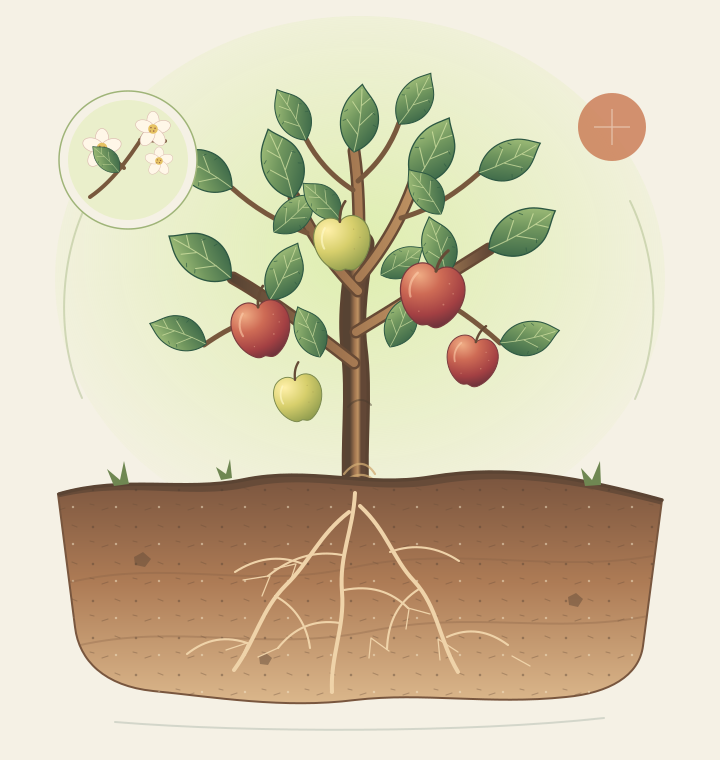
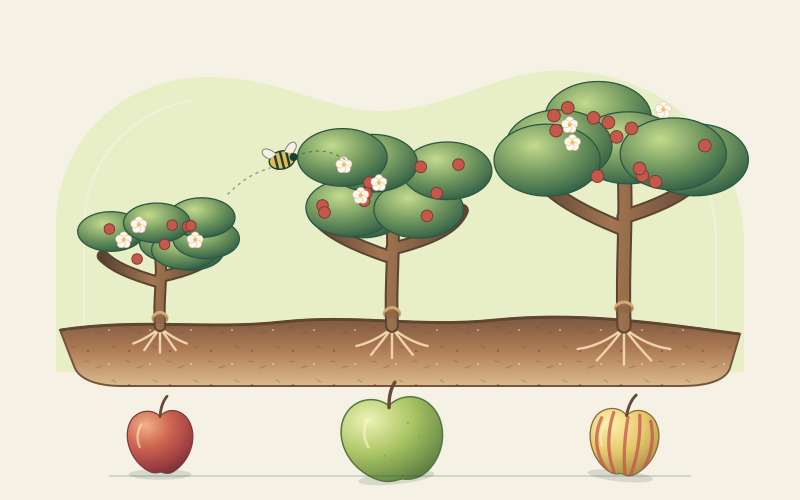
Grafted apple tree with an open branching crown, green leaves, red and gold fruit, spring blossom inset and roots spreading through a soil cutaway.
A grafted apple combines a fruiting cultivar with a root system chosen for size and site; the permanent woody framework supports recurring harvests.

Know the crop

Crop profile

A long-lived deciduous fruit tree usually sold as a cultivar grafted onto a size-controlling rootstock. Rootstock, cultivar, winter chill, spring frost, compatible pollen and annual training determine local cropping. On a suitable dwarfing or semi-dwarfing rootstock, the first useful crop commonly follows two to four years of establishment; larger trees can take considerably longer.

Crop essentials

Botanical name
Malus domestica
Growth
2–4 years From planting a young grafted tree on a suitable dwarfing or semi-dwarfing rootstock to its first useful crop. Blossom or a few fruits can appear earlier, but removing much early fruit helps roots and framework establish. Vigorous standard trees may need eight years or more; winter injury, inadequate chill, poor pollination, pruning and local disease can delay or prevent cropping.
Family
Rosaceae
Origin
Central Asia, with the primary wild ancestor Malus sieversii native to the region
Habit
Long-lived deciduous tree, usually grafted and trained as a free-standing or supported form

Nutrition / raw with skin

Nutrition, in context

Moderate Editorial nutrient-density rank 2. This is Rooted’s qualitative category for protein, fibre, folate, iron and potassium in the site’s food comparison, with highlights adding context. It is not an official nutritional score or a promise of a health outcome.

Approximate values per 100 g raw apples with skin, edible portion.
NutrientAmount
Protein0.26 g
Fibre2.4 g
Folate3 µg
Iron0.12 mg
Potassium107 mg
  • Contains 2.4 g dietary fibre and 4.6 mg vitamin C per 100 g in this raw, skin-on reference, with little protein, folate or iron.
  • These values describe raw fresh apples, not peeled apples, juice, sweetened sauce, cooked apples or dried apple rings.
  • Drying removes water and concentrates sugar, energy and other nutrients per 100 g; it does not make dried fruit equivalent weight-for-weight to fresh fruit.

Basis: Approximate values per 100 g raw apples with skin, edible portion (USDA FoodData Central SR Legacy 171688; includes Red Delicious, Golden Delicious, Gala, Granny Smith and Fuji analytical data). View the USDA reference.

The reference combines analytical data from several cultivars, so an individual garden apple can differ. Cultivar, ripeness, storage, peeling, cooking, drying and serving size change intake. Use only sound fruit, wash fresh apples under running water before cutting, and dry apples with a reliable preservation method before sealed storage. Nutrient content does not predict absorption or individual dietary needs.

At the table

Enjoy fresh and dried apples in context

  • Oats, yogurt, nuts or seeds — A varied breakfast or snack: Grains and protein-containing foods make an apple-based meal more substantial, while nuts or seeds add different nutrients and texture. Choose according to dietary preference and overall needs rather than treating apple as a required health ingredient. Slice a fresh apple beside oatmeal with plain yogurt, or serve it with a small handful of walnuts.
  • Cheese, nut butter or whole-grain bread — Practical fresh-fruit pairings: These accompaniments complement raw apple’s crisp texture and add protein, fat or additional fibre depending on the food. No particular combination is essential. Pack apple slices with cheese and whole-grain bread, or spread a little unsweetened nut butter on fresh slices.
  • Dried apple with oats, beans or savoury grains — Processing and practical portions: Dried apple is a storage food whose sugar and energy are concentrated by water removal. Use a portion that fits the meal, and account for any sugar or other ingredients added during processing. Chop a small portion of unsweetened dried apple into oatmeal, or add it to a grain and bean salad with herbs.

The essentials

From grafted tree to a sound harvest

Six practical stages for Malus domestica. Adapt cultivar, rootstock, training and timing to local winter chill, frost, rainfall and growing advice.

  1. Match rootstock, cultivar, chill and pollen

    Buy a healthy grafted tree whose label identifies both the fruiting cultivar and rootstock. Rootstock strongly influences mature size, support and time to bearing; it does not turn one cultivar’s fruit into another. Choose a cultivar with a chill requirement suited to local winters and a ripening season suited to local warmth. Most apples crop more reliably with a different compatible cultivar flowering nearby; do not assume any two named varieties overlap.

  2. Plant in sun and build the framework

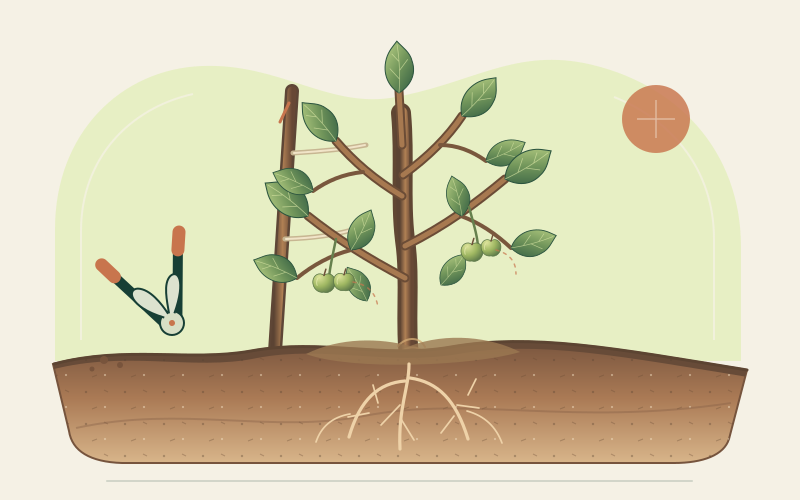
    Choose full sun, moving air and free-draining soil outside a frost pocket. Plant dormant stock when soil is workable, spread roots without bending them sharply, and keep the graft union above final soil level as the nursery directs. Clear competing grass, mulch away from the trunk and install a stake or permanent support where the rootstock requires it. Begin formative training for an open centre, central leader, cordon or espalier rather than improvising later.

  3. Prune by tree form and fruiting wood

    Use clean sharp tools to remove dead, damaged, crossing and badly placed growth, then make only the cuts required by the chosen training system. Free-standing trees are commonly pruned during dormancy; restricted trained forms also need summer pruning to direct growth into short fruiting wood. Apple fruit forms largely on spurs and older wood, with cultivar differences, so avoid routinely shortening every shoot. Heavy renovation is best staged rather than removing most of a crown at once.

  4. Water establishment and prevent local problems

    Water young trees thoroughly during dry spells, checking moisture below the surface rather than keeping soil saturated. Keep mulch clear of bark and use local soil or leaf evidence before feeding; excessive nitrogen favours soft growth and can increase disease susceptibility. Inspect blossom, leaves, bark and fruit for locally important scab, fire blight, mildew, codling moth or other problems. Identify the cause before acting and use only legal labelled controls where needed.

  5. Thin fruit to space the crop

    Young trees benefit from removing most early fruit while roots and framework develop. On cropping trees, natural early-summer fruit drop may not be enough. After that drop, hand-thin damaged and crowded fruitlets, commonly leaving one or two per cluster or roughly 10–15 cm between fruits as a starting point, adjusted to cultivar and local advice. Thinning supports fruit size, reduces limb load and can lessen alternating heavy and light crops.

  6. Pick mature fruit and store or dry it safely

    Apples can continue maturing after harvest, so judge cultivar background colour, developed flavour, seed darkening where characteristic and an easy lift-and-twist release. Pick in several passes, keeping the stalk and fruiting spur intact. Eat early cultivars promptly; store only sound late keepers near 0–3°C with high humidity, using perforated bags in a refrigerator or a suitable frost-free store, and inspect often. For dried fruit, wash and slice sound apples, use a reliable dehydrator method until leathery with no wet centre, cool and condition the batch, then pack airtight only when fully dry.

Growing notes by place

Read your region, then read your winter

Compare broad growing conditions, then adjust for your own chill accumulation, winter minimums, frost dates, altitude, rainfall, heat and soil.

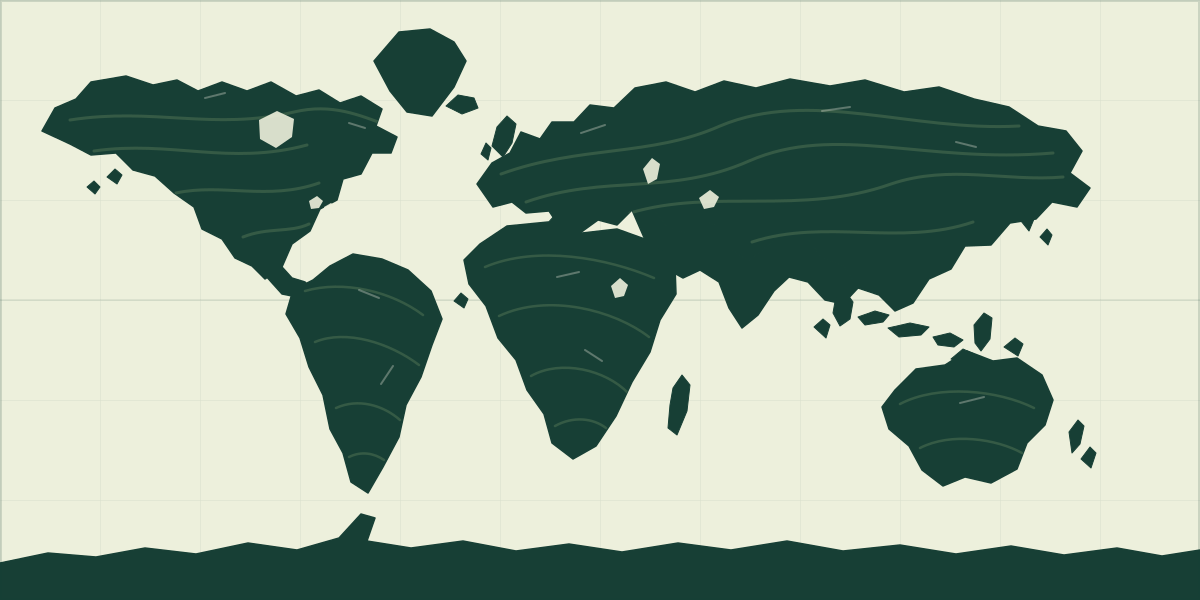
Cool, temperate and often maritime, with winter chill usually sufficient in traditional districts but mild winters, spring frost and cool summers varying by site.

Northwestern Europe

Apples are widely suited to Britain, Ireland, the Low Countries and nearby districts when the cultivar flowers and ripens reliably locally. Sheltered urban, exposed coastal and upland sites need different choices.

Indicative planting
Plant a healthy dormant bare-root tree from late autumn–early spring while soil is workable and neither frozen nor waterlogged; container trees can use other mild windows with attentive watering. Install support required by the rootstock and confirm a compatible flowering partner nearby.
Indicative harvest
After roughly 2–4 years on a suitable dwarfing or semi-dwarfing rootstock, pick early cultivars from late summer and later keepers through autumn. Use flavour, background colour and an easy lift-and-twist release rather than date alone.
Soil and moisture
Fertile, moisture-retentive but free-draining soil in full sun; avoid frost pockets, persistent saturation and excessive nitrogen. Mulch the root zone without piling material against the trunk.

Field note: Choose cultivar and rootstock for local ripening, space and disease pressure; prune free-standing trees in dormancy and trained forms at the locally recommended time, usually including summer pruning.
Dates are indicative. Local winter chill, frost forecasts, winter minimums, seasonal heat, rainfall and recent weather—not the calendar alone—should guide planting, pruning and harvest.

Cool-temperate Northern Hemisphere · example

A perennial tree’s rhythm

A compact planning guide, not a fixed schedule. Shift it with latitude, altitude, cultivar, rootstock, winter chill, training form and local conditions.

  1. November–March

    Plant dormant stock when soil is workable and local guidance permits. Prune established free-standing trees in the appropriate dormant window after severe cold, inspect support and confirm a compatible pollen partner before bloom.

  2. April–June

    Protect blossom only with realistic frost forecasts and suitable covers that allow pollinator access when open. Water young trees, keep the root zone weed-free and inspect new growth for local pests and disease.

  3. June–August

    Thin crowded fruitlets after natural drop, support laden limbs without damaging bark and summer-prune trained forms at the recommended time. Begin tasting early cultivars as background colour and flavour develop.

  4. August–November

    Harvest in several passes by maturity. Use early apples promptly, chill sound late keepers with high humidity, and dry selected fruit by a reliable method before conditioning and sealed storage.

The 2–4 year window runs from planting suitable young dwarfing or semi-dwarfing grafted stock to its first useful crop, not from annual sowing. Early fruit may be removed to favour establishment; standard rootstocks, winter injury, inadequate chill, pruning and disease can lengthen the wait or prevent cropping.

From the field journal

Train, choose and preserve your apples

Practical reading for perennial establishment, informed cultivar and rootstock choices, and fresh or dried fruit without superfood claims.

Your next harvest begins here

Start with the right graft and a patient framework.

Choose a locally proven cultivar and rootstock, confirm compatible pollen, and give a young tree time to establish. Careful training and thinning make every later harvest easier to reach and use.

Open the growing guide