What it does
Monoterpene phenol found in thyme and oregano. Potent antimicrobial — disrupts bacterial cell membranes 1 and inhibits biofilm formation 2. Also acts as bronchospasmolytic, relaxing airway smooth muscle 3. Moderately volatile: boiling drives off some thymol (cover tea while steeping). Drying reduces thymol content somewhat. Alcohol tincture extracts and preserves thymol very effectively. Used in commercial mouthwash (Listerine) at ~0.06%. Heating above 230°C decomposes thymol. Synergistic with carvacrol (its isomer) — together more antimicrobial than either alone.
Plants that contain it

Ayurveda · Unani Serious cautions
Ajwain
Trachyspermum ammi
Traditionally used for acute bloating and gas; indigestion with heaviness.
- chewing
- Used for
- 1 condition
- Body systems
- Digestive
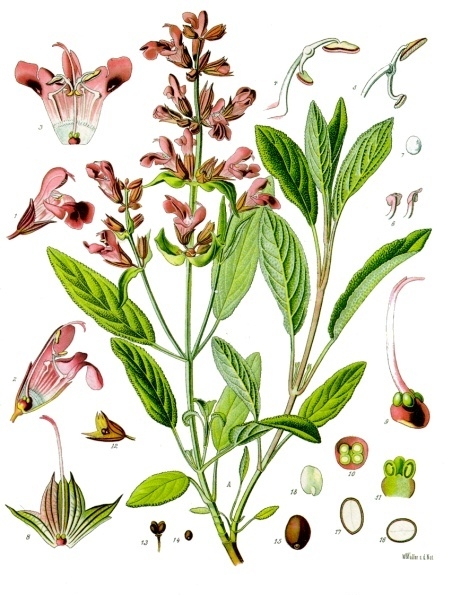
European · Unani Serious cautions
Sage
Salvia officinalis
Traditionally used for sore throat and pharyngitis; mouth ulcers and gum inflammation; tonsillitis.
- chewing
- gargle
- infusion
- tea
- Used for
- 3 conditions
- Body systems
- Respiratory, Women’s Health +1
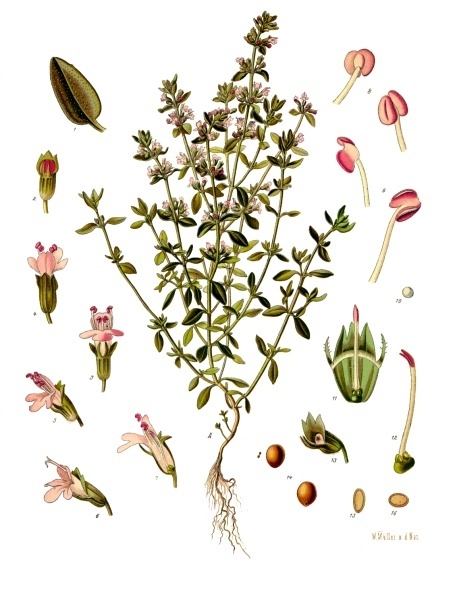
European · Unani Serious cautions
Thyme
Thymus vulgaris
Traditionally used for productive cough with thick mucus; bronchitis and chest congestion; whooping cough.
- decoction
- infusion
- steam inhalation
- syrup
- Used for
- 3 conditions
- Body systems
- Respiratory, Fever & Infection
Research references
- Xu J et al.. The antibacterial mechanism of carvacrol and thymol against Escherichia coli. Lett Appl Microbiol, 2008.
- Nostro A et al.. Effects of oregano, carvacrol and thymol on Staphylococcus aureus and Staphylococcus epidermidis biofilms. J Med Microbiol, 2007.
- Begrow F et al.. Impact of thymol in thyme extracts on their antispasmodic action and ciliary clearance. Planta Medica, 2010.