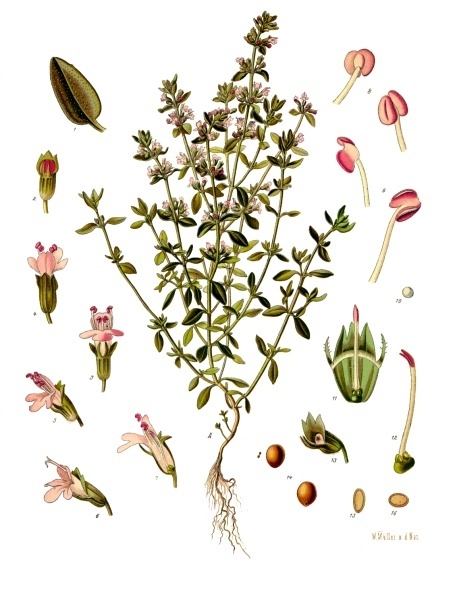
Traditionally used for productive cough with thick mucus; bronchitis and chest congestion; whooping cough.
Traditional uses
- For productive cough with thick mucus
- For bronchitis and chest congestion
- For whooping cough (pertussis)—traditional specific
- Antimicrobial action supports clearing respiratory infections
Conditions it is used for
Respiratory System
Fever & Infection
In the old texts
Thyme has been a respiratory remedy in European medicine since the Greeks. Dioscorides documented it. Its essential oil (thymol) has demonstrated antimicrobial and expectorant properties. German Commission E approved it for bronchitis and whooping cough. It exemplifies the crossover between culinary and medicinal use.
What does the work
- Thymol
- Monoterpene phenol found in thyme and oregano.
- Volatile oils
- Complex mixtures of terpenes, terpenoids, and phenylpropanoids responsible for plant aromas and many therapeutic effects.
Combines well with
Elecampane European
Acute + chronic bronchitis—expectorant + antimicrobial synergy
How: Thymol and carvacrol disrupt bacterial cell membranes and act as bronchospasmolytic agents; alantolactone (sesquiterpene lactone from elecampane) is expectorant and antimycobacterial
Cautions
- Pregnancy Serious
Many herbs cross the placental barrier and may stimulate uterine contractions (emmenagogue/oxytocic effects) or disrupt fetal development. Alkaloids, volatile oils, and anthraquinone laxatives carry particular risk 1. - Surgery Take care
Herbs affecting coagulation (garlic, ginkgo, ginger inhibit platelet aggregation) or anesthesia metabolism (kava, valerian potentiate sedatives) should be discontinued 2–3 weeks before elective surgery.
These are the cautions recorded for this plant, not a complete list. Doses, preparations and interactions vary; ask a pharmacist or qualified practitioner before combining a herb with medication.
Research references
- Ernst E. Herbal medicinal products during pregnancy: are they safe?. BJOG, 2002.