What it does
Diarylheptanoid polyphenol responsible for turmeric’s yellow color. Inhibits NF-κB 1, COX-2, and LOX — broad anti-inflammatory. Extremely poor oral bioavailability (<1%) due to rapid hepatic glucuronidation and intestinal metabolism 2. Piperine (black pepper) increases absorption ~2000% by inhibiting glucuronidation 3. Lipids enhance absorption via micellar solubilization. Boiling in water extracts only ~10% of curcumin; simmering in fat/oil extracts much more. Alcohol tincture is effective for extraction. Drying preserves curcumin well. Heat degrades curcumin above 180°C into vanillin, ferulic acid, and feruloylmethane — all mildly anti-inflammatory but less potent.
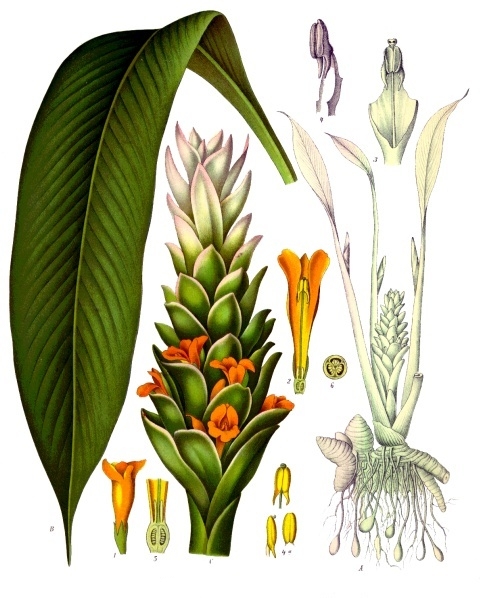
Plants that contain it
Research references
- Singh S, Aggarwal BB. Activation of transcription factor NF-kappa B is suppressed by curcumin. J Biol Chem, 1995.
- Anand P et al.. Bioavailability of curcumin: problems and promises. Mol Pharm, 2007.
- Shoba G et al.. Influence of piperine on the pharmacokinetics of curcumin in animals and human volunteers. Planta Medica, 1998.