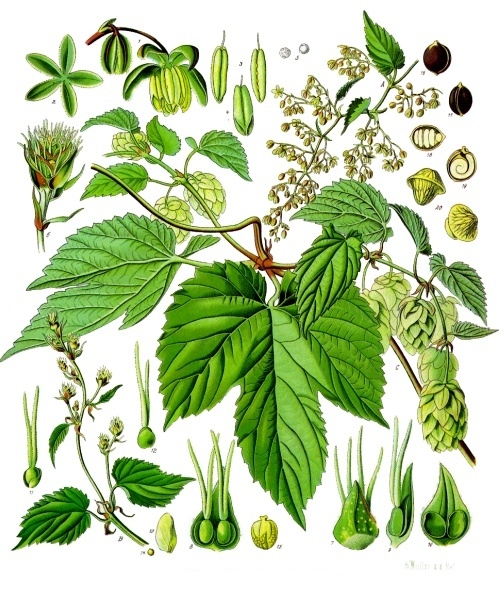
Traditionally used for insomnia, especially with restlessness; sleep disturbance with digestive upset.
Traditional uses
- For insomnia, especially with restlessness
- For sleep disturbance with digestive upset
- Combined with valerian for enhanced effect
Conditions it is used for
Nervous System & Mental State
In the old texts
Hops are best known as a beer ingredient, but their sedative properties have been recognized medicinally since at least the 9th century. Hop pickers were observed to tire easily—the volatile compounds absorbed through skin caused drowsiness. Hops are often combined with valerian for sleep.
What does the work
- Flavonoids
- Large class of polyphenolic compounds (>6000 known).
- Volatile oils
- Complex mixtures of terpenes, terpenoids, and phenylpropanoids responsible for plant aromas and many therapeutic effects.
Combines well with
Valerian European
Classic European sleep formula; complementary sedation
How: Valerenic acid is a positive allosteric modulator of GABA-A receptors; 2-methyl-3-buten-2-ol (hops degradation product of alpha-acids) acts as a direct GABA-A agonist; complementary GABAergic sedation at distinct binding sites
Cautions
- Pregnancy Serious
Many herbs cross the placental barrier and may stimulate uterine contractions (emmenagogue/oxytocic effects) or disrupt fetal development. Alkaloids, volatile oils, and anthraquinone laxatives carry particular risk 1. - Estrogenic effects Take care
Phytoestrogens (isoflavones, coumestans, lignans) and structurally estrogenic compounds (anethole) bind estrogen receptors, potentially stimulating hormone-sensitive tissue proliferation 2. - Sedation Worth knowing
GABAergic herbs (valerian, kava, passionflower) potentiate GABA-A receptor activity, producing additive sedation when combined with benzodiazepines, barbiturates, or alcohol 3.
These are the cautions recorded for this plant, not a complete list. Doses, preparations and interactions vary; ask a pharmacist or qualified practitioner before combining a herb with medication.
Research references
- Ernst E. Herbal medicinal products during pregnancy: are they safe?. BJOG, 2002.
- Albert-Puleo M. Fennel and anise as estrogenic agents. J Ethnopharmacol, 1980.
- Khom S et al.. Valerenic acid potentiates and inhibits GABA(A) receptors: molecular mechanism and subunit specificity. Neuropharmacology, 2007.