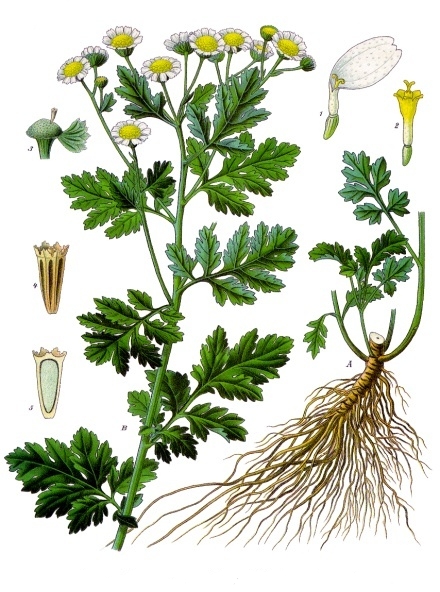
Traditionally used for migraine prevention.
Traditional uses
- For migraine prevention—must be taken regularly for weeks to months; not for acute treatment
- Reduces frequency and severity of migraines in many users
- May help with menstrual migraines
- Some use for arthritis inflammation
Conditions it is used for
Pain & Inflammation
In the old texts
Feverfew has been used in European folk medicine for centuries, but gained particular attention in the late 20th century for migraine prevention. Its use for “feverfuge” (fever-reducing) explains the name, but its application for headaches is equally traditional. Parthenolide, its key compound, has been studied for anti-inflammatory and migraine-preventive effects.
What does the work
- Parthenolide
- Sesquiterpene lactone from feverfew (Tanacetum parthenium).
Cautions
- Pregnancy Serious
Many herbs cross the placental barrier and may stimulate uterine contractions (emmenagogue/oxytocic effects) or disrupt fetal development. Alkaloids, volatile oils, and anthraquinone laxatives carry particular risk 1. - Allergic reactions Take care
Asteraceae (chamomile, echinacea, feverfew) contain sesquiterpene lactones that can trigger contact dermatitis and cross-reactive IgE-mediated responses in ragweed-sensitive individuals. - Surgery Take care
Herbs affecting coagulation (garlic, ginkgo, ginger inhibit platelet aggregation) or anesthesia metabolism (kava, valerian potentiate sedatives) should be discontinued 2–3 weeks before elective surgery.
These are the cautions recorded for this plant, not a complete list. Doses, preparations and interactions vary; ask a pharmacist or qualified practitioner before combining a herb with medication.
Research references
- Ernst E. Herbal medicinal products during pregnancy: are they safe?. BJOG, 2002.