What it does
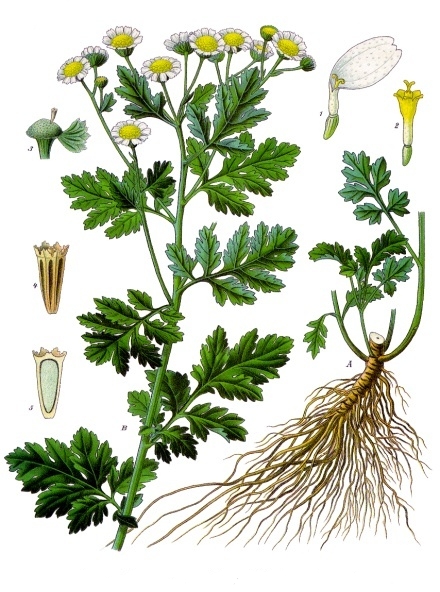
Sesquiterpene lactone from feverfew (Tanacetum parthenium). Primary mechanism: inhibits NF-κB by alkylating cysteine residues 1, reducing production of pro-inflammatory cytokines (TNF-α, IL-1). Also inhibits platelet aggregation and serotonin release from platelets 2 — basis of migraine prevention use. Unstable: degrades significantly during drying, especially with heat. Fresh plant or freeze-dried preparations are most potent. Alcohol tincture from fresh herb preserves parthenolide better than dried preparations. Boiling degrades parthenolide substantially. Standardized extracts aim for 0.2–0.4% parthenolide. Chewing fresh leaves is the traditional (though bitter) delivery method.
Plants that contain it
Research references
- Garcia-Pineres AJ et al.. Cysteine 38 in p65/NF-kappaB plays a crucial role in DNA binding inhibition by sesquiterpene lactones. J Biol Chem, 2001.
- Groenewegen WA et al.. A comparison of the effects of an extract of feverfew and parthenolide on human platelet activity in-vitro. J Pharm Pharmacol, 1990.