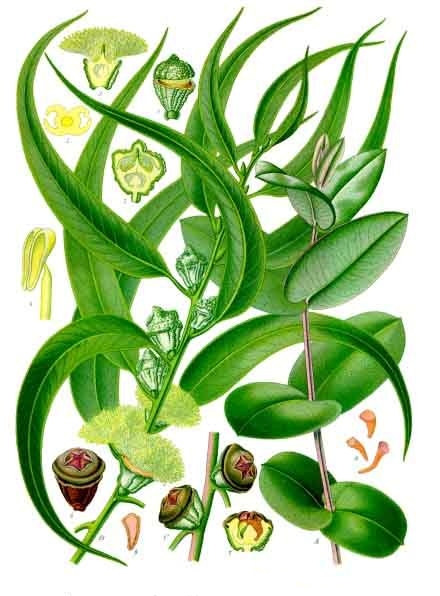
Traditionally used for nasal and sinus congestion; chest congestion; headache from sinus pressure.
Traditional uses
- For nasal and sinus congestion
- For chest congestion
- For headache from sinus pressure
- As an antimicrobial for respiratory infections
Conditions it is used for
Respiratory System
In the old texts
Eucalyptus was used by Aboriginal Australians long before European contact. The tree was introduced to Europe and other regions in the 19th century and rapidly became a staple of respiratory medicine. The essential oil contains eucalyptol (1,8-cineole), a potent decongestant.
What does the work
- Cineole
- Bicyclic monoterpene ether (also called eucalyptol or 1,8-cineole).
Cautions
- Drug interactions Serious
Herbs can alter drug metabolism via CYP450 induction (St. John’s wort induces CYP3A4 1) or inhibition (piperine inhibits CYP3A4 and P-glycoprotein), causing subtherapeutic or toxic drug levels. - Children Take care
Children have immature hepatic CYP450 enzyme systems and lower body mass, making them more susceptible to dose-dependent toxicity. Many herbs lack pediatric pharmacokinetic data.
These are the cautions recorded for this plant, not a complete list. Doses, preparations and interactions vary; ask a pharmacist or qualified practitioner before combining a herb with medication.
Research references
- Moore LB et al.. St. John’s wort induces hepatic drug metabolism through activation of the pregnane X receptor. Proc Natl Acad Sci USA, 2000.