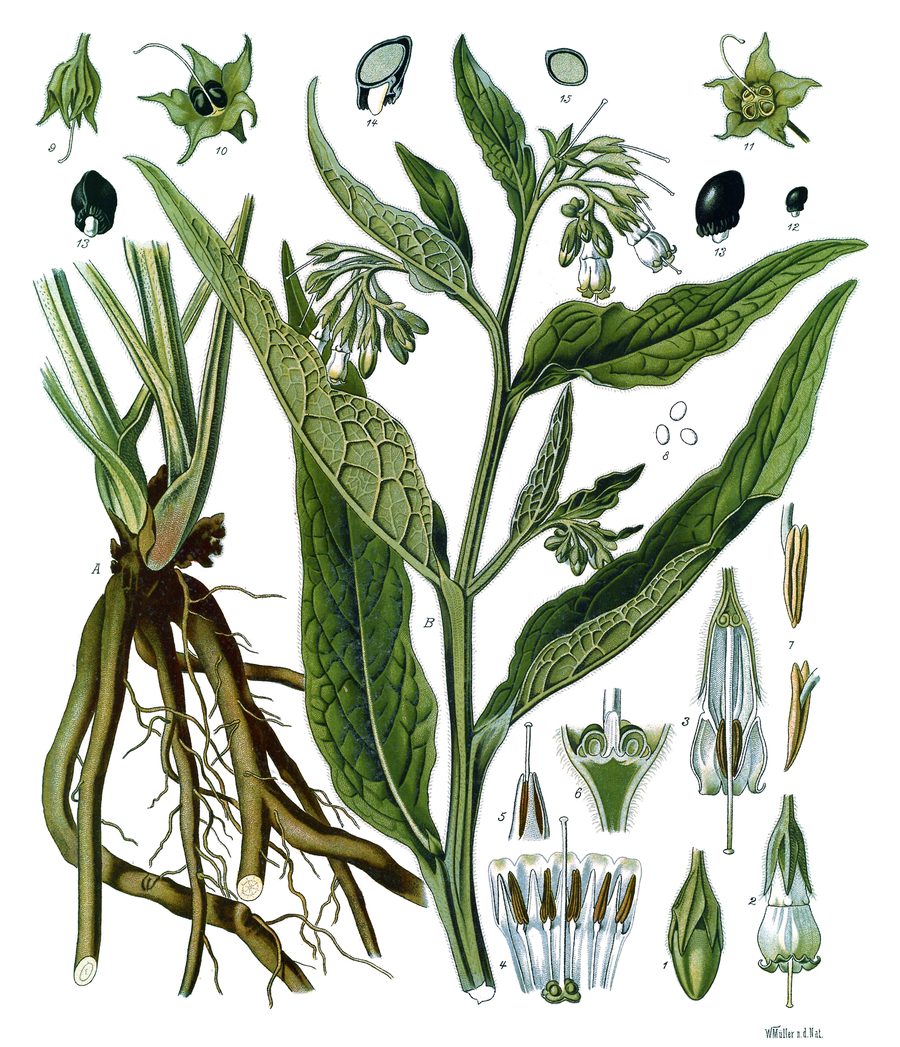
Traditionally used for back strain and muscular pain; bruising and tissue injury.
Traditional uses
- For back strain and muscular pain
- For bruising and tissue injury
- Applied to intact skin over affected area 2-3 times daily
Conditions it is used for
Pain & Inflammation
Wounds, Skin & External Conditions
In the old texts
Comfrey has been used topically for bone and tissue injuries since ancient times—hence “knitbone.” It contains allantoin, which promotes cell proliferation, and has demonstrated effects on back pain in clinical studies. However, internal use is no longer recommended due to pyrrolizidine alkaloid content.
What does the work
Cautions
- Liver conditions Serious
Hepatotoxic constituents including pyrrolizidine alkaloids, pulegone (pennyroyal), and kava lactones can cause veno-occlusive disease, centrilobular necrosis, or cholestatic injury in susceptible individuals 1. - Pregnancy Serious
Many herbs cross the placental barrier and may stimulate uterine contractions (emmenagogue/oxytocic effects) or disrupt fetal development. Alkaloids, volatile oils, and anthraquinone laxatives carry particular risk 2. - Topical use only Serious
Certain herbs contain compounds too toxic for systemic absorption (comfrey pyrrolizidine alkaloids, podophyllotoxin) but safe at controlled topical doses where hepatic first-pass metabolism is bypassed. - Breastfeeding Take care
Lipophilic compounds (alkaloids, volatile oils, terpenoids) readily transfer into breast milk, potentially exposing the infant to pharmacologically active doses. Herbs that alter prolactin or dopamine may also affect milk supply.
These are the cautions recorded for this plant, not a complete list. Doses, preparations and interactions vary; ask a pharmacist or qualified practitioner before combining a herb with medication.
Research references
- Teschke R et al.. Herbal hepatotoxicity: a tabular compilation of reported cases. Liver Int, 2012.
- Ernst E. Herbal medicinal products during pregnancy: are they safe?. BJOG, 2002.