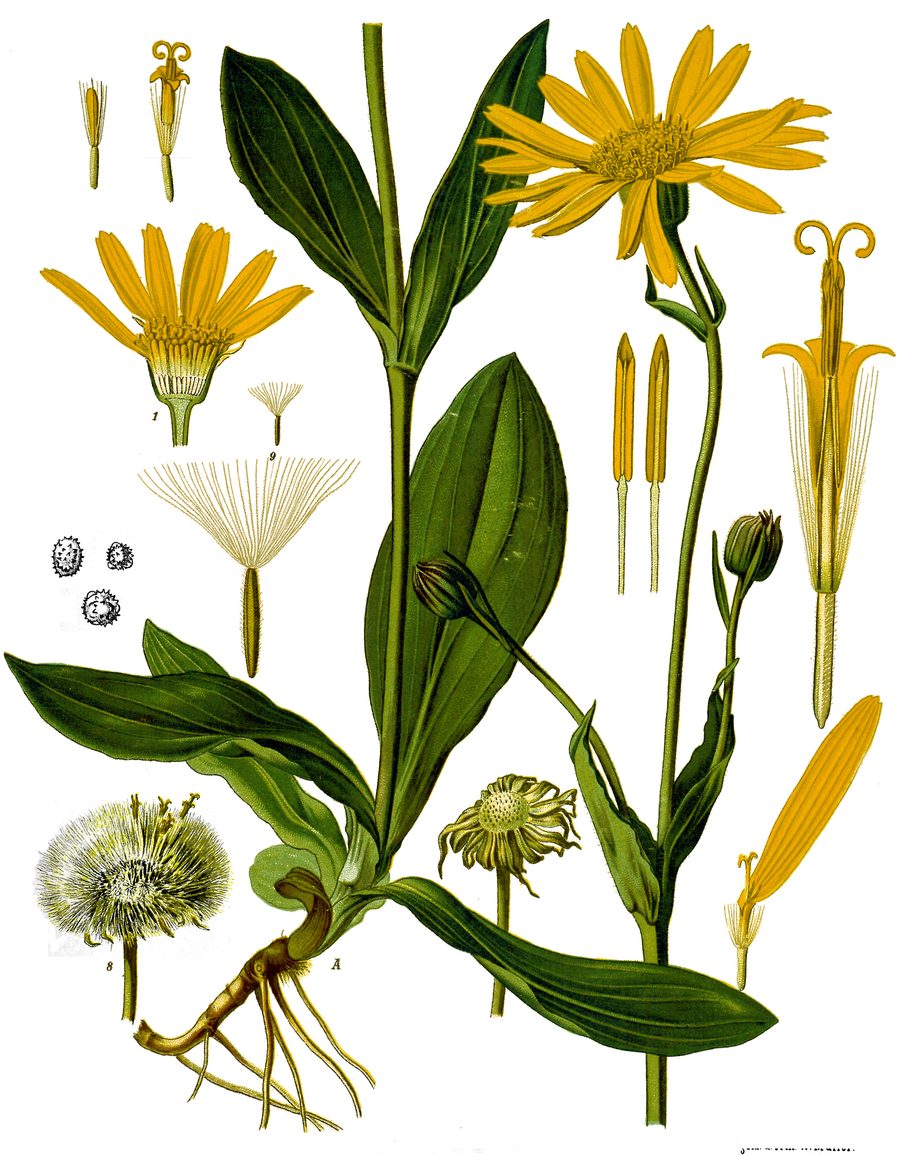
Traditionally used for muscle soreness and strain; bruises and contusions; sprains and joint trauma.
Traditional uses
- For muscle soreness and strain—apply after exertion
- For bruises and contusions
- For sprains and joint trauma
- Do NOT apply to broken skin
Conditions it is used for
Pain & Inflammation
Wounds, Skin & External Conditions
In the old texts
Arnica has been used topically for bruises, sprains, and muscle pain in European mountain regions for centuries. It became a staple of homeopathic medicine and German phytotherapy. It is primarily a TOPICAL remedy—internal use of the herb is potentially toxic.
What does the work
- Flavonoids
- Large class of polyphenolic compounds (>6000 known).
Cautions
- Topical use only Serious
Certain herbs contain compounds too toxic for systemic absorption (comfrey pyrrolizidine alkaloids, podophyllotoxin) but safe at controlled topical doses where hepatic first-pass metabolism is bypassed. - Allergic reactions Take care
Asteraceae (chamomile, echinacea, feverfew) contain sesquiterpene lactones that can trigger contact dermatitis and cross-reactive IgE-mediated responses in ragweed-sensitive individuals.
These are the cautions recorded for this plant, not a complete list. Doses, preparations and interactions vary; ask a pharmacist or qualified practitioner before combining a herb with medication.