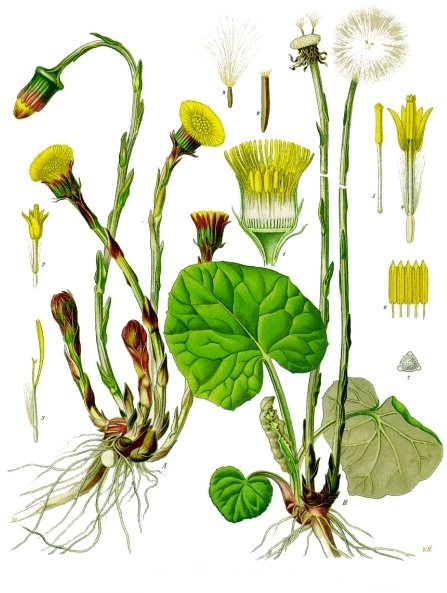
Traditionally used for chronic cough and bronchitis; bronchial irritation; chest congestion with thick mucus.
Traditional uses
- For chronic cough and bronchitis
- For bronchial irritation
- For chest congestion with thick mucus
Conditions it is used for
Respiratory System
In the old texts
The Latin name Tussilago literally means “cough dispeller.” It has been used for chest conditions for millennia—Dioscorides, Pliny, and later herbalists all documented it. The leaves were traditionally smoked for bronchial spasm (paradoxical but historically documented).
What does the work
- Alkaloids
- Nitrogen-containing organic compounds with potent pharmacological activity.
Cautions
- Liver conditions Serious
Hepatotoxic constituents including pyrrolizidine alkaloids, pulegone (pennyroyal), and kava lactones can cause veno-occlusive disease, centrilobular necrosis, or cholestatic injury in susceptible individuals 1. - Pregnancy Serious
Many herbs cross the placental barrier and may stimulate uterine contractions (emmenagogue/oxytocic effects) or disrupt fetal development. Alkaloids, volatile oils, and anthraquinone laxatives carry particular risk 2. - Breastfeeding Take care
Lipophilic compounds (alkaloids, volatile oils, terpenoids) readily transfer into breast milk, potentially exposing the infant to pharmacologically active doses. Herbs that alter prolactin or dopamine may also affect milk supply.
These are the cautions recorded for this plant, not a complete list. Doses, preparations and interactions vary; ask a pharmacist or qualified practitioner before combining a herb with medication.
Research references
- Teschke R et al.. Herbal hepatotoxicity: a tabular compilation of reported cases. Liver Int, 2012.
- Ernst E. Herbal medicinal products during pregnancy: are they safe?. BJOG, 2002.