Fire Moderate
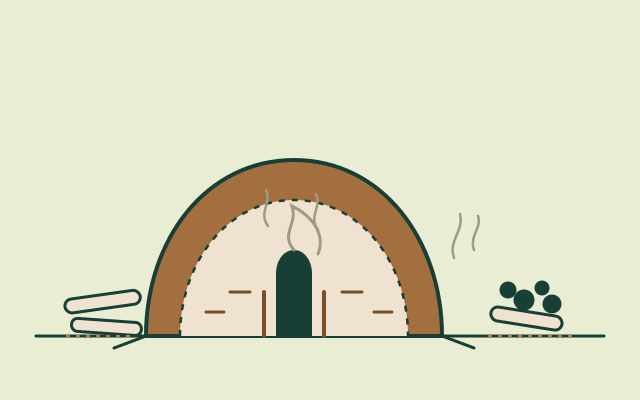
Charcoal from the woodlot
Build an earth mound, control the air, and turn coppiced wood into concentrated fuel for the forge, the oven and the filter.
- hardwood
- earth
- turf
- water
- Makes
- Fuel, filter, drawing
- Time
- 3–6 days
Rooted field manual · Hearth
Three field recipes for fuel, cooking and warmth — charcoal from the woodlot, earth ovens and rocket stoves, and a room that stays warm on a small fire.
No power tools and no fuel that has to arrive on a truck. Each recipe names its fuel, its smoke and carbon-monoxide risks, and the simple tests that tell you whether it worked before you rely on it for a winter.
A route, not a rule
Fuel first, then cooking, then the building that keeps the heat. Walls, roofs and fired clay are in Earth; charcoal also feeds the bloomery iron recipe in Crafts.
Charcoal turns brush and coppice into a concentrated, smokeless fuel that keeps dry under cover and carries heat to an oven, forge or kiln.
An earth oven or rocket stove burns small sticks hot and clean, for daily cooking and baking with a fraction of an open fire’s wood.
With mass, insulation, sun and a small stove you can make one room genuinely warm before trying to heat a whole house.
The recipe box
Every guide includes materials, step-by-step method, tests, limits and its own safety notes. Fire is an outdoor tool: read the workshop code below before the first burn.
Showing all 3 recipes.
Fire Moderate
Build an earth mound, control the air, and turn coppiced wood into concentrated fuel for the forge, the oven and the filter.
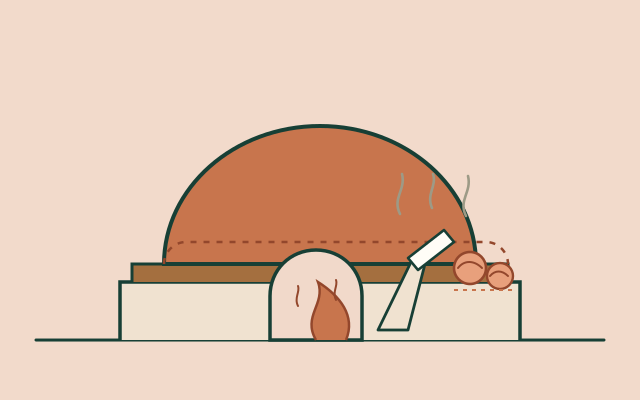
Clay & fire Moderate
A cob dome for bread and a brick rocket stove for the daily pot — both built from the ground, both fuelled by small wood.
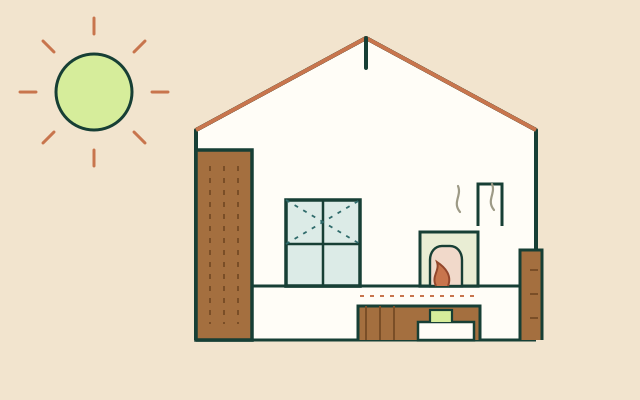
Warmth Moderate
Design for the sun, store heat in mass, seal the draughts, and heat one room well instead of every room badly.
The workshop code
These methods are old, but the people using them are not disposable. Read this page before the first fire, the first slaking, or the first wall.
Scope and honesty
“Primitive” is a direction of travel, not a purity test. The aim is to reduce dependence on distant supply chains, not to pretend that a group in isolation has no obligations.
A group of roughly eight to thirty people, with axes, saws, spades, hammers, buckets, a wheelbarrow or cart, and the patience to work with weather. Steel hand tools are assumed; a forge can repair and eventually remake them.
Clay, sand, stone, timber, water and firewood are rights before they are materials. Get permission, respect protected sites and species, and check building, fire, water and food-safety rules. Local advice outranks any page here.
Roofs, retaining walls, chimneys, ponds and any structure people sleep under carry real risk. The recipes explain principles and proportions, not stamped designs. Use a qualified local engineer for structural and water works.
Burn one batch of charcoal and cook one meal on a rocket stove. Watch the smoke: a fire that smokes is wasting fuel, and one in a closed room can kill.