
Crop 004 / Spinacia oleracea

Tender leaves from a short, cool season.

Grow true spinach for baby salads or full-sized cooking leaves. Sow small batches into cool, moist soil, keep growth steady, and pick before heat and lengthening days send the rosette into flower.

Flexible leaf harvest
Baby or mature Cut tender young leaves early or allow full-sized rosettes to develop.
Typical crop window
35–50 days To first full-size leaves in favourable cool conditions; baby leaves can be earlier.
Season
Cool and moist Heat, long days and dryness encourage bolting.
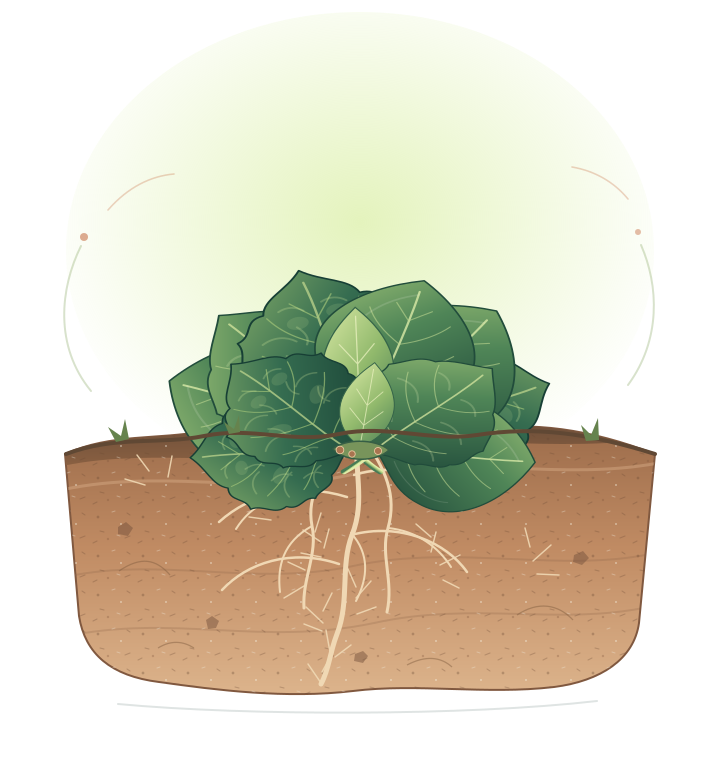
Spinach rosette with smooth and crinkled green leaves above a slender taproot and fine branching roots in a soil cutaway.
Smooth and savoy leaves meet at a low crown; below ground, a taproot and fine roots support the fast-growing rosette.

Know the crop

Crop profile

True spinach, Spinacia oleracea, is a fast, cool-season leaf crop. New Zealand spinach, Malabar spinach and perpetual spinach are different crops with different needs.

Crop essentials

Growth
35–50 days From sowing to first full-size leaves under favourable cool conditions. Baby leaves may be ready in about a month; cold soil slows growth.
Family
Amaranthaceae
Origin
Central and western Asia
Habit
Cool-season annual with a low leaf rosette before flowering

Harvest promptly: heat, long days and drought can cause bolting. Cultivar, temperature, moisture and harvest stage all shift the timing.

Nutrition / boiled and drained

Nutrition, in context

Very high Nutrient density, editorial rank 4 of 4. This is Rooted’s qualitative category for protein, fibre, folate, iron and potassium density in a small cooked-food comparison, not an official score or universal crop ranking.

Approximate nutrients per 100 g spinach, cooked, boiled, drained, without salt
Nutrient Amount
Protein 2.97 g
Fibre 2.4 g
Folate 146 µg
Iron 3.57 mg
Potassium 466 mg

The same 100 g reference contains 493.6 µg vitamin K, 524 µg RAE vitamin A and 9.8 mg vitamin C. Cooked leaves are more concentrated by volume than raw leaves, so raw and cooked values are not interchangeable.

Basis: Approximate values per 100 g spinach, cooked, boiled, drained, without salt (USDA FoodData Central SR Legacy 168463). Spinach contains oxalate, which limits absorption of some minerals. Its iron is non-heme; the listed content is not an absorbed amount. Boiling water, cultivar, preparation and serving size change nutrient intake.

At the table

Build a varied spinach meal

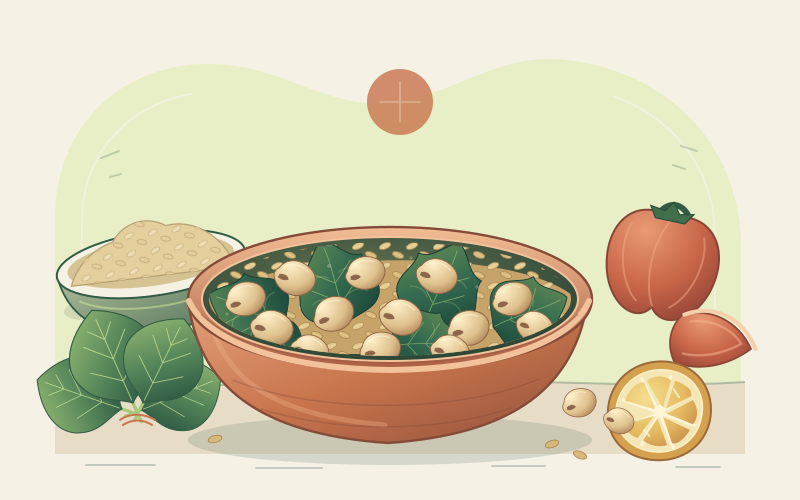
  • Chickpeas or lentils with grains: add protein and fibre while making the meal more varied. Their different amino-acid patterns can complement each other across the day. Try spinach and chickpeas with brown rice or whole-grain flatbread.
  • Lemon, peppers or tomatoes: a vitamin-C-rich food in the same meal can support absorption of non-heme iron from spinach and other plant foods. It does not cancel every inhibitor or guarantee a particular absorption increase. Finish spinach and lentils with lemon, or add sweet peppers.
  • Eggs, fish, yogurt or tofu: contribute protein and different nutrients alongside spinach. Choose according to preference and overall dietary needs; no single accompaniment is essential. Fold spinach into a tofu scramble or serve it with fish and potatoes.

Iron absorption depends on the whole diet and a person’s iron status. Spinach is a useful leafy vegetable, not a treatment for iron deficiency or a substitute for individual medical advice.

The essentials

From cool soil to tender leaves

Six practical stages. Adapt each one to your local temperature, day length, rainfall and chosen cultivar.

  1. Choose a short, cool window

    Plan for spring, autumn or a suitably protected cold season rather than sustained summer heat. True spinach grows quickly while conditions are cool. Use locally recommended fast, hardy or slow-bolting selections for the intended sowing slot.

  2. Direct sow and repeat small batches

    Sow where plants will grow, roughly 1–2.5 cm deep unless the seed packet says otherwise. Keep the seedbed evenly moist for germination; very warm soil can delay or reduce it, and cold saturated soil can rot seed. Succession-sow every one to three weeks only while cool conditions suit.

  3. Prepare fertile, moist soil

    Choose sun or light shade and moisture-retentive, free-draining soil improved with mature compost. Water at soil level without waterlogging, weed carefully around shallow roots, and thin full-sized plants gradually to roughly 7.5–15 cm apart, adjusting for cultivar and leaf size.

  4. Limit heat and long-day bolting

    Long days are a natural flowering cue, while heat and dryness can accelerate the change. Slow-bolting cultivars, light afternoon shade and reliable watering may buy time but cannot make spinach heatproof. Pick usable leaves promptly when a thick central stalk begins to rise.

  5. Prevent mildew and leafminer damage

    Space for airflow and water at the base to reduce downy-mildew risk. Choose current, locally recommended resistant selections; resistance is not immunity and pathogen races differ. Inspect leaf undersides for leafminer eggs, remove mined leaves, and seal fine insect mesh over uninfested beds before flies lay eggs.

  6. Pick baby or mature leaves

    Cut baby leaves when they reach the desired size. For mature harvests, take outer leaves while leaving the centre productive, or cut a whole rosette just above the base for one picking. Harvest with clean hands and tools in cool conditions, refrigerate promptly, and rinse before preparation.

Growing notes by place

Read your region, then read your weather

Compare broad growing conditions, then adjust for your own temperature, day length, frost, altitude, rainfall and soil.

Cool and temperate, with mild coastal areas and colder inland or upland springs.

Northwestern Europe

Spinach fits spring and autumn in much of Britain, Ireland and nearby districts. Summer heat and long days shorten harvests.

Indicative planting
Sow small batches from mid-spring to May and again from late summer into early autumn. Use cloches for early crops and hardy cultivars for overwintering.
Indicative harvest
Pick baby leaves from about a month; harvest full leaves during the indicative window when growth is active. Expect spring and autumn pickings, with later crops in cold soil.
Soil and moisture
Fertile and moisture-retentive but not waterlogged, with plenty of compost; light shade helps in warm weather.

Field note: Water consistently, avoid sowing into very hot or cold soil and remove plants once a flowering stalk forms.
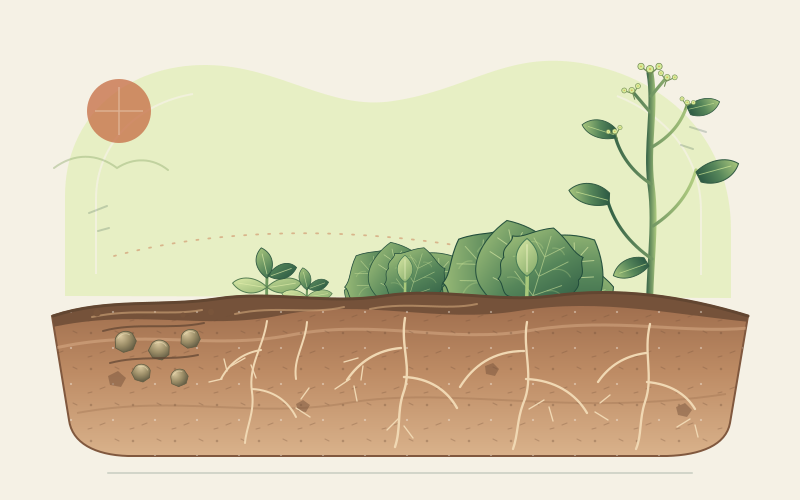

Dates are indicative. Local temperature, day length, frost forecasts, soil conditions and recent weather—not the calendar alone—should guide sowing and harvest.

Cool-temperate Northern Hemisphere · example

Two cool-season rhythms

A compact planning guide, not a fixed schedule. Shift it with latitude, altitude, cultivar, day length and local conditions.

  1. March–April

    Prepare a fertile, moisture-retentive bed. Direct sow as soil becomes workable, using a cloche where locally useful; do not sow into frozen or saturated ground.

  2. April–May

    Make small repeat sowings while conditions remain cool. Thin for the intended leaf size, water evenly and pick baby or mature leaves before flowering stalks develop.

  3. August–September

    Resume succession sowing as sustained heat eases and days shorten. Wait for cooler soil if germination conditions remain poor, and keep late sowings consistently moist.

  4. September–November

    Harvest autumn leaves promptly. Where local guidance supports it, use hardy cultivars and suitable ventilated protection for later crops; severe cold and wet can still cause losses.

In a short or warm season, two well-timed cool windows are usually more realistic than trying to maintain one spinach sowing through long, hot summer days.

From the field journal

Sow, select and serve your spinach

Practical reading for fitting spinach into a cool season, choosing leaf forms and seasonal traits, and understanding its nutrients without superfood claims.

Your next harvest begins here

Start with one small, cool-season sowing.

A short row is enough to learn the crop. Keep the soil evenly moist, note when the first leaves are ready, and repeat the sowing only while local conditions favour tender growth.

Open the growing guide