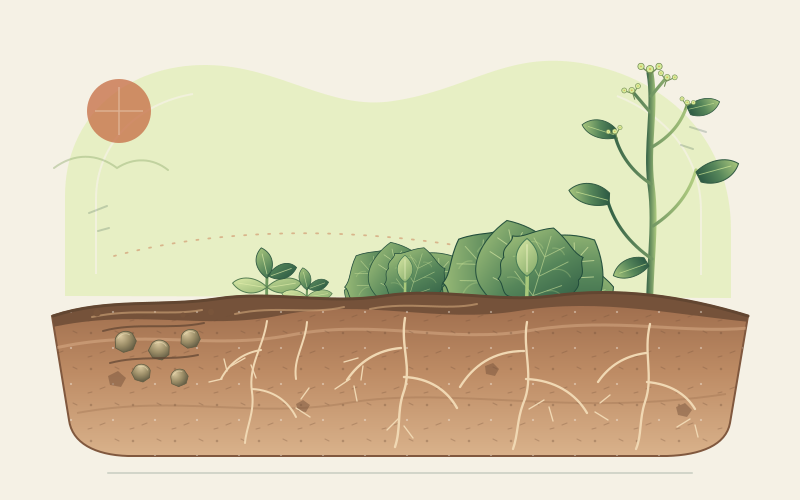
Make the most of a short, cool window
True spinach, Spinacia oleracea, is a fast leafy annual for spring, autumn, and, where winters are suitable, protected cold-season growing. It is not a crop to force through high summer. Warm temperatures, water stress, and long days encourage bolting: the plant switches from a low rosette of leaves to an elongating flower stem. Leaf quality and further production then decline.
Rooted’s 35–50 days is an indicative range to a first harvest under favourable conditions, not a fixed maturity date. Young baby leaves can be picked earlier than full-sized rosettes; mature leaves need longer. Seed age, cultivar, temperature, day length, soil, and moisture all shift the timing. Follow the packet’s local sowing slot rather than counting days alone. In a short-season climate, an early spring sowing and a late-summer or autumn sowing may be more productive than one prolonged planting.
Spinach tolerates cool conditions, but seedlings and overwintering plants are not indestructible. Severe cold, frozen waterlogged soil, and an abrupt cold check can damage plants or contribute to premature flowering. Use a cold frame, cloche, or breathable horticultural fleece where locally appropriate, with ventilation to prevent a damp, overheated canopy.
Sow and care for steady leaf growth
-
Prepare a fertile, moisture-retentive bed
Choose sun or light shade and soil that holds moisture without remaining waterlogged. Remove weeds and loosen compaction while the ground is workable. Mature compost can improve structure; a soil test is the best guide to pH and fertiliser needs. Spinach grows quickly and responds poorly to dry, infertile ground, but more fertiliser is not automatically better. Use local recommendations and avoid adding concentrated fresh manure directly to a food bed.
-
Direct sow into cool, moist soil
Spinach is usually sown where it will grow, avoiding root disturbance from transplanting. A common starting depth is roughly 1–2.5 cm, but seed size and supplier instructions take priority. Water gently after sowing and maintain even moisture during germination. Very warm soil can reduce or delay germination, while cold saturated soil can rot seed. If late summer remains hot, wait for cooler conditions rather than repeatedly sowing into an unfavourable bed.
-
Thin for the harvest you intend
For baby leaves, a denser sowing can provide a quick cut without much thinning. For full-sized plants, thin gradually so leaves have room and air can move through the row; use the tender thinnings in the kitchen. Many guides suggest final spacing around 7.5–15 cm, adjusted for cultivar and desired leaf size. Wider spacing does not compensate for drought or poor soil, and crowded mature foliage can remain damp for longer.
-
Succession sow only while conditions suit
Sow a small batch every one to three weeks during suitable cool weather instead of planting the whole packet at once. This spreads baby-leaf and bunching harvests and limits the amount that bolts together. Stop or pause successions when sustained heat approaches, then resume as temperatures fall. Choose a cultivar described as slow-bolting for late spring, and a vigorous or hardy selection for autumn and winter where locally recommended.
-
Water, weed, and keep foliage cleaner
Check moisture below the surface and water at soil level when needed, ideally early enough for foliage to dry. Containers dry especially quickly. Avoid both drought stress and a constantly saturated root zone. A light mulch can conserve moisture and reduce soil splash once plants are established, though it should not create a slug refuge. Remove small weeds carefully because spinach has shallow roots and competes poorly while young.
Slow bolting, but do not promise summer spinach
Long days are a fundamental flowering cue, and heat and dryness can accelerate the change. A “bolt-resistant” cultivar is better described as slow-bolting: it may buy time in late spring, but it does not make true spinach heatproof. Light afternoon shade and reliable watering can moderate stress; neither cancels unsuitable temperatures or day length.
Inspect the centre of the rosette. Once a thick upright stem begins to rise, harvest usable leaves promptly rather than waiting for another flush. Remove plants that become tough or unpalatable and use the space for a seasonally suitable crop. New Zealand spinach and Malabar spinach are different species with different cultivation needs, not heatproof versions of Spinacia oleracea.
Prevent downy mildew and leafminer damage
Keep the canopy dry and resistance relevant
Spinach downy mildew often begins as yellow patches on upper leaf surfaces, with grey to purplish growth sometimes visible underneath. Cool, wet conditions and a dense damp canopy favour it. Space plants for airflow, water at the base, avoid handling wet leaves, and remove badly affected material according to local extension advice. Rotation and hygiene help with some problems but cannot stop airborne spores.
Locally recommended resistant cultivars are a valuable preventive tool. Resistance is not immunity, and the pathogen occurs in different races that change over time. Check current local trial or extension information rather than relying on an old catalogue claim. Identify symptoms before treating; if a pesticide is legally available and warranted, its label must explicitly cover the crop, problem, and situation.
Exclude leafminer flies before eggs are laid
Spinach leafminer larvae feed between leaf surfaces, leaving winding tunnels or pale blotches. Inspect undersides for small white eggs and remove egg-bearing or mined leaves promptly; do not leave heavily infested residue in the bed. Fine insect mesh or floating row cover can exclude egg-laying flies when installed immediately after sowing or planting, supported so it does not abrade leaves and sealed at the edges.
Use covers only where the previous crop was not infested, or pupae in the soil may emerge beneath them. Rotate away from infested ground and manage related host plants and weeds, including beetroot, chard, and lambsquarters where relevant. Larvae inside leaves are protected from many contact treatments, so exclusion and early removal are more useful than spraying after mines appear. Preserve parasitic wasps and other natural enemies by avoiding unnecessary broad-spectrum insecticides.
Harvest baby leaves or full rosettes
For baby spinach, pick young tender leaves when they reach the size you want, taking a few outer leaves from several plants or cutting a dense sowing above the growing point where the method and cultivar permit regrowth. For mature leaves, harvest outer leaves repeatedly while the centre remains productive, or cut the whole rosette just above the base for one substantial picking. Do not remove every leaf if you expect regrowth.
Harvest in cool conditions, use clean tools and hands, and keep grit out of the harvest container. Spinach is a fresh leaf crop, not a root or long-storage crop. Refrigerate sound leaves promptly, wash before preparation under running water, and use them while fresh. Large leaves shrink substantially when cooked. For longer preservation, follow a tested freezing or other food-preservation method rather than leaving harvested leaves at room temperature.