
Crop 027 / Rubus idaeus

Know the cane. Keep the row.

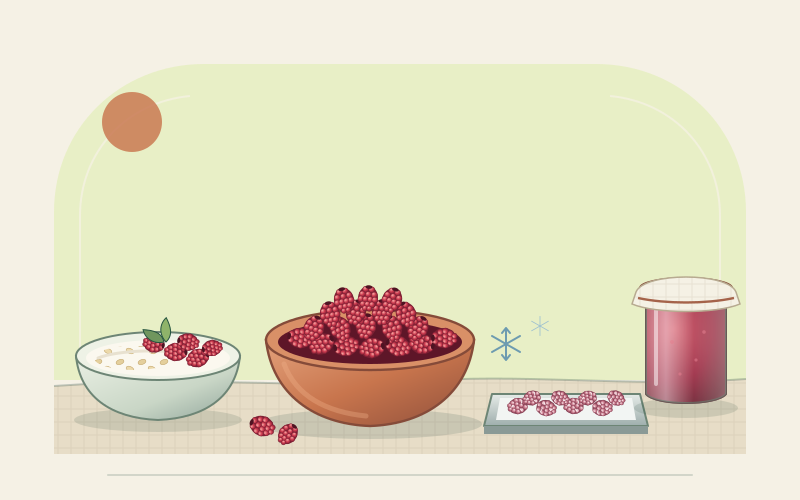
Grow red raspberries for a summer crop on second-year canes or an autumn crop on new canes. Install support, prune for the fruiting type, contain wandering suckers, and handle each ripe berry gently.

Perennial plant, biennial canes
Roots persist; canes change Summer and autumn types fruit on different cane ages.
First useful crop
1–2 years Autumn types can crop in year one; summer types usually crop from their second summer.
Harvest
Ripe, dry and shallow Pick often, avoid stacking fruit deeply, and chill promptly.
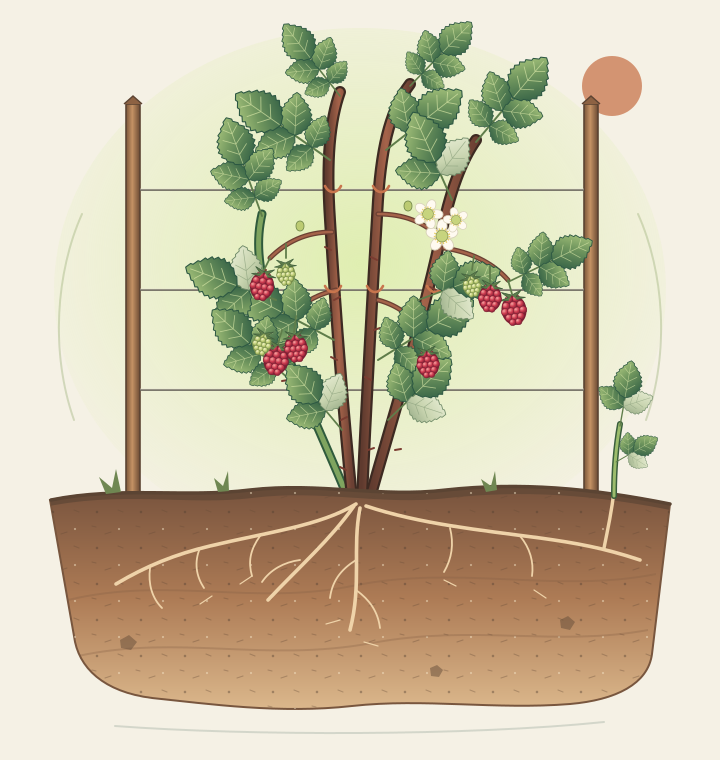
Raspberry plant with green compound leaves, pale flowers, clusters of red aggregate berries, upright woody canes tied to support wires, and spreading roots with a sucker beyond the row.
A raspberry crown persists for years, while individual canes grow, fruit and die on a two-year cycle; new suckers can extend beyond the intended row.

Know the crop

Crop profile

A perennial soft fruit with a persistent crown and biennial canes. This entry concerns red raspberry, Rubus idaeus. Summer-fruiting types bear on second-year canes; autumn-fruiting types bear near the tips of current-season canes. Expect a first useful crop after one to two years, depending on fruiting type and establishment.

Crop essentials

Botanical name
Rubus idaeus
Growth
1–2 years From planting a young cane to the first useful crop, not from sowing seed. Autumn-fruiting primocane types can crop in their first year; summer-fruiting floricane types usually fruit from their second summer. Plant condition, climate, cane survival and management can delay cropping.
Family
Rosaceae
Origin
Europe and northern Asia
Habit
Perennial crown and roots; upright biennial canes, usually supported in a managed row

Nutrition / raw fresh raspberries

Nutrition, in context

High Editorial nutrient-density rank 3. This is Rooted’s qualitative category for protein, fibre, folate, iron and potassium in the site’s food comparison, with highlights adding context. It is not an official nutritional score or a promise of a health outcome.

Approximate values per 100 g raspberries, raw edible portion.
Nutrient Amount
Protein1.2 g
Fibre6.5 g
Folate21 µg
Iron0.69 mg
Potassium151 mg
  • Contains 6.5 g fibre and 26.2 mg vitamin C per 100 g in the raw reference, with modest protein, folate and potassium.
  • The fruit is mostly water and delicate after harvest; these values describe fresh raw berries, not jam, juice, dried fruit or sweetened desserts.
  • This raw-fruit reference is not directly interchangeable with the cooked vegetables and grains in the site comparison.

Basis: Approximate values per 100 g raspberries, raw edible portion (USDA FoodData Central SR Legacy 167755). View the USDA reference.

Fresh raspberries crush and mould readily. Pick into shallow containers, chill promptly and wash gently under clean running water just before use; discard mouldy or badly spoiled fruit rather than salvaging the rest of a leaking punnet. Freeze sound berries by a reliable method or follow tested recipes for jam and other preserves. Cultivar, ripeness, preparation and serving size change nutrient intake; listed content does not measure absorption or individual needs.

At the table

Enjoy raspberries as one part of a varied diet

  • Yogurt, oats, nuts or seeds — A varied breakfast or snack: These foods add protein, starch, fat and different nutrients alongside raspberries’ fibre and vitamin C. Choose according to preference and dietary needs; no accompaniment is essential. Serve fresh raspberries with plain yogurt and oats, or with whole-grain toast and nut butter.
  • Beans, lentils, eggs, fish or tofu — Protein variety: Raspberries contain little protein per 100 g. Protein-containing foods make a fruit-containing meal more varied without turning the berries into a required health ingredient. Add raspberries to a breakfast beside tofu scramble or eggs, or serve them after a bean and vegetable meal.
  • Other fresh fruit and vegetables — Colour, texture and nutrient variety: Different produce contributes different textures and nutrients. Variety across the diet matters more than treating one berry as a superfood or assuming its vitamin C guarantees a particular absorption increase. Combine raspberries with sliced peaches or melon, or serve them beside a meal containing peppers and leafy greens.

The essentials

From young cane to shallow picking tray

Six practical stages for Rubus idaeus. Adapt cultivar, planting time and winter care to local conditions.

  1. Choose the fruiting type and healthy stock

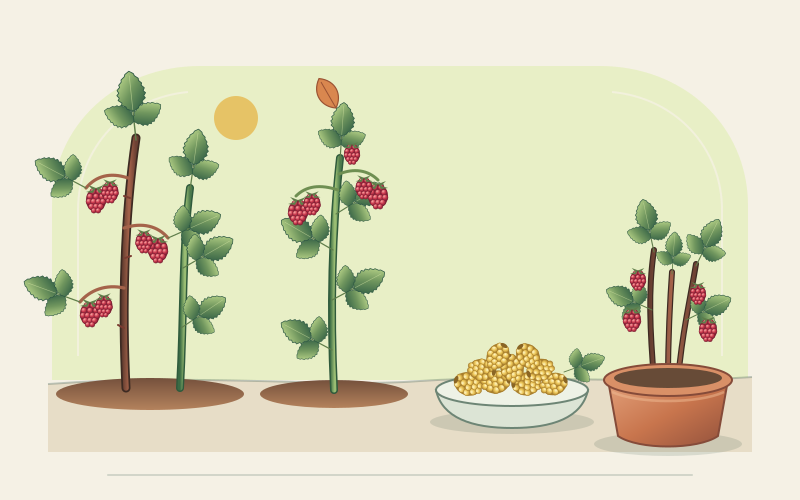
    Summer-fruiting, or floricane, raspberries bear on canes grown the previous year; autumn-fruiting, or primocane, types bear near the tips of canes grown that season. Choose a locally adapted cultivar, considering winter survival, season length and disease pressure. Buy certified virus-free stock where available. Summer types usually give a useful crop from the second summer; autumn types can crop in the first year.

  2. Prepare the row and install support

    Choose sun or light shade, shelter from damaging wind, and fertile, moisture-retentive but free-draining soil. Clear perennial weeds, use raised beds where water sits, and set sturdy posts and wires before planting. Space young plants roughly 40–60 cm apart where local cultivar guidance agrees, leaving generous working room between rows. Compact cultivars can suit large containers with regular water and support.

  3. Plant shallowly and train new canes

    Plant dormant canes at their previous depth, with upper roots only about 5 cm below the surface; do not bury the crown deeply. Water during establishment and dry fruit-development periods without waterlogging shallow roots. Mulch while keeping a gap around cane bases. Tie summer canes loosely to wires with room to thicken, or contain autumn canes between parallel supports; keep foliage open and reachable.

  4. Prune by cane age, not by guesswork

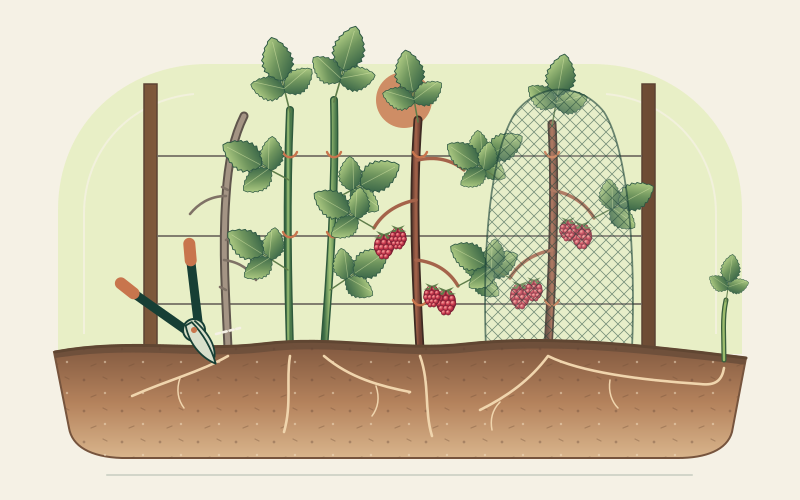
    After summer harvest, cut old brown fruited floricanes to ground level, then retain and space strong new green canes for next year. For a single autumn crop, cut all primocane stems to the ground in late winter before new growth. Optional double-cropping of suitable autumn cultivars uses a different, more complicated system and can reduce the autumn crop; follow a named local method rather than mixing the two routines.

  5. Contain suckers and watch cane health

    Raspberries spread from the root system, sending suckers outside the row. Slice or dig out unwanted shoots while young, and maintain a defined bed edge; do not let a thicket take over paths or neighbouring crops. Propagate only from healthy, recently certified stock. Inspect leaves and canes, remove badly diseased material as local guidance directs, and obtain a diagnosis before using any crop-labelled control.

  6. Pick ripe berries gently and preserve promptly

    Pick every day or two in peak season when fruit is fully coloured, plump and releases easily from the pale central plug. Work in dry, cool conditions and place berries only two or three layers deep in a clean shallow punnet; do not pull unripe fruit or squeeze clusters. Chill promptly and wash gently just before eating. Use sound berries soon, freeze by a reliable method, or follow a tested preserving recipe; discard mouldy or leaking fruit.

Growing notes by place

Read your region, then read your canes

Compare broad growing conditions, then adjust for winter cold, chilling, heat, altitude, rainfall and soil.

Cool, temperate and often maritime, with milder coastal districts and colder, shorter seasons inland and in uplands.

Northwestern Europe

Raspberries suit much of Britain, Ireland and nearby districts. Summer and autumn types can share a garden, but wet ripening weather and exposed sites require local adjustment.

Indicative planting
Plant certified dormant canes from late autumn to early spring while soil is workable and not frozen or saturated; spring is safer on cold, wet ground. Install support and allow 40–60 cm between plants, adjusted to the cultivar.
Indicative harvest
Summer types usually crop from early to late summer once second-year canes are established, often from the second summer after planting. Autumn types can fruit from late summer into autumn, including a modest first-year crop.
Soil and moisture
Fertile, moisture-retentive but free-draining soil, ideally slightly acidic; use raised beds where winter water sits and mulch without burying cane bases.

Field note: Cut summer fruited canes out after harvest and tie in new ones; cut autumn types to the ground in late winter. Remove suckers beyond the row and pick dry berries into shallow trays.
Dates are indicative. Local winter minimums, chilling, frost forecasts, rainfall and recent weather—not the calendar alone—should guide planting, pruning and harvest.

Cool-temperate Northern Hemisphere · example

A two-year cane cycle in a perennial row

A compact planning guide, not a fixed schedule. Shift it with cultivar, latitude, altitude, winter injury and local conditions.

  1. November–March

    Plant dormant stock while soil is workable, or wait for spring on cold wet ground. Repair posts and wires. In late winter, cut single-crop autumn-fruiting canes to the ground and mulch without covering cane bases.

  2. April–June

    Watch new primocanes emerge and keep moisture steady without saturation. Tie or support summer-fruiting floricanes, thin overcrowded growth as advised, and remove suckers beyond the intended row.

  3. June–August

    Pick summer fruit every day or two when ripe and dry. After harvest, remove old fruited canes at ground level and tie in strong current-season canes for next year. Continue watering developing autumn fruit in dry spells.

  4. August–October

    Harvest autumn types from their current-season cane tips before frost or prolonged wet weather. Chill berries promptly, freeze sound surplus by a reliable method, and keep the bed free of unwanted suckers and spoiled fruit.

The 1–2 year window runs from planting a young cane to its first useful crop. Autumn types can crop in year one; summer types normally need second-year canes. Winter damage, poor establishment or incorrect pruning can delay fruiting.

From the field journal

Prune, choose and enjoy your raspberries

Practical reading for a contained perennial row, an informed choice of fruiting season and colour, and careful use of a delicate harvest.

Your next harvest begins here

Start with one clearly marked row.

Label the fruiting type, install support before growth begins, and learn to tell this year’s green canes from last year’s woody ones. Correct pruning and gentle picking matter more than a large first planting.

Open the growing guide